



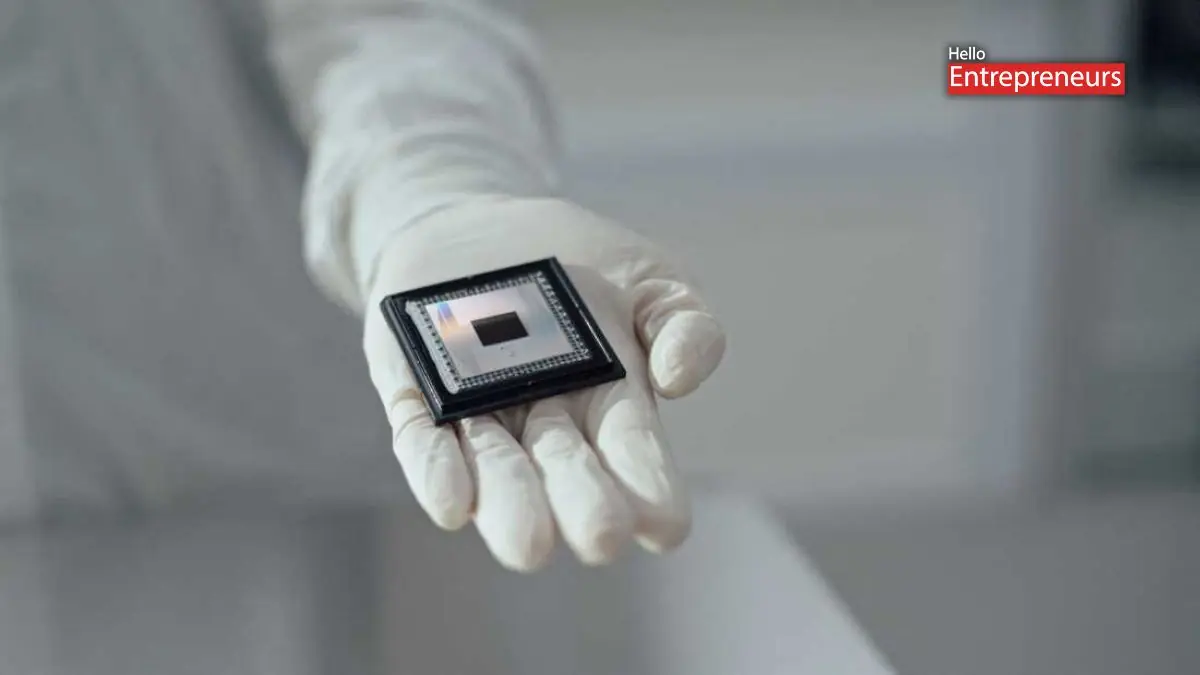
New Delhi: Google has recently announced that its Quantum AI’s Willow chip has achieved the first-ever verifiable quantum advantage, running its Quantum Echoes algorithm at a speed of 13,000 times faster than the best classical algorithm in the world’s fastest supercomputer. The result obtained with the Willows Chip is verifiable, which means it can be replicated by other quantum computers or further experimented with, leading to people getting closer to the first real-world application of quantum computing.
Google’s Willow quantum chip has been paving the way in understanding quantum computing, as in 2019, it demonstrated that a quantum computer could solve problems that would take a supercomputer thousands of years. Later on in 2024, the Willow chip showed that errors can be suppressed dramatically, solving a 3-decade-long problem. The Quantum Echoes is an out-of-order time correlator algorithm, which is a mechanical tool used in quantum computing. Quantum Echoes can be helpful in learning the structure of the systems in nature, from molecules to magnets to black holes.
Quantum computation of the molecular geometry through many-body nuclear spin echoes demonstrated how the latest technique, a molecular ruler, can measure longer distances than today’s methods, utilising data from Nuclear Magnetic Resonance to gain more information about the chemical structure. This is the first time in history that any quantum computer has successfully run a verifiable algorithm that surpasses the ability of supercomputers.
Google also state that this means that the result can be repeated on our quantum computer or any other of the same calibre to get the same answer, confirming the result. The latest technique works like a highly advanced echo, sending a carefully crafted signal into their quantum system.

