



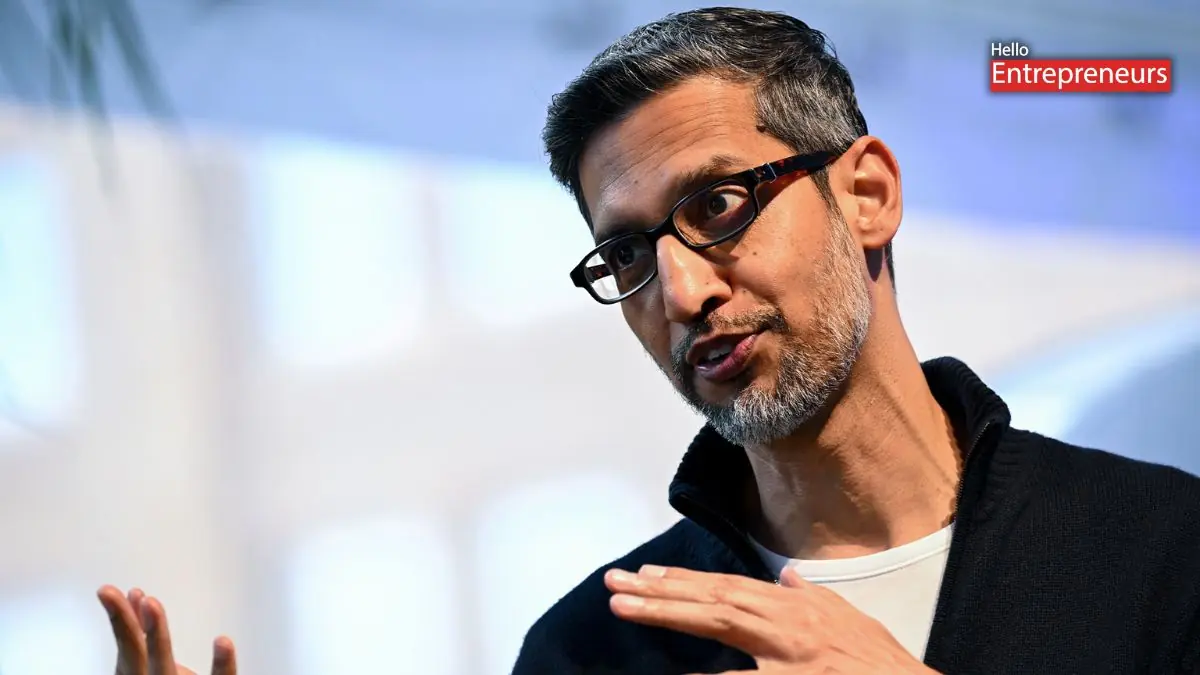
New Delhi: Google CEO Sundar Pichai has recently envisioned vibe coding as the next chapter, as the next great equaliser in technology, opening career paths for non-technical professionals in the same way the internet created opportunities for creators. Vibe Coding, or an AI-assisted coding approach, enables individuals to build functional applications through conversational prompts rather than traditional programming languages, fundamentally reshaping who can participate in software development. The technology allows for anyone to develop applications and websites through simple prompts, making the coding so much more enjoyable and accessible regardless of the educational background or technical training.
The shift is already transforming workplaces across the industries; HR professionals, accountants, and other non-technical workers are leveraging AI tools like ChatGPT, Gemini, Claude, and Replit to create functional applications. Sundar Pichai has also explained that vibe coding enables employees to move beyond verbal descriptions and actually demonstrate working prototypes of their ideas. Within the tech companies, the impact is particularly striking. At Google, Sundar Pichai noted that there was a sharp increase in the employees submitting their first code modifications addressing specific features or bugs.
The trend extends across Silicon Valley, with Meta’s product managers vibe-coding prototypes for CEO Mark Zuckerberg. However, Microsoft and Amazon have also encouraged their employees to embrace AI-assisted coding tools, with the AI usage increasingly becoming a factor in workplace performance evaluations at many tech companies. Sundar Pichai tempered his optimism with practical caution; he acknowledged that vibe coding remains inappropriate for the large, security-critical codebases where precision and protection are paramount.
Developers are working on mission-critical systems, and must maintain rigorous oversight rather than relying primarily on AI-generated code. Yet Sundar Pichai’s long-term outlook remains decidedly optimistic. He also emphasised that the current AI coding capabilities represent merely the starting point, with the dramatic improvements inevitable.

