



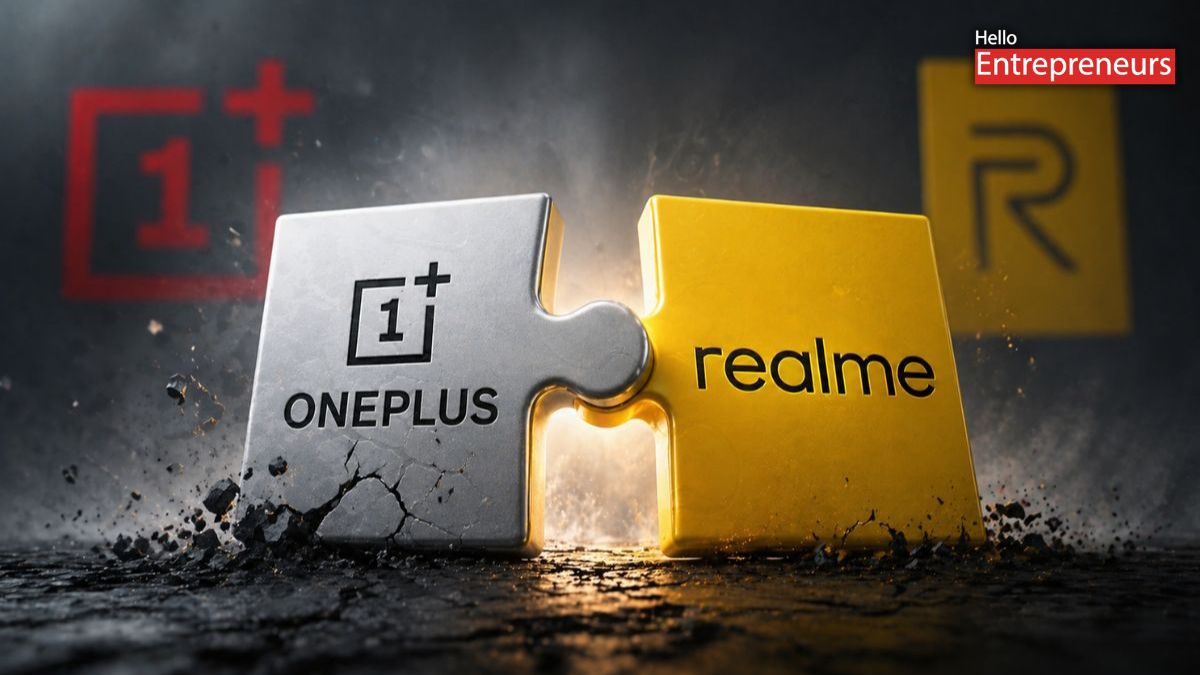
New Delhi: The industry of smartphones is currently experiencing a significant change as it is been reported that OnePlus can merge its business with that of Realme as part of a larger restructuring in the ecosystem of the BBK Electronics brand. So people are talking about what’s happening with OnePlus and another brand. It seems like they are trying to work under one system.
This is causing a discussion in the technology market. The question is, will OnePlus still be the company and have the same place, in the market or is this a smart move for OnePlus to stay in the game in a market where everyone is competing? As per the information available, OnePlus and Realme will be put under a new internal department, commonly known as a sub-product centre. This unit would coordinate activities in both the world and China markets, in terms of product development, marketing, and after-sale services. Though it has been integrated, both brands have a high likelihood of remaining independent in terms of branding and market presence.
It is anticipated that leadership will still be within the current structure and Pete Lau will continue to be instrumental in the management of operations. In layman terms, the activities occurring in the back end can be combined but the brand identities will be isolated at least in the short term.
It seems that the main motive behind this action can be attributed to the increasing pressure in the international smartphone market. In the recent years, the slowing of demand has been caused by the increasing costs, economic uncertainty and increased upgrade cycles among consumers. At the time the competition with other big companies like Xiaomi and Samsung is getting tougher. This is putting more pressure on mobile phone companies to make money and grow.
The mobile phone manufacturers are getting worried about these problems. So they are trying to be more careful, with money and work better. Companies are seeking to share knowledge on research and development, streamlining of teams, and elimination of duplication to enhance efficiency and bring products to market faster. The OnePlus and Realme merger perfectly fall under this larger plan.
The move however also puts into question the current market position of OnePlus. In the last few years, the brand has exhibited tendencies of losing its dominance as it used to be a few years back. It has lost its presence in some of the world markets especially in Europe and internal restructuring and change of leadership has created uncertainty. The concerns have been further riled by reports that the company is considering its future in certain areas. With that said, it does not necessarily imply that OnePlus is going downhill. Rather, it indicates that the brand is going through a transitional phase, adapting to changing market dynamics.
The question of whether this integration is a mistake is dependent to a large extent on the manner in which this integration is carried out. The risk of the loss of brand identity can be listed among the largest ones. OnePlus has long existed as a premium flagship killer brand, with Realme having positioned itself as a value-for-money offering brand in the mid-range segment. When the two brands start sharing product strategies to the extent that their products become similar to each other, consumers will be confused by the similarities between the two product brands.
It also risks internal competition as the two brands end up competing against each other, ultimately killing the sales of both brands. This would blur the premium status that OnePlus has been a core element of its reputation. Conversely, the integration is also characterized by great opportunities. Through resource sharing, OnePlus and Realme are able to cut down on costs, speed up the innovation process, and increase their competitiveness on the global stage in comparison with such giants as Apple and Samsung. The better efficiency may also enable them to offer better products at more competitive prices.
In the case of the Indian market, where both brands have a prominent market share, the effect may be felt. There can be an increase in similarities in design and features across the devices of both brands, as well as more aggressive pricing strategies. Also, common after sales facilities may result in better customer care.
Nevertheless, it will be critical to ensure proper differentiation. Unless OnePlus manages to maintain its high-end status, it can lose some of its loyal customers who associate the brand with its quality and performance. To sum up, this should not be regarded as a sign of the OnePlus collapse, yet it certainly marks a turning point. The brand itself is actually struggling, and it is also demanding of its independence, but it is not fading away. Rather, this action is indicative of a larger scale move towards survival and adaptation in an extremely competitive market.
When done well, the integration may be able to make OnePlus more efficient and competitive. When not managed well, it may weaken the brand and the user base that has remained loyal to the brand. In the end, one aspect is going to be the primary determinant of the success of this strategy: the ability of Oneplus to remain unique in its spirit and share resources behind the scenes.

