



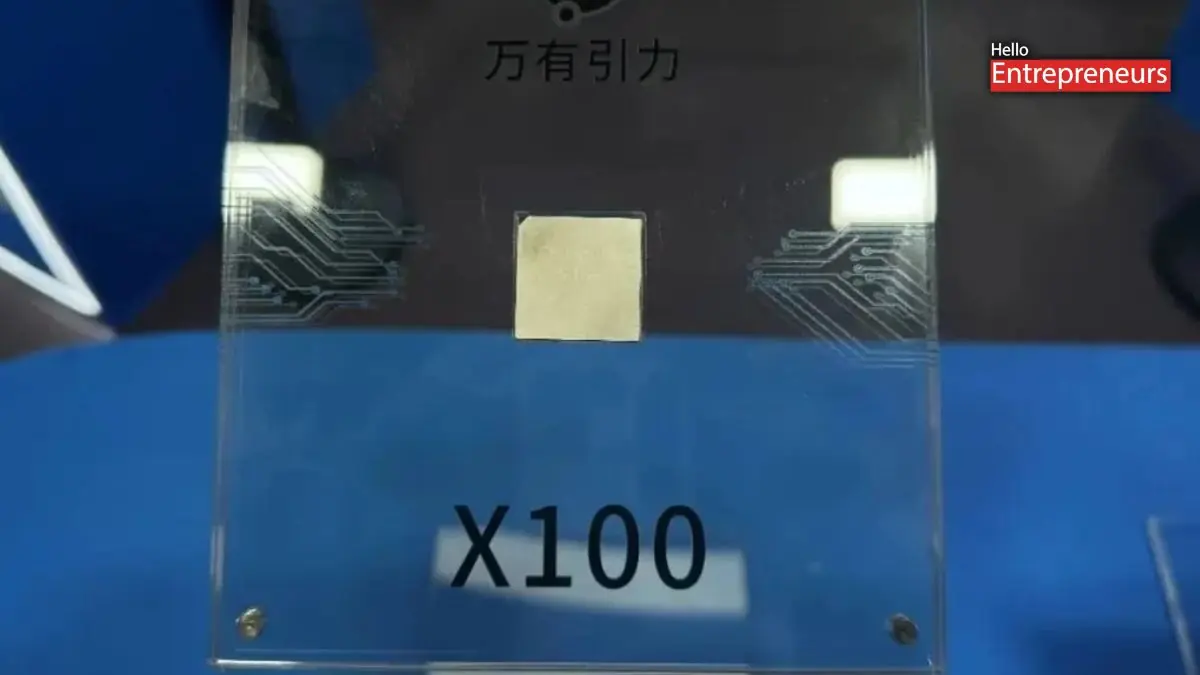
New Delhi: A Chinese startup founded by former Apple engineer Wang Chaohao has been making its own waves after revealing its AI smart glasses chip. After exiting from Apple’s extended reality division, Wang Chaohao leads GravityXR in China with the goal of delivering components that could challenge Apple’s own high-end devices. GravityXR’s latest announcement is the Jizhi G-X100, described as China’s first all-in-one mixed reality chip using the advanced 5nm technology. This latest chip is designed to power lightweight AI glasses and headsets by positioning it as a potential competitor to Apple’s Vision Pro, which is currently the leader in the premium XR hardware segment.
The most standout feature of the G-X100 is its photon-to-photon latency of 9 milliseconds, which surpasses the 12 milliseconds achieved by Apple’s Vision Pro headset. Lower latency means a more seamless and responsive virtual and augmented reality experience. GravityXR states the latest chip is suitable for a range of devices, from compact AI glasses to advanced XR headsets. The field enabled by this hardware allows the digital devices to process and see the real world, integrating physical environments with the virtual content. The Jizhi G-X100’s combination of high-speed performance and low latency reflects a broader industry trend, where companies are racing to reduce the gaps between physical and digital perception in XR and AI wearables.
Wang Chaohao’s transition from Apple to founding GravityXR in China marks a notable shift in the talent landscape as well. His background at Apple’s extended reality unit and Stanford University adds credibility to the venture. GravityXR is aiming to offer a local alternative to US tech giants in a market that is prioritising technological self-reliance at a time when tensions between the US and China persist over high-end tech such as AI chips. The former Apple engineer’s venture has already found several backers, including the likes of HongShan, formerly Sequoia Capital China, Gaorong Capital, Chinese contract electronics manufacturers Goertek, and video game developer miHoYo.

