



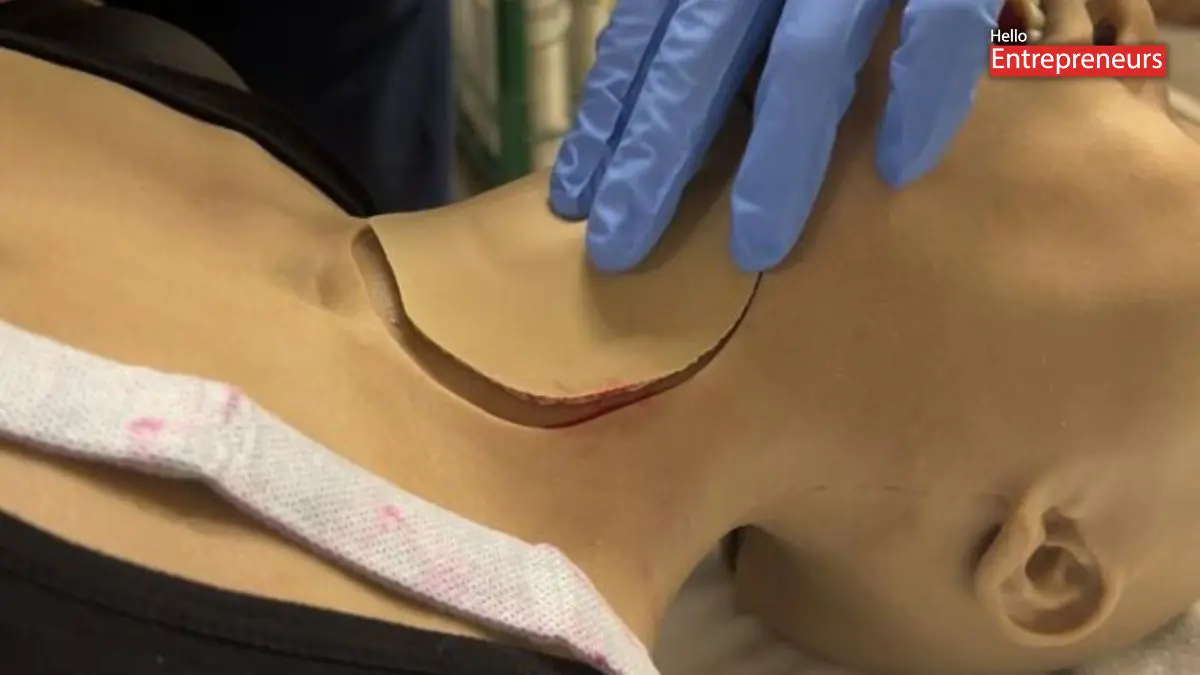
New Delhi: The University of Minnesota College of Science and Engineering has successfully 3D printed realistic human tissue simulants that can be used for medical training for new surgeons and doctors. Previously, methods have made simple, rigid tissue simulants, but this is the latest technique, published in Science Advances, that can mimic the complex directional strength, softness and stretchiness found in real tissues like skin and other organs. The researchers were able to make the simulated tissues more realistic by adding tiny fluid-filled capsules to imitate blood. This is done by printing small microcapsules that contain the liquid, preventing it from drying out or interfering with the printing process.
3D-printed tissue brings new realism to medical traininghttps://t.co/FgliCkWrtV pic.twitter.com/MmoNOYFTkH
— College of Sci & Eng (@UMNCSE) September 23, 2025
This approach opens the door to creating more realistic training models for surgery, which could ultimately improve medical outcomes. He has a doctorate in mechanical engineering from the University of Minnesota and was the first author on the paper. While the challenges remain in scaling up the process, they see the strong potential for this 3D printing method in complex training scenarios. A preliminary study found surgeons rated the latest 3D printed models higher for the tactile feedback and response to cutting compared to previous, conventional models. The team envisions future applications that will improve and advance surgical training, which is one of the foundations of Minnesota’s healthcare ecosystem.
The researchers will now focus on expanding the latest technology to create a variety of shapes to mimic other organs, develop bionic organs and incorporate more advanced materials that respond to standard surgical tools like electrocautery, a surgical technique that uses a heat tool to remove small growths. This is a great idea they have created for the fresher doctors and surgeons to get more advanced training, and with the proper guidance.

