



Mumbai: For years, artificial intelligence behaved like that one overly enthusiastic intern who answered every question nobody asked.
“Write me an email.”
“Summarize this document.”
“Generate a poem about productivity.”
Impressive? Occasionally.
Necessary? Debatable.
But something more consequential is now unfolding inside the technology industry — and this time, the shift feels less theatrical and far more invasive.
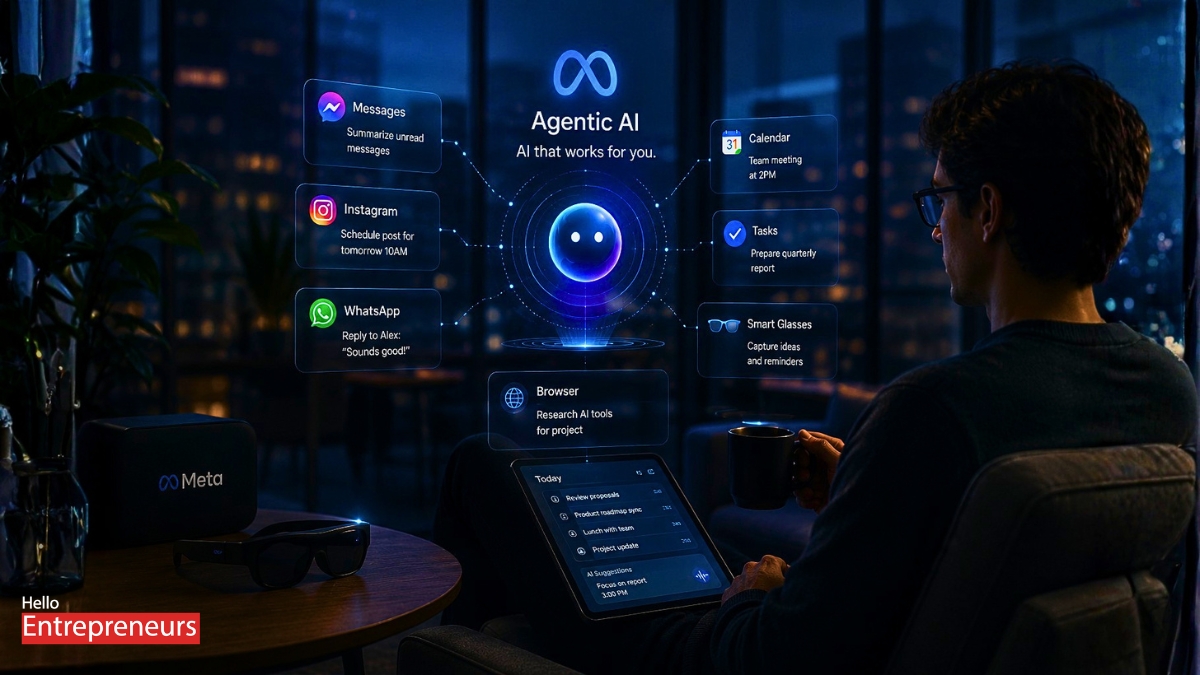
Reports surrounding Meta Platforms suggest the company is quietly building what many insiders are calling “agentic AI” — systems designed not merely to respond to prompts, but to actively perform tasks across apps, devices, browsers, and eventually daily routines.
Translation?
Tech companies no longer want AI to talk to you.
They want it working for you.
Around you.
Possibly instead of you.
Subtle distinction. Mildly terrifying implications.
And unlike the chatbot frenzy that dominated the last two years, this next phase of artificial intelligence may genuinely alter how people interact with technology on a structural level.
Because the future of AI isn’t a conversation box anymore.
It’s invisible infrastructure.
The Real Shift Isn’t Smarter Chatbots
Most consumers still think AI means:
- Chat interfaces
- Image generators
- Voice assistants
- Search summaries
But inside Silicon Valley, the conversation has already evolved beyond that.
The new obsession is autonomy.
Companies now want AI systems capable of:
- Booking appointments
- Managing workflows
- Navigating browsers
- Organizing schedules
- Handling digital tasks independently
In other words:
AI is transitioning from “assistant” to “operator.”
And yes, that sentence absolutely sounds like the beginning of a science-fiction thriller. Unfortunately, it also happens to be commercially accurate.
What “Agentic AI” Actually Means
The phrase sounds wonderfully corporate and vaguely ominous.
“Agentic AI” refers to artificial intelligence capable of taking actions toward goals with limited human intervention.
Not just answering.
Doing.
That includes:
- Completing multi-step tasks
- Remembering context across apps
- Acting inside digital ecosystems
- Making routine decisions automatically
Imagine asking your AI:
“Plan my week, schedule meetings, order groceries, summarize my unread emails, and remind me which people I’m avoiding emotionally.”
The technology industry is attempting to build exactly that.
Minus the emotional awareness. Probably.
Why Meta Is Pushing Aggressively Into This Space
Meta Platforms has spent years chasing the next dominant computing platform.
First social media.
Then virtual reality.
Then the metaverse.
Now?
AI assistants appear to be the new strategic battlefield.
And unlike virtual worlds filled with expensive digital legs, AI agents have immediate practical appeal.
The company already owns:
- Massive social ecosystems
- Messaging platforms
- Advertising infrastructure
- Wearable ambitions
- Billions of active users
Adding intelligent AI agents into that ecosystem creates something extraordinarily valuable:
Persistent daily engagement.
Or, phrased less delicately:
constant behavioral integration.
The Bigger Industry Trend Is Impossible To Ignore
This isn’t happening in isolation.
Across the technology sector:
- AI browser agents are emerging
- Wearable AI devices are expanding
- Productivity ecosystems are integrating automation
- Operating systems are becoming AI-centric
The competition is no longer about who has the smartest chatbot.
It’s about who controls the most useful digital assistant ecosystem.
And usefulness is extremely monetizable.
The Infrastructure Arms Race Behind The Scenes
Building agentic AI systems is extraordinarily expensive.
These systems require:
- Massive compute infrastructure
- Advanced foundational models
- Real-time contextual memory
- Continuous cloud processing
Which explains why major technology companies are collectively spending hundreds of billions of dollars on:
- AI chips
- Data centers
- Cloud expansion
- Model training infrastructure
Because apparently, the future of convenience requires the electrical output of a small nation.
Why Investors Are Suddenly Obsessed
Investors increasingly view AI agents as the next platform transition.
Comparable to:
- Smartphones
- Search engines
- Social media ecosystems
If successful, AI agents could become the primary interface between humans and the internet itself.
Which means:
- Advertising changes
- Search changes
- Shopping changes
- Productivity changes
- Consumer behavior changes
Naturally, every technology company now wants to own the middle layer between people and reality.
Very healthy industry behavior.
The Positive Side Nobody Should Ignore
To be fair, there are legitimate advantages.
Properly designed AI agents could:
- Reduce repetitive digital tasks
- Improve accessibility
- Increase productivity
- Simplify workflows
- Help users manage information overload
For overwhelmed professionals, students, and businesses, automation may genuinely save meaningful time.
And in a world drowning in notifications, meetings, and administrative chaos, that value is difficult to dismiss entirely.
The Slightly Uncomfortable Privacy Question
Now for the darker corridor of the mansion.
AI agents require context.
A lot of it.
To function effectively, these systems may need access to:
- Emails
- Calendars
- Browsing behavior
- Purchases
- Communication patterns
- Personal preferences
Which means the future AI assistant economy may depend on unprecedented levels of user data integration.
Convenience and surveillance continue their deeply committed relationship.
The Browser War Is Returning — With AI Attached
One overlooked aspect of this transition is the browser itself.
The next AI battleground may revolve around:
- AI-powered browsing agents
- Autonomous search behavior
- Smart workflow navigation
Instead of searching manually, users may increasingly instruct AI systems to:
- Find products
- Compare information
- Handle bookings
- Complete transactions
The internet may slowly shift from:
“humans navigating websites”
to:
“AI navigating websites for humans.”
A remarkably efficient idea. Slightly existential. But efficient.
The Wearable AI Era Is Quietly Approaching
The industry also sees wearables as critical.
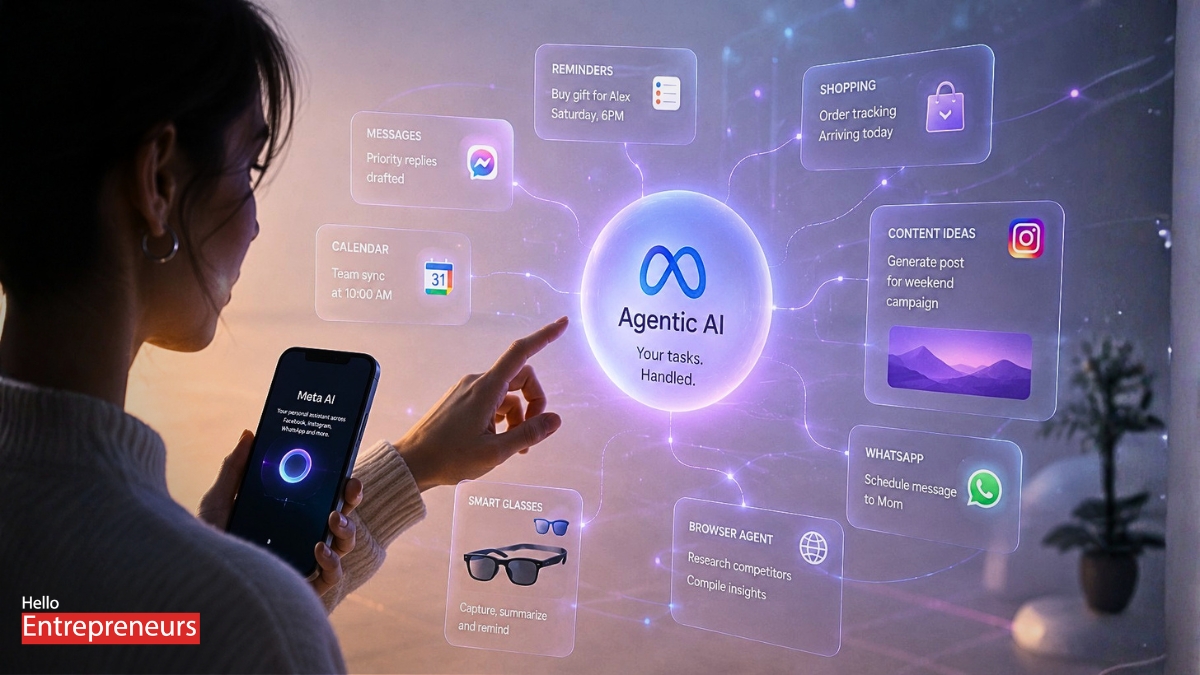
Future AI assistants may live inside:
- Smart glasses
- Earbuds
- Watches
- Ambient computing devices
The long-term goal appears obvious:
make AI constantly available without requiring direct interaction.
Technology companies are no longer designing tools.
They are designing continuous presence.
The Economic Reality Behind The Optimism
There’s another reason companies are racing toward agentic AI.
Growth pressure.
Social platforms are maturing. Smartphone innovation is plateauing. Traditional advertising markets are stabilizing.
AI offers:
- New monetization models
- Subscription ecosystems
- Productivity services
- Enterprise automation opportunities
In simpler terms:
AI agents are not merely technological products.
They are economic survival strategies.
The Cons Nobody Wants To Discuss Loudly
The risks remain substantial.
- Overdependence: People may become increasingly reliant on automated systems for basic digital tasks.
- Job Disruption: Administrative and workflow-heavy roles could face serious automation pressure.
- Data Centralization: A handful of companies may gain unprecedented behavioral insight.
Decision Transparency:
- AI systems making autonomous decisions raise accountability concerns.
- Especially when algorithms inevitably make mistakes.
- Because they absolutely will.
The Sarcasm The Industry Earned Fairly
There’s something darkly amusing about modern technology culture.
For years, people begged platforms to:
- Reduce addictive behavior
- Improve privacy
- Stop overwhelming users with notifications
The industry responded:
“Excellent. Here’s an AI system that lives inside every aspect of your routine.”
Progress remains wonderfully committed to escalation.
The Bigger Truth: AI Is Becoming Invisible
This may be the most important shift of all.
The future of artificial intelligence likely won’t feel dramatic.
No cinematic robot uprising.
No glowing holograms.
No theatrical takeover.
Instead:
AI will quietly embed itself into:
- Operating systems
- Browsers
- Messaging apps
- Productivity tools
- Daily routines
The transition will feel gradual.
Until suddenly, millions of people can no longer imagine functioning without algorithmic assistance.
Technology’s favorite trick has always been dependency disguised as convenience.
The Final Thought: The Internet Is About To Get A Middleman
The rise of agentic AI signals a profound transformation in how humans interact with technology.
For decades:
People navigated software manually.
Now:
Software may increasingly navigate itself.
And companies like Meta Platforms understand something critical:
The most powerful AI won’t necessarily be the smartest.
It will be the one users trust enough to hand their daily lives over to.
Which is simultaneously a brilliant business strategy and an absolutely haunting sentence.
Still, the momentum appears unstoppable.
The industry has moved beyond chatbots.
Beyond novelty.
Beyond experimental hype.
Now it wants AI embedded into habits, workflows, decisions, and routines.
Not beside your life.
Inside it.
Read More: Smartphones Are Quietly Becoming Luxury AI Subscriptions

