



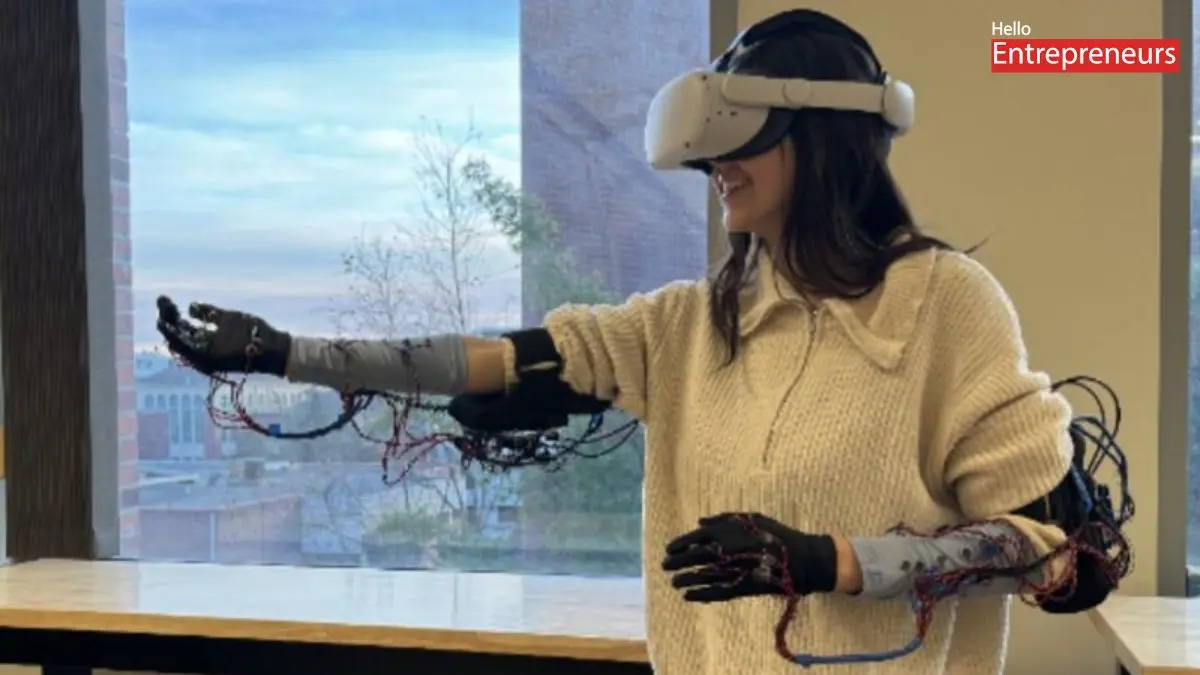
New Delhi: In a world where screens are increasing mediating human connection, touch is fading from daily interactions. But the engineers at the USC Viterbi School of Engineering aim to be more unique, and they aim to change that with a latest haptic system that brings physical sensations into virtual reality. This wearable technology lets people feel the gestures like handshakes, pats, and squeezes, even when separated by miles. Their system, tested in a recent user study, uses the gloves and armbands fitted with the vibration motors to recreate physical contact in the shared virtual spaces.
Long-distance high five? Hugs from across the country? A squeeze through the screen? Wearable tech by @USCViterbi lets users feel gestures real-time in virtual reality.
🔗 https://t.co/Kj07SDoyfn pic.twitter.com/a9CgRGpoT8
— USC (@USC) July 28, 2025
It is especially designed to make digital communication more emotionally rich and realistic, and early results suggest it works. The wearable system allows up to 16 users to interact inside a shared virtual environment. Each person is represented by a full-body avatar that mirrors their real-world movement. Users can move freely, perform gestures, and interact with the virtual objects like passing a cup or completing group tasks. The tactile sensations are delivered through small motors in the gloves and sleeves. These simulate pressure and motion, making virtual gestures feel more lifelike.
The users’ study published alongside the IEEE World Haptics Conference found that people felt more emotionally connected when the touch was included. Interactions became more pleasant and engaging; the researchers also tested how variants in gesture speed and vibration type affected the emotional response, offering insights for future design. USC Viterbi associate professor Heather Culbertson said that, “even though people are spending just as much, if not more, time socialising online, we’re seeing rising levels of depression, anxiety and what’s often described as touch starvation.”
This system will emerge from a shared desire to feel closer to loved ones during long periods of separation. Lead researchers and first author Premankur Banerjee, a doctoral student at the USC Viterbi, said the project came from lived experience. This project was born from a simple, deeply human desire: to feel closer to the people we miss, as said by Banerjee.
Having spent over five years away from my own loved ones, this research was more than academic, it was personal, he also added. It’s about using the technology not just to simulate presence, but to restore a sense of the physical closeness that’s often lost in long-distance communication. It could help patients in hospitals connect with the family, enhance engagement in hybrid classrooms, or bring comfort to people separated by military deployments or travel. While platforms like Zoom and FaceTime have allowed families, friends and colleagues to maintain visual and verbal contact, these models lack the physicality that humans naturally crave, according to Culbertson.