



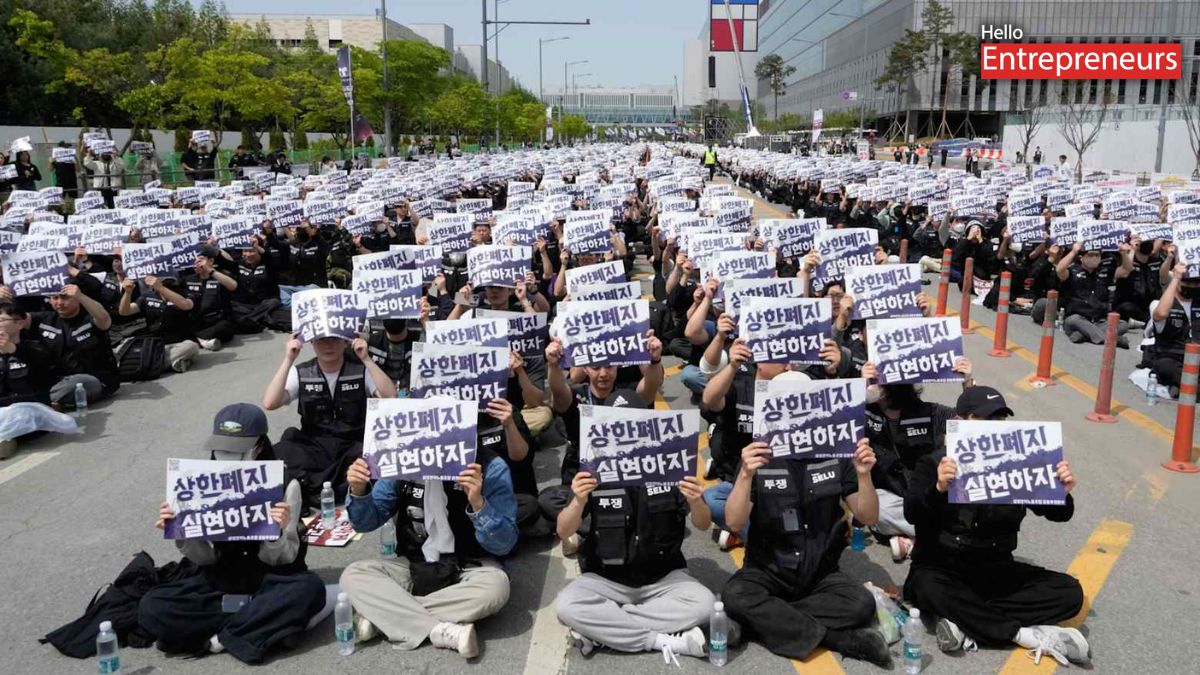
New Delhi: South Korea’s Samsung Electronics is in for one of the biggest labour strikes of its lifetime as tens of thousands of workers threatened to hit the picket lines over their employee bonuses. Both the company and the semiconductor and technology industry at large have been worried by the issue.
The planned strike affects almost 48,000 participants, many of whom are members of Samsung’s semiconductor business. The workers are not pleased about the company’s compensation system and feel that they are not being fairly compensated for their contributions to the company’s profits in the current era of booming AI.
AI is driving up demand for memory chips, which has been a huge boon for Samsung. The hike in overall demand for AI servers, data centers, smartphones and laptops over the world has boosted profits for the company, as well as its rival SK Hynix. But workers say although the company is having a strong performance, many workers aren’t getting the rewards they deserve.
Samsung’s labor union’s primary demand is to end a bonus cap that is capped at 50% of annual pay. The workers also want the company to put a portion, of its yearly operating profit, into a common employee bonus fund that is 15% of the operating profit. The union leaders wish that the changes be made into a permanent policy and not just a temporary measure.
The disagreement escalated when Samsung gave out vastly different bonus deals to employees in different divisions. The bonuses often offered to employees in the memory chip division were capped at 607% of annual salary, while those in other businesses relating to chips were offered much smaller bonuses. This left many of the workers upset over the system.
The unequal bonus systems may lead to the workers leaving the Samsung back for other companies, like SK Hynix, which recently reduced the limitation on the bonus amount and provided improved compensation packages, according to the Union. Several staffers allegedly already jumped ship to other companies because of other salary and bonus offers.
The possible strike also was an issue for the South Korean government. Samsung has a significant role in the country’s economy, with the part of exports nearly a quarter of the total of South Korea. Official had warned that a prolonged strike could have a negative impact on the economy as well as chip supply to the world when demand for AI hardware is fast growing.
But industry experts estimated that a long strike by the union could eat into profits on Samsung’s product line even as it could cause a disruption to the global semiconductor supply chain. Samsung memory chips are used across the globe in AI systems, smart phones, laptops and cloud systems.
Luckily enough for Samsung, both parties have just agreed on an interim settlement, due to be settled by the South Korean government in the final moments. The planned strike is now on hold as the union members vote on the proposed deal which is a 18-day strike. Investors welcomed the news, driving a 2% rise in Samsung’s shares.
Despite that, the circumstances also reflect the increasing friction among the biggest tech firms in the era of AI. Employees now wants a bigger share of the profits generated by businesses that use AI, particularly as the global competition for the skilled semiconductor workers is growing.

