



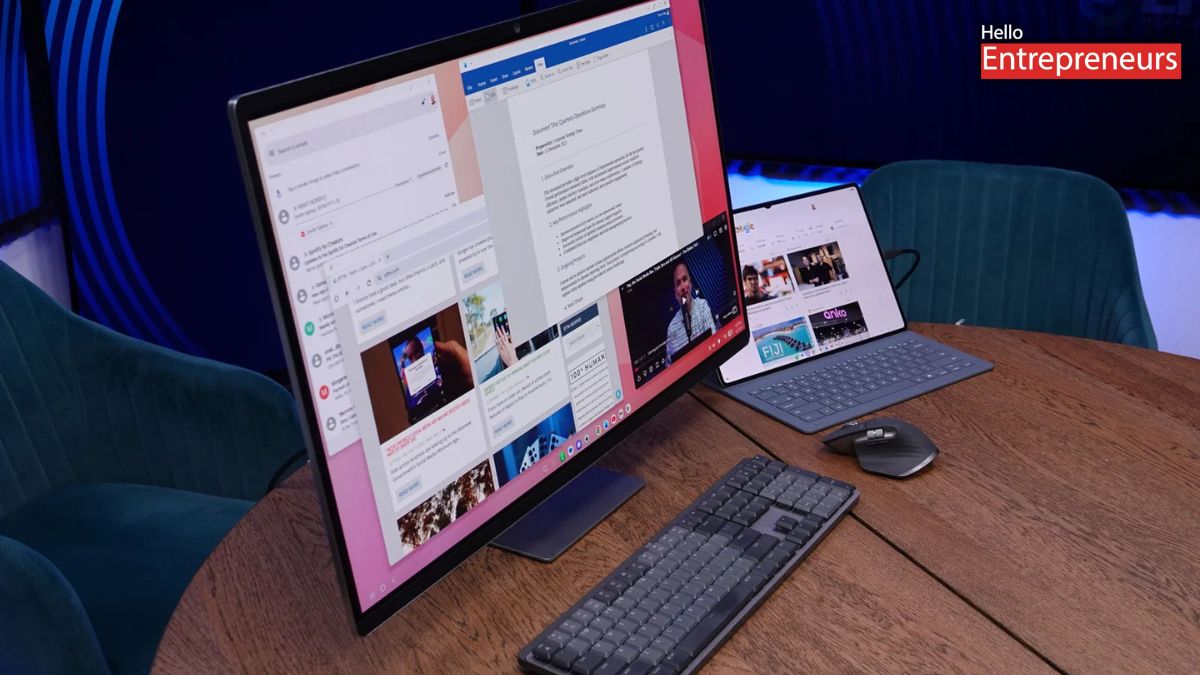
New Delhi: Laptops have been a device that everyone has been using the last few years for work, study and entertainment. That said, today’s tablets are even more powerful than they’ve ever been, and that makes many wonder that a tablet is capable of replacing a traditional laptop. I did so for several weeks to see just how much I could get done with just a tablet and discovered that so much can be accomplished, it makes you wonder why this step wasn’t taken when my smartphone was still invented? It was quite a surprise but also raised some key gaps.
At first glance, today’s high quality tablets appear to be able to achieve virtually everything that can be done with a laptop. They are equipped with excellent processors, vast screens, include keyboard and stylus, and contain thousands of productivity software applications. There are tablets that even run desktop software which allows them to be used in a wider range of applications than older generations.
The primary benefit of going with a tablet is mobility. Tablets are typically thinner and lighter to carry around than laptops. The smaller size is a huge advantage when commuting to work, going to school or traveling. Battery life is also impressive, with some tablets boasting full day of battery life when they are charged once.
The tablet worked well at the simplest of things. Searching online, checking emails, viewing videos, viewing video meetings, and handling social media all had a gliding experience. Once I plugged in an accessory for the keyboard, which I was not at first comfortable with, writing and editing documents became so comfortable. Indeed, for the majority who are most at ease with text, a Tablet can be as productive as a laptop.
Another aspect of tablets that really excel is entertainment. Playing games, social media, e-books, watching movies are easily done on a touch screen. The ease of use at lounging on a couch or bed is also made easier by the tablet’s light weight.
But the venture was not entirely successful. The one challenge which was apparent, was multi-tasking. Tablet computers provide split-screen functions and other enhancements in multitasking, but they are not as flexible as running an entire desktop operating system. It can be restrictive to switch from one app to another, or manage several windows in the office, as compared to a laptop.
Laptops are still better when it comes to file management. Tablet operating systems have made great strides, but managing a large file list and moving folders, as well as using external media can be trickier than it is on Windows and macOS computers.
Sometimes professional software can be a constraint too. There are numerous applications for tablets that are creative in nature or business-oriented that have a form for tablets, but they may not have the same advanced functionality as the corresponding desktop version. Individuals, such as video editors, programmers, engineers, or other users who work with special software, might not find a tablet to be adequate.
Keyboards are considered as well. However, detachable keyboards have progressed over the years, they generally are not as much comfortable and stable to use as a laptop keyboard. If typing is a time-consuming task, it actually becomes less convenient, particularly if on a desk.
In terms of connectivity it also result in difficulties. Some tablets have fewer ports than laptops, so any users of this type may end up needing to use adapters to attach to external storage devices, displays, and other accessories. This can represent additional expenses and complications.
So, can a tablet replace a laptop? Which it will depend on the actions you use it for. A modern tablet might well be a substitute for a laptop for students, writers, casual users, and individuals who just use their computers to send email, create documents and watch media. In some instances, it could even be the superior option due to portability and battery life.
If you’re someone who relies on sophisticated software, multitasking, coding, pro video editing, or reliable organization of extensive files, the old-fashioned laptop will serve you best. Tablets are far come a long way, but still have limitations that mean they simply aren’t a complete replacement for the laptop for all users.
Fortunately, tablet-laptop economics are starting to close. Tablets have a tremendous amount of power packed into minimal packaging, and that seems to be increasing with each passing year due to higher processors, new software and superior accessories. It’s possible they can’t always do everything for people today as laptops do, but they are getting closer and closer.

