



Mumbai: For years, lithium-ion batteries have been treated like the inevitable protagonist of the clean-energy story. Electric cars, home storage, renewable projects — lithium seemed to have secured every major role. Now, another element is quietly entering the plot: sodium.
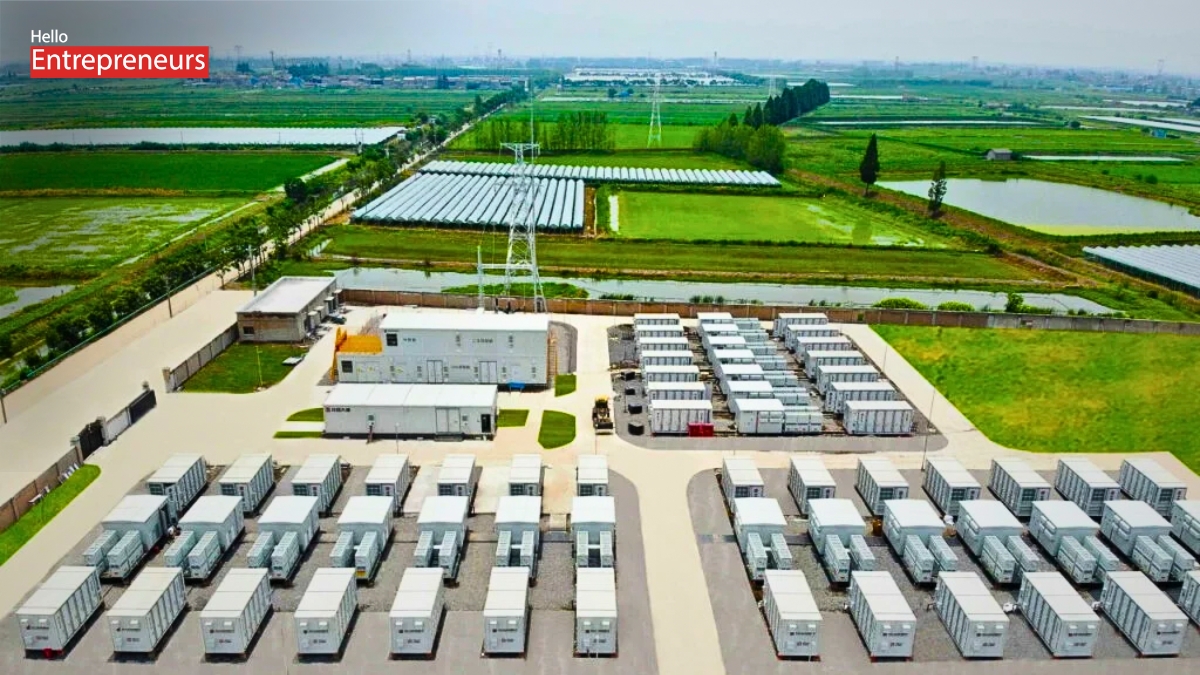
Peak Energy’s decision to build a dedicated grid-scale sodium-ion battery manufacturing facility in Sacramento, California, could mark an important shift in how America thinks about energy storage. The planned 183,000-square-foot plant represents an investment of up to $71 million and is expected to create 239 local jobs. Once operational, it is designed to produce up to 4 GWh of battery systems annually, with first shipments targeted for the first quarter of 2027.
That may sound modest beside the enormous sums being poured into the broader battery industry. But the significance lies elsewhere. The project is an attempt to commercialise a technology designed for the very place where energy demand is becoming increasingly voracious: the electric grid.
A Battery Designed For The Boring Stuff
Sodium-ion technology does not necessarily need to replace lithium-ion everywhere. In fact, trying to make it do so would rather miss the point.
For stationary storage, batteries do not have to fit inside a car, carry passengers uphill or obsess over every kilogram. They need to store electricity reliably, release it when required and survive years of repeated use.
That changes the equation.
Sodium is abundant and widely available, while sodium-ion batteries can offer advantages around thermal management and operating conditions. For large-scale storage, where space is less restrictive than it is in a vehicle, those characteristics can become commercially meaningful.
Peak Energy says its Sacramento facility already has more than 6 GWh of customer commitments, giving the company a substantial demand pipeline before the factory begins production.
And there is a larger market waiting. The rapid expansion of AI data centres is creating another appetite for dependable electricity and storage. The machines may be intelligent; unfortunately, they still require an astonishing amount of power.
The $71 Million Question
The Sacramento project brings an important dose of optimism to an American battery sector eager to diversify its technology and supply chains.
The plant is expected to support domestic manufacturing while creating hundreds of jobs. It also gives sodium-ion technology something it has lacked for years: a route from laboratory promise to industrial-scale production.
But there is a catch.
Sodium-ion batteries generally have lower energy density than lithium-ion alternatives, meaning larger systems may be required to store the same amount of energy. Lithium-ion technology also has an enormous manufacturing ecosystem behind it, with years of commercial experience and increasingly optimised supply chains.
So sodium is not walking into an empty ballroom. Lithium is already sitting at the head table.
Why The Grid May Be Different
The real opportunity is therefore not a dramatic lithium-versus-sodium showdown.
It is diversification.
A modern electricity system needs several forms of storage because its requirements vary. Solar generation peaks during daylight. Demand does not politely follow the sun. Wind can be unpredictable. Data centres increasingly require uninterrupted power. Grid operators need flexibility when supply and demand refuse to behave.
That makes a technology with different material requirements, safety characteristics and operating strengths potentially valuable even if it never becomes the dominant battery chemistry.
Peak Energy’s Sacramento facility is consequently less about declaring the death of lithium and more about expanding the menu.
The Road Ahead
The company expects production and shipments to begin in Q1 2027, meaning the real test is still ahead.
The advantages are compelling:
- Greater diversity in energy-storage technology and supply chains.
- Potentially attractive economics for large stationary systems.
- Domestic manufacturing and 239 planned local jobs.
- A possible fit for renewable-energy projects and data-centre infrastructure.
The disadvantages are equally worth watching:
- Lower energy density can mean larger installations.
- Sodium-ion manufacturing remains far less mature than lithium-ion production.
- Cost advantages depend heavily on achieving scale.
- Commercial performance still needs to be demonstrated across years of large-scale deployment.
That last point matters. A factory announcement is a milestone, not a victory lap.
The Bigger Energy Story
The Sacramento project arrives at an interesting moment for the battery industry. Automakers and energy companies are increasingly exploring sodium-ion technology, particularly for applications where weight is less important and cost, safety and supply resilience matter more.
That could give sodium-ion batteries their own niche rather than forcing them into a fight they do not need to win.
Perhaps that is the more sensible lesson from Sacramento. The future of energy storage may not belong to one miraculous chemistry. It may belong to a portfolio of technologies, each doing the job it is actually good at.
Lithium can keep powering vehicles. Sodium can help stabilise grids. Other chemistries can find their own territory.
After all, the energy transition has enough problems already. It probably does not need a battery popularity contest too.
Read More: India’s Tech Alliance

