
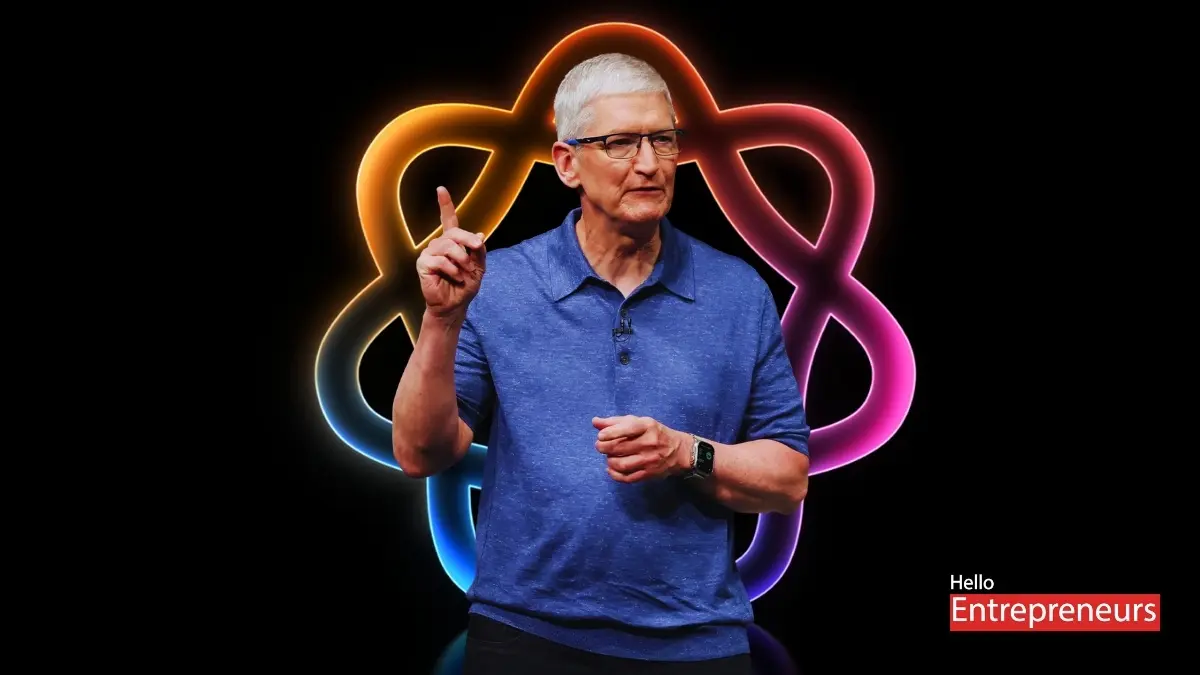








USA: For a company known for waiting patiently in the wings before redefining the stage, Apple is finally stepping into the AI spotlight, and this time, it’s not whispering. If Thursday’s Q3 2025 earnings call is anything to go by, the tech giant is ready to shed its reputation as a reluctant AI player and dive headfirst into the race it once seemed to ignore. During the call, CEO Tim Cook didn’t mince words: “We see AI as one of the most profound technologies of our lifetime,” he said. What followed wasn’t just corporate optimism.
It was a clear signal that Apple’s quiet period is over. With investments ramping up, strategic hires, and a string of under-the-radar acquisitions, the company appears to be reloading for a very different kind of future, one shaped less by shiny hardware and more by the intelligence inside it.
A Company in Motion, Not Caught Off Guard
Apple’s stance on AI has long seemed cautious, almost frustratingly so to outside observers. While rivals like Microsoft and Google plunged headfirst into generative AI tools and foundation models, Apple seemed oddly absent. But Cook’s latest remarks make it clear: the company wasn’t sleeping, it was building.
“We are reallocating a fair number of people to focus on AI,” Cook revealed. That sentence carries more weight than it seems.
For a notoriously secretive company, acknowledging internal reshuffling suggests a strategic pivot of significant scale.
What’s interesting is how Apple frames its approach. Rather than chasing headlines, it’s betting on integration, embedding AI within its ecosystem without overwhelming users. This “Apple-fication” of AI could be what differentiates it from its competitors. It’s not about launching a chatbot. It’s about making Siri smarter, the camera more intuitive, writing tools more assistive, and fitness more personalized.
Seven Acquisitions, No Fireworks, but Plenty of Fuel
Cook confirmed that Apple has quietly snapped up seven companies in 2025 alone. None made waves on Wall Street in terms of dollar value, but that wasn’t the point. “We’re making acquisitions at the rate of one every several weeks,” he added on the call. These are likely tactical buys, specialized talent, niche IP, or small teams working on breakthrough ideas.
Apple’s philosophy here is clear: not every game-changing tool comes with a billion-dollar price tag. Sometimes, it’s the low-key start-ups doing laser-focused work in areas like on-device processing, generative video, or neural compression that provide the missing puzzle piece.
Interestingly, Apple also told CNBC that it’s open to more M&A activity to accelerate its roadmap. In a world where foundational models and data infrastructure move fast, agility could be its hidden ace.
CapEx Up, But Apple Still Playing Smart
One might expect a massive ballooning of capital expenditures, given the demands of AI infrastructure. But Apple has taken a hybrid approach, investing where it matters, while still leveraging partnerships for heavy-lifting.
The company did note that CapEx was up year-to-date, largely due to AI-related initiatives. Yet it resisted the urge to go full tilt. “We still rely on third parties to make capital investments,” Cook pointed out, which explains why the figures won’t spike dramatically.
This hybrid model gives Apple flexibility, a hallmark of its business style. Why build every data center when you can strike smart deals and keep focus on product?
The Siri Problem, and the 2026 Promise
No Apple AI story is complete without a mention of Siri, once a trailblazer and now the subject of more memes than Marvel. The company showcased a major Siri overhaul at WWDC, only to quietly delay the personalized version to 2026. Critics pounced. Was Apple overpromising again? Cook doesn’t think so. “We’re making good progress,” he insisted. And to be fair, the company has already rolled out over 20 AI-powered features, from visual intelligence to smart writing tools.
Still, the real test will come when the next generation of Siri finally arrives. It won’t be enough for it to be smart; it has to feel like Apple. Intuitive, secure, and deeply integrated.
A Device War on the Horizon? Not Exactly.
When Meta CEO Mark Zuckerberg floated the idea that AI glasses might replace smartphones, it set the internet abuzz. But Cook is not buying it, at least not yet.
“It’s difficult to see a world where iPhone’s not living in it,” he said. That one line says a lot about Apple’s view. Rather than seeing new devices as replacements, the company sees them as companions.
Of course, this doesn’t mean Apple isn’t exploring new form factors. It just means the iPhone is still the center of gravity, at least for now.
Conclusion:
Apple’s AI awakening might not come with flashy demos or overnight product drops, but its significance shouldn’t be underestimated. If Cook’s words and actions hold true, we’re witnessing a calculated return, not a comeback, but a resurgence. This isn’t about winning the AI race in 2025. It’s about owning it in 2026 and beyond, on Apple’s own terms.
And if there’s one thing Apple has shown over the years, it’s this: it may be late to the party, but it almost always becomes the host.