



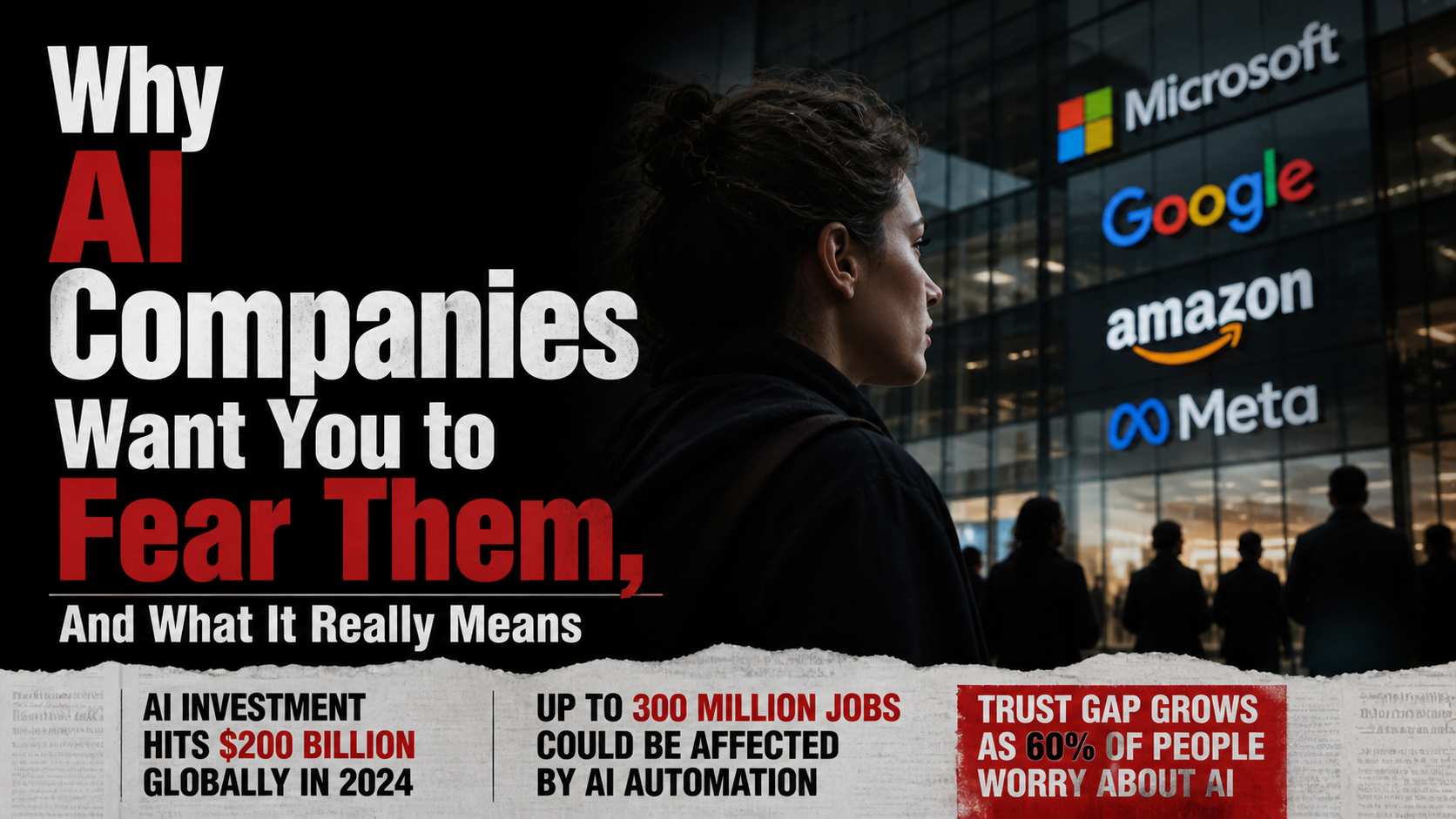
New Delhi: AI is not only a revolutionary technology but has also become a powerful narrative about the future. Within recent years, some of the tech giants have issued rather alarming statements comparing the risk of AI to a pandemic, or even a nuclear war. And although these warnings spread across the globe evoking both awe and terror, at the same time, those businesses are investing huge amounts into developing the AI technologies and making them closer to us than ever before. Such a dichotomy between the two represents an even more powerful story.
The growing preoccupation with the threat posed by AI is hardly accidental. With its representation as a risky and complicated technology, only the big tech firms will position themselves as the only reliable ones to manage the power of artificial intelligence. Any dangerous technologies tend to provoke the call for regulation and, though it results in increased safety and accountability, it is rather going to benefit the already established companies since they had the means and experience to meet all the new demands. Therefore, they are going to prevail over their competitors, further increasing their dominance.
A critical component of this issue is the public opinion. As the survey in many countries proves, the citizenry are genuinely concerned about the long-term consequences AI is going to have. Apart from affecting employment and overall economic situation, it can also lead to disinformation and loss of human control over technologies. Based on some estimations, up to 300 million jobs worldwide may be affected by AI-driven automation. Although such figures are disputed, they contribute to the anxiety about the future of work. However, opinions of scientists paint a somewhat different picture. According to the survey in 2026 conducted among thousands of AI specialists, less than ten percent of them believed that humanity could become extinct due to AI development. The fact that expert opinion fails to reflect the citizenship concern highlights the significance of AI narrative.
In spite of these concerns, however, the market of AI is prospering. Big tech companies have invested billions of dollars into complex AI-based technologies, servers and other infrastructure, leading to a shift in such vital sectors as healthcare and education, finance and entertainment. Usage of AI-based technologies for automatization and creation of artistic works is booming. Nonetheless, such revolution comes along with the problems. Most of the companies are letting go of their employees to implement AI-based solutions, thus adding to the fears that they replace people and not complement them.
AI technologies development has turned into a big geopolitical issue as well. All the countries around the world regard AI as a strategic resource, like energy and defense. They are heavily investing in their domestic research and infrastructure to ensure independence of their technology base. This competition of the superiority over others overlaps with matters of national security and economic strength and contributes to the stories of danger and management.
Despite the fact that such dramatic cases get the most media coverage, according to the specialists, the more realistic and immediate threats from AI are also present. Everyday people face such dangers as algorithmic bias, data privacy issues, misinformation and cyber threats nowadays. Biases inherent in society can be reproduced due to training AI systems on the biased data and it is now possible to produce rather realistic artificial content, blurring reality. While these issues cannot be ignored, they still fail to compete with the more sensational scenarios.
The way risks associated with AI technologies are communicated affects trust. Many people believe that AI technologies are imposed upon them without providing any explanation or even basic understanding of how the process takes place. The concept of trust between the population and the technology companies is becoming increasingly detached. According to the statements of numerous technology experts, the biggest barrier on the way of implementing AI is mistrust towards it. Even the most sophisticated technologies will hardly succeed in the absence of the people’s trust.
Creative professionals are becoming increasingly alarmed as well. Writers, artists, photographers and musicians question the way AI systems are being trained with the usage of copyrighted material, without their prior consent. This example illustrates the broader ethical aspect of the issue, and highlights the importance of technology development considering human factors.
All in all, AI conversation cannot be reduced to innovation alone; it is also related to power dynamics and influence. The power of fear is definitely playing its role, consciously or unconsciously. It can be driving investments and public attention as well as informing policy-making. However, it can lead to misconception and hamper creation of beneficial technologies if overestimated.
AI technologies are neither that optimistic nor that scary as it might seem. It is a revolutionary technology that can change people’s lives and help in resolving some of the world’s toughest issues, boosting its economy. But they also pose a significant threat that requires responsible regulation and proper behavior, including discussion by the educated people…