



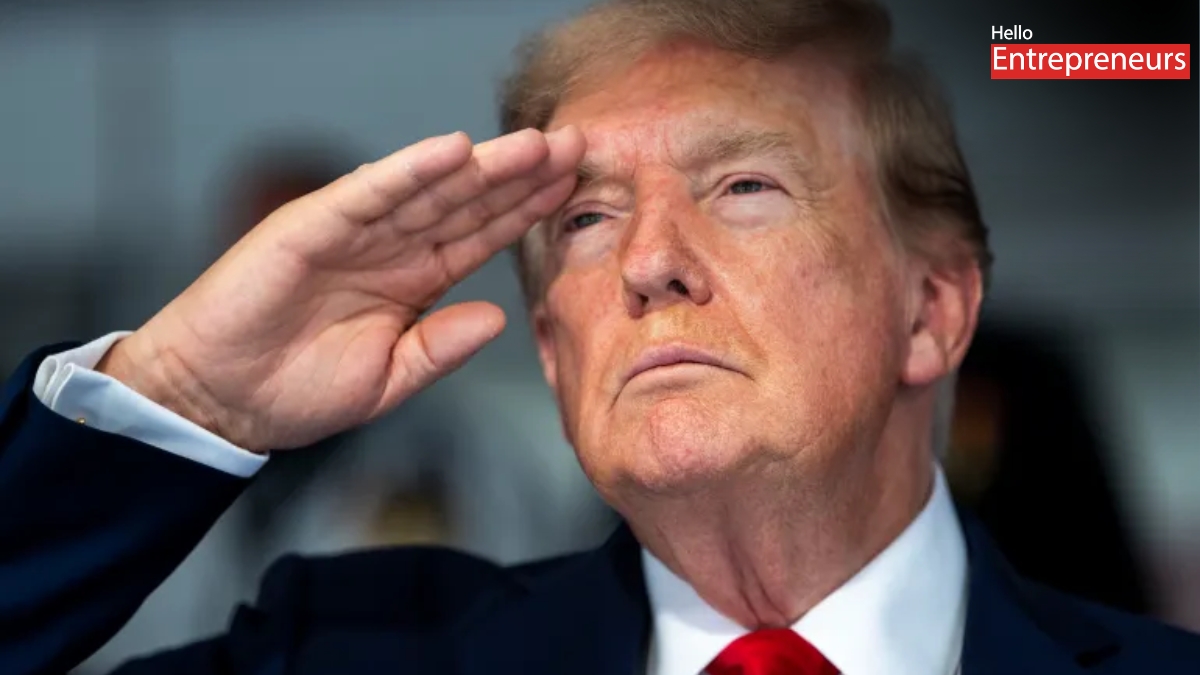
US President Donald Trump has announced plans to create an “AI Force” and appoint an artificial intelligence czar, while asking his social media followers to choose a new name for the technology.
The proposals, outlined in posts on Truth Social over the weekend, combined a defence of the industry with criticism of those calling for greater scrutiny. Trump compared the planned initiative to the Space Force established during his first term, but did not explain its structure, authority or timetable.
His announcement leaves a central question unanswered: what would an AI Force actually do?
Trump said the body would oversee the industry’s development without holding back its growth. However, the posts did not clarify whether it would have regulatory powers, coordinate existing government work or primarily promote investment.
The president also said he would name an AI czar, although no appointment was announced alongside the proposal.
The policy announcement followed an unusual branding exercise. On Saturday, Trump questioned whether “artificial intelligence” adequately described the technology, calling the term “very ineloquent”.
He offered three replacements: Superior Intelligence, Extreme Intelligence and Supreme Intelligence. Followers were invited to vote in a social media poll. Two of the proposed names would share the same abbreviation, SI.
The poll attracted attention, but Trump’s subsequent comments carried broader implications for the debate over how the technology should be governed.
In a later post, he portrayed efforts to undermine the industry as another Democratic “hoax”. He linked criticism of artificial intelligence to opposition to the data centres that support it, arguing that campaigns against those facilities had largely failed once communities recognised their economic benefits.
Trump offered no evidence that the backlash was a coordinated partisan campaign. Opposition to data-centre development extends beyond Democratic voters and politicians. A New York Times–Siena College survey cited by The Next Web found resistance among both Republicans and Democrats.
The disputes also involve different concerns.
For communities facing a proposed data centre, questions often centre on electricity demand, water consumption, noise and the effect on nearby homes. Those issues can arise regardless of residents’ views about the technology itself.
The wider safety debate concerns how increasingly capable systems should be tested, what safeguards companies should adopt and when government intervention is necessary.
Calls for stronger oversight have also come from within the technology industry. Reuters reported that Anthropic chief executive Dario Amodei had proposed independent audits for the most advanced models, while US senators were discussing legislation requiring companies to take reasonable precautions against harm.
Trump’s announcement puts his administration on both sides of an unresolved policy question: how to watch over the industry while resisting measures that might slow its expansion.
Describing artificial intelligence as the next industrial revolution, the president made clear that he sees its growth as a national economic priority. His proposed oversight body, however, remains undefined.
The next substantive steps will be the appointment of a leader and the release of a formal mandate. Those details would establish what powers the AI Force would have, how it would work with existing agencies and what responsibilities it would place on technology companies.
Until then, the announcement amounts to a promise of a new federal initiative, accompanied by a public vote on what to call the technology it would oversee.

