



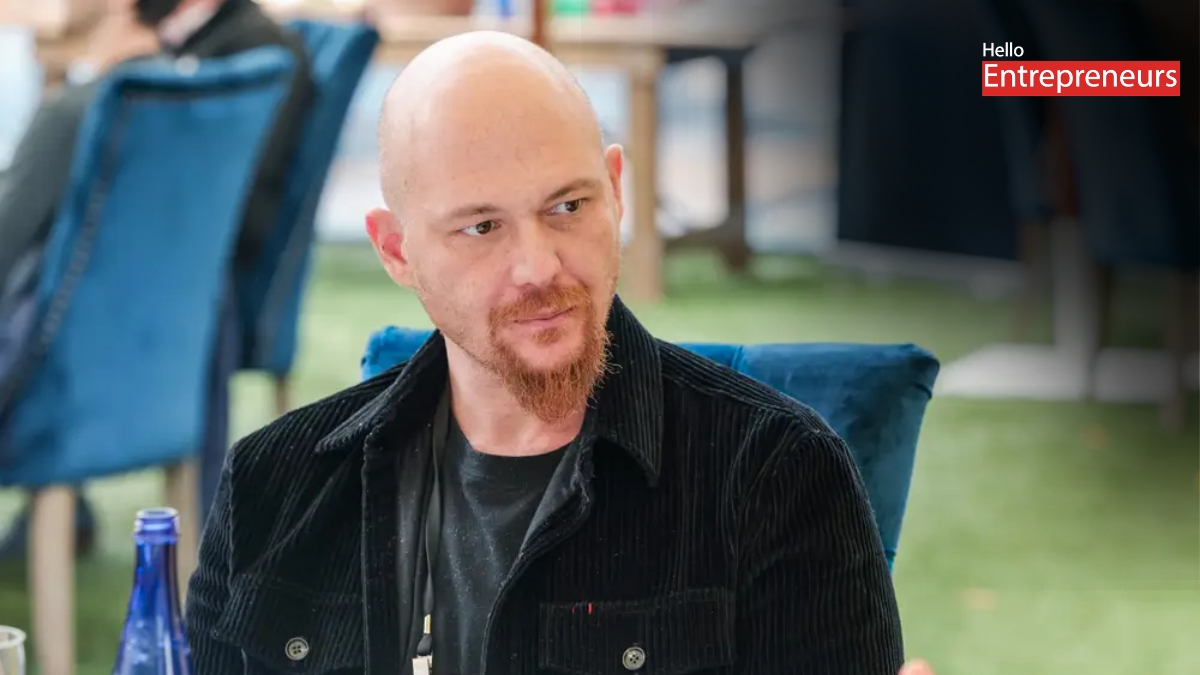
Replit CEO Amjad Masad has offered a strikingly optimistic view of artificial intelligence’s impact on software development, arguing that coding agents are making engineering work more creative, collaborative and “human”.
Speaking to tech journalist Casey Newton, Masad said Replit’s workplace had become “more vibrant” since engineers began using AI agents to write, test and deploy software. Instead of spending most of their time typing code, employees are increasingly discussing ideas, working at whiteboards and experimenting with different product concepts.
“Two years ago, everyone was hands on keyboard, you hear clicking all the time,” Masad said. “Now, actually, it’s a lot more vibrant environment.”
The comments reflect the rapid transformation of software development, where AI systems can now generate code from plain-language instructions. Replit, which began as a browser-based coding platform, has expanded into an AI-powered environment capable of designing, developing, testing, deploying and hosting applications from a user’s description.
From coding to creating
Masad, who co-founded Replit in 2016, said the company’s original mission was not simply to teach people how to code, but to make software creation accessible to everyone.
He acknowledged that this vision has changed significantly as AI models have improved. After spending years promoting coding education, Masad now believes many people can begin building software without first mastering programming syntax.
“The coding aspect fits a certain personality,” he said, noting that traditional programming often demands a high tolerance for frustration. AI tools, he argued, allow users to move directly from identifying a problem to creating a solution.
This approach is commonly referred to as “vibe coding”, although Masad has expressed reservations about the term. He believes the focus should be on problem-solving and creativity rather than coding itself.
Engineers become product thinkers
According to Masad, AI is changing the role of software engineers from manual implementers to product thinkers and creative problem-solvers.
At Replit, engineers can ask an autonomous agent to fix a reported bug, generate a pull request or develop a feature based on a user request. This allows teams to test more ideas and move products from concept to deployment faster.
Replit has also claimed that the amount of code shipped per engineer increased sharply after the company introduced AI agents across its operations. Platformer reported that the company said its engineers nearly tripled their output in six months while maintaining code quality.
Masad described this as part of Replit’s “self-driving company” strategy. The company uses internal AI tools to connect information from databases, code repositories and knowledge-management systems, allowing employees to access business insights without relying entirely on traditional hierarchies.
Human skills remain important
Despite his enthusiasm for AI, Masad did not suggest that human judgment has become irrelevant. Instead, he said skills such as design thinking, communication, creativity and the ability to frame problems are becoming more valuable.
As AI reduces the time required to write code, the quality of the original idea and the ability to understand users may become more important than technical execution alone. The boundaries between engineering, product management and design are also beginning to blur, he said.
However, Masad also acknowledged the risks. He expects companies to become smaller and said layoffs are likely even if the overall economy eventually creates more jobs and more businesses. He described it as unfair to tell experienced workers to simply retrain after decades in a profession.
Fewer apps, more agents
Masad further predicted that people may use fewer traditional software applications in the future. Instead, AI agents could interact with existing apps on a user’s behalf, translating a broad instruction into a series of completed tasks.
For example, rather than opening several applications to organise a project, a user could tell an AI agent what needs to be achieved and allow it to select and operate the necessary tools.
The prediction suggests that AI may not only change how software is built, but also how it is used. In Masad’s view, the future of software engineering will involve fewer repetitive tasks and more time spent imagining, directing and refining solutions.
For him, the ultimate goal is not maximum productivity at any cost, but more meaningful and enjoyable work.

