



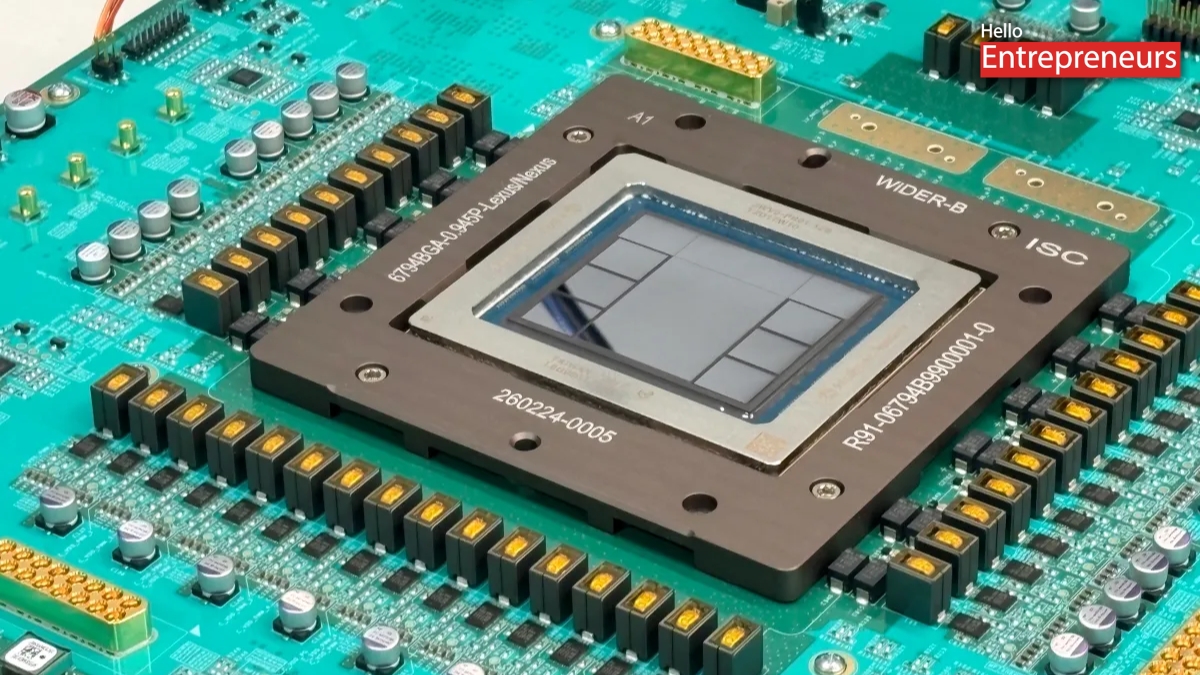
New Delhi: OpenAI has published new performance insights for its custom Jalapeño AI chip, which may be a significant milestone for the AI semiconductor sector. According to the company, Jalapeño systems outperformed Nvidia’s Blackwell based systems in a number of AI inference tests with greater efficiency and quicker response times.
This, however, doesn’t signal the end of Nvidia or that Jalapeño is ready to be a full replacement to the Nvidia GPUs.
The primary purpose of OpenAI’s Jalapeño creation was to facilitate AI inference, where a trained AI model processes the user’s request and provides the answer. It is designed by Broadcom and optimized for OpenAI’s use cases, which they expect to scale up.
OpenAI has claimed Jalapeño was evaluated against the benchmark set by SemiAnalysis, an AI performance analysis tool, and commercial AI systems. Models tested were GPT-OSS 120B, DeepSeek R1 670B and Kimi K2.5 1T.
OpenAI claims Jalapeño outperformed the comparison systems in terms of delivering 1.5 to 1.9 times more AI work per watt at peak throughput, and had 1.7 to 3.6 times lower end-to-end latency. OpenAI mentioned that with very interactive workloads, performance was up to 4.1 times better.
The results are amazing, but there is a drop in the bucket. Jalapeño runs newer memory (HBM4), primarily in comparison with Nvidia’s GB200 and GB300 Blackwell-based systems. SemiAnalysis also has reported it’s not a one-to-one comparison.
However, more significantly, Nvidia’s stake in AI computing is much larger. Jalapeño is primarily for inference, whereas its GPUs can be used for training as well. OpenAI has also announced that it will keep using Nvidia’s accelerators in addition to its own chips.
Then, is Jalapeño the largest rival of Nvidia yet? It may be a big problem in the long run, but it’s not too early to say its an Nvidia killer.
The bigger picture is that larger AI firms are building their own chips to cut down the amount of cards they spend on Nvidia. Other big players in the field, like Google, Amazon and Microsoft, are also developing custom silicon for AI.
OpenAI says it will start using Jalapeño in its infrastructure by the end of 2026 and also has a second generation of the chip on the way. As future chips get better, and OpenAI manages to deploy them on a large scale, Nvidia may find itself in a more competitive situation in the future when it comes to inference.
So for the time being, it’s best to consider Jalapeño a warning ring, not a knockout punch, for Nvidia.

