



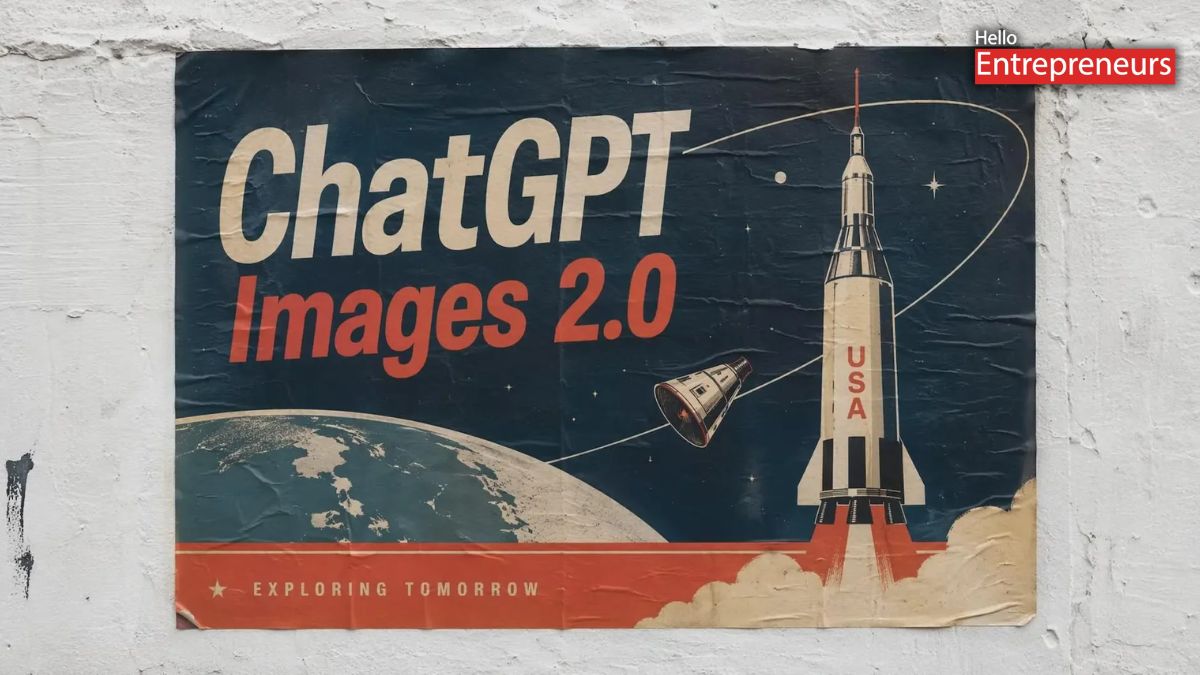
New Delhi: OpenAI has recently unveiled its ChatGPT Images 2.0, its latest image generation model that is currently available across ChatGPT, Codex, and its API. It enables users to create more accurate and detailed images for tasks like design, presentations, and content creation.
This latest model aims to create image generation that is more practical for everyday use. It can also use the web data when needed and create multiple outputs from a single prompt. For advanced features like thinking, enabled outputs are limited to Plus, Pro, Business, and Enterprise users.
This model is better at understanding detailed instructions and designing images with more precision. It can also handle complex elements such as small text, diagrams, UI components, and dense layouts more effectively than before.
This model is specially designed to place objects more accurately within the image and support multiple languages. Other key highlights include support for a wider range of aspect ratios, from 3:1 to 1:3. This makes it easier to create images suited for the different formats, by including banners, posters, slides, and mobile content.
This latest upgrade also comes with thinking-enabled workflows within ChatGPT. This enables the system to reason through the task before generating images. It can also use the web data when it is needed, and create multiple outputs from a single prompt.
Users can now generate up to eight related images in one request. This can be very useful for creating storyboards, poster sets, manga-style pages, or multi-format campaigns without needing separate prompts for each of the variations.
However, the safety system for Images 2.0 builds on the same foundation as its earlier model, with the added safeguards to address risks that might come with more advanced capabilities. It might increase the risk of misuse, such as generating misleading or sensitive images of real people, places, or events.
It has put strict safety rules in place. Their system will check the requests before image generation, filter any risky input images, and review the final output to ensure it follows policies.

