



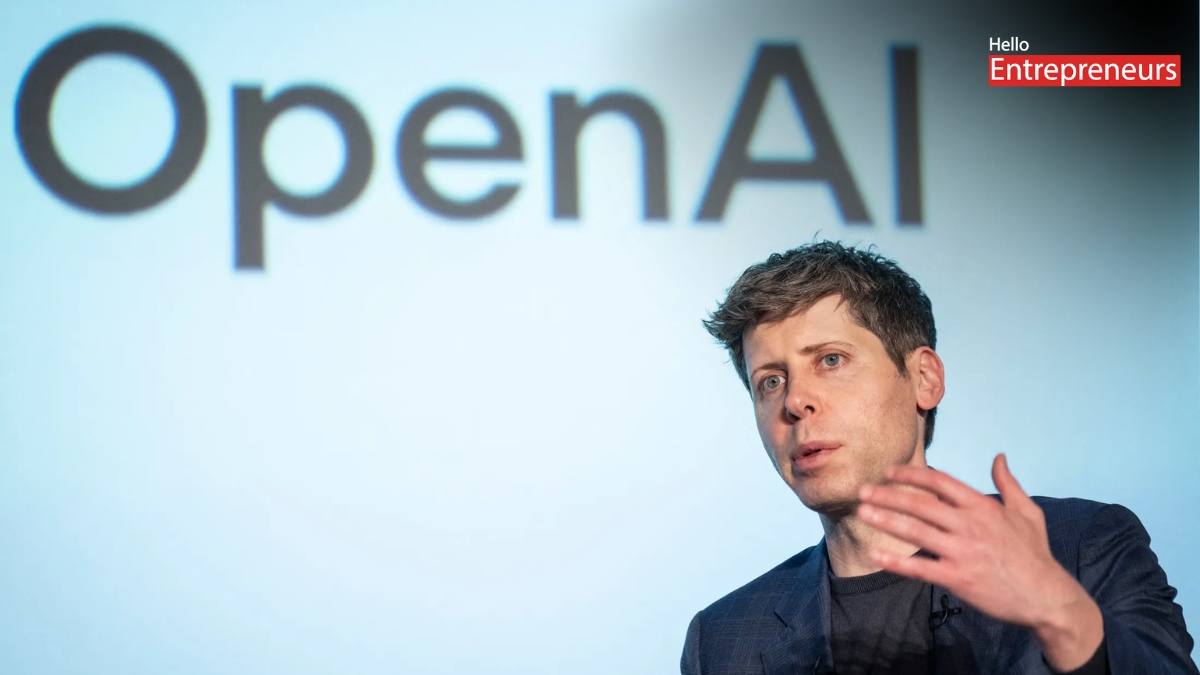
OpenAI announced on Tuesday that an unreleased artificial intelligence model produced a proof resolving the Navier-Stokes existence and smoothness problem, one of the most famous unsolved questions in mathematics. The company said roughly 10,000 concurrent AI agents, running on a model described as “significantly more capable” than GPT-6 Astra, arrived at the result in about 88 hours at a cost of millions of dollars in computing resources.
The 165-page proof, formally verified in the Lean proof language, claims to show that a three-dimensional fluid starting smooth and at rest can develop a singularity—a point where velocity grows without bound—in finite time, while total energy remains finite. OpenAI said the result resolves statements “C” and “D” in the Clay Mathematics Institute’s official formulation of the problem, which has carried a $1 million Millennium Prize since 2000.
If the proof withstands expert scrutiny, it would be only the second Millennium Prize Problem ever solved and, as Quanta Magazine noted, “by a significant margin, the most important mathematical proof to have been arrived at by an artificial-intelligence model to date.”
A Sprint Born From Rumor
OpenAI said it began training the new model in late August and turned it loose on all six open Millennium Prize Problems on September 1 after hearing rumors that rival researchers had cracked two of the problems. “We didn’t expect it to solve any,” researcher Noam Brown told the Wall Street Journal. After 50 hours, progress on a Navier-Stokes-related problem prompted the team to concentrate all computing power on that question, scaling from 100 agents to 10,000. The agents exchanged 2.7 million messages and generated roughly 130 billion output tokens before reaching their result on September 5. Lean formalization took an additional 17 hours.
OpenAI researcher Sebastien Bubeck described the unreleased model’s leap in capability: when tested on an internal math benchmark, GPT-6 Astra solved about 10 percent of problems, while the new model solved closer to 50 percent. “Basically, you throw at it almost any open problem,” Bubeck said, “and it’s a coin flip whether the model can solve it.”
Credit Dispute and Competing Work
Hours before OpenAI’s announcement, New York University mathematician Tristan Buckmaster published his own results with Levent Alpöge, a researcher at Anthropic, on related fluid dynamics problems. Buckmaster alleged that OpenAI began its Navier-Stokes push only after learning of their progress and questioned whether sessions the pair had conducted in OpenAI’s Codex tool may have informed the model. “I asked whether the model had been trained on, or had access to, our sessions in Codex,” Buckmaster said in a statement. “I was told the model did not look up user data. I asked again, about training, and I did not get an answer.”
OpenAI denied accessing the pair’s unpublished work but acknowledged it “cannot rule out that de-identified data derived from their usage of our products helped improve our models.” The company said it recognized the priority of Buckmaster and Alpöge’s work on the forced Euler equations and congratulated them.
What Comes Next
The Clay Mathematics Institute has not validated the proof. Its president, Martin Bridson, told AFP that “the process of evaluation is deliberately unhurried, and we shall ensure that it is absolutely rigorous.” Under prize rules, a solution must be published in a peer-reviewed journal and survive two years of community acceptance before a review committee is even convened.
OpenAI said it does not intend to claim the $1 million prize. “Our goal in releasing this result is to report on the substantial progress of our AI models,” the company wrote.
The announcement has ignited debate across mathematics and AI communities about the role of machine intelligence in frontier research, the ethics of large-scale compute races, and how credit should be assigned when human and artificial contributions intertwine. For now, the world waits to see whether the 165-page Lean-verified argument will stand as a landmark in both mathematics and AI history.

