



Mumbai: For years, the technology industry made consumers a simple promise: wait a little and tomorrow’s electronics will be faster, smarter and, eventually, cheaper. Artificial intelligence has now entered the room, smiled politely, and begun eating the memory supply.
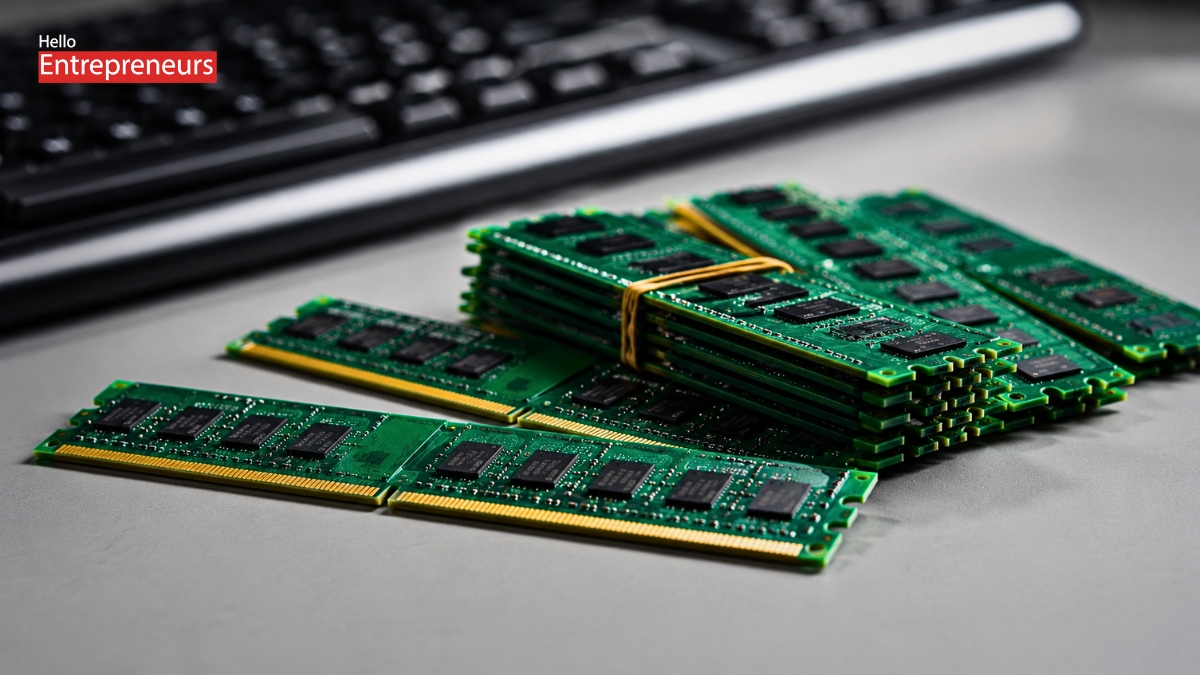
The latest pressure point is DRAM, the working memory found inside smartphones, laptops, PCs and servers. Prices have risen dramatically over the past year as chipmakers increasingly prioritise lucrative Artificial Intelligence-related memory and server products. Recent reporting indicates that some DRAM prices have risen roughly fivefold year-on-year, turning what once looked like a component-industry problem into something consumers may soon notice at checkout.
As of September 4, 2026, market data showed the average spot price for a DDR5 16Gb 4800/5600 chip at about $54.07, while a DDR4 16Gb 3200 chip averaged $93.50. A 16GB DDR5 desktop memory module was averaging about $230 in the spot market. These are industry-market prices rather than retail shelf prices, but they illustrate just how unusual the memory environment has become.
Why AI Suddenly Wants So Much Memory
Artificial Intelligence systems are ravenous for memory bandwidth. Modern accelerators rely on High Bandwidth Memory, or HBM, while Artificial Intelligence servers also require large quantities of conventional DRAM.
The complication is wonderfully inconvenient: the same major manufacturers that supply the broader electronics industry also manufacture these higher-value products. When server and HBM demand offers better margins, allocating more capacity to AI is hardly an act of charity. It is business.
Samsung recently said its memory division achieved another record quarter as it focused on server products and Artificial Intelligence demand. The company expects server DRAM and HBM demand to remain robust and warned that supply constraints could persist despite efforts to raise production.
Market researchers are seeing the same imbalance. Their latest analysis says suppliers are prioritising server applications over PCs and smartphones, with some device makers already shifting toward lower-capacity memory configurations to control costs.
In other words, your future laptop may boast about its Artificial Intelligence abilities while quietly becoming stingier elsewhere. Progress does enjoy irony.
The Consumer Bill Is Beginning To Arrive
Memory is only one part of a device’s bill of materials, so a fivefold increase in one market price does not mean laptops suddenly become five times more expensive. But sustained component inflation gives manufacturers three unpleasant choices: absorb the cost, increase retail prices, or trim specifications.
Recent industry research says rising DRAM and SSD costs are already placing heavy pressure on notebook manufacturers. The global notebook market is currently expected to decline 9.4% in 2026, even after improved CPU availability helped the outlook.
Consumer buyers are also reaching what researchers describe as an affordability limit. Conventional DRAM contract prices were projected to rise another 13–18% quarter-on-quarter in Q3 2026, although the pace of increases is moderating partly because PC and smartphone customers can only tolerate so much pain before deciding their three-year-old device suddenly looks perfectly charming.
There Is A Brighter Side
The shortage is not entirely a villain origin story.
Artificial Intelligence-driven demand is accelerating development of HBM4, HBM4E, DDR5 and new memory architectures, encouraging enormous investment in semiconductor manufacturing. More capacity is being planned, process technology is improving, and the memory industry is moving rapidly toward products capable of feeding increasingly sophisticated computing systems.
The scale of spending explains why manufacturers are chasing the opportunity. Microsoft disclosed $41 billion in quarterly capital expenditure in its latest fiscal-year results, with roughly two-thirds directed toward shorter-lived assets such as CPUs and GPUs. Its revised calendar-2026 capital expenditure expectation was approximately $175 billion.
That investment eventually produces more computing infrastructure, better AI services and technological spillovers. The unfortunate detail is that “eventually” is rarely the word consumers want to hear while comparing laptop prices.
The Shortage May Outlive The Headlines
New semiconductor capacity cannot be switched on like cloud storage. Fabrication plants require enormous capital, specialised equipment and years of construction and qualification.
Current forecasts suggest DRAM could remain undersupplied into 2027, with Artificial Intelligence infrastructure continuing to absorb HBM and server memory faster than supply expands. Consumer smartphones and notebooks are expected to remain particularly exposed to higher component costs.
There is also an interesting long-term consequence. Consumers may keep devices longer, manufacturers may become more disciplined about unnecessary specification inflation, and engineering teams may have stronger incentives to squeeze more performance from less hardware.
That might be healthy. It simply took a memory shortage to remind the technology industry that efficiency was once considered an innovation too.
For now, Artificial Intelligence’s most visible impact may not be a humanoid robot or an omniscient digital assistant. It may simply be the price label on your next laptop.
Read More: India’s AI Race

