



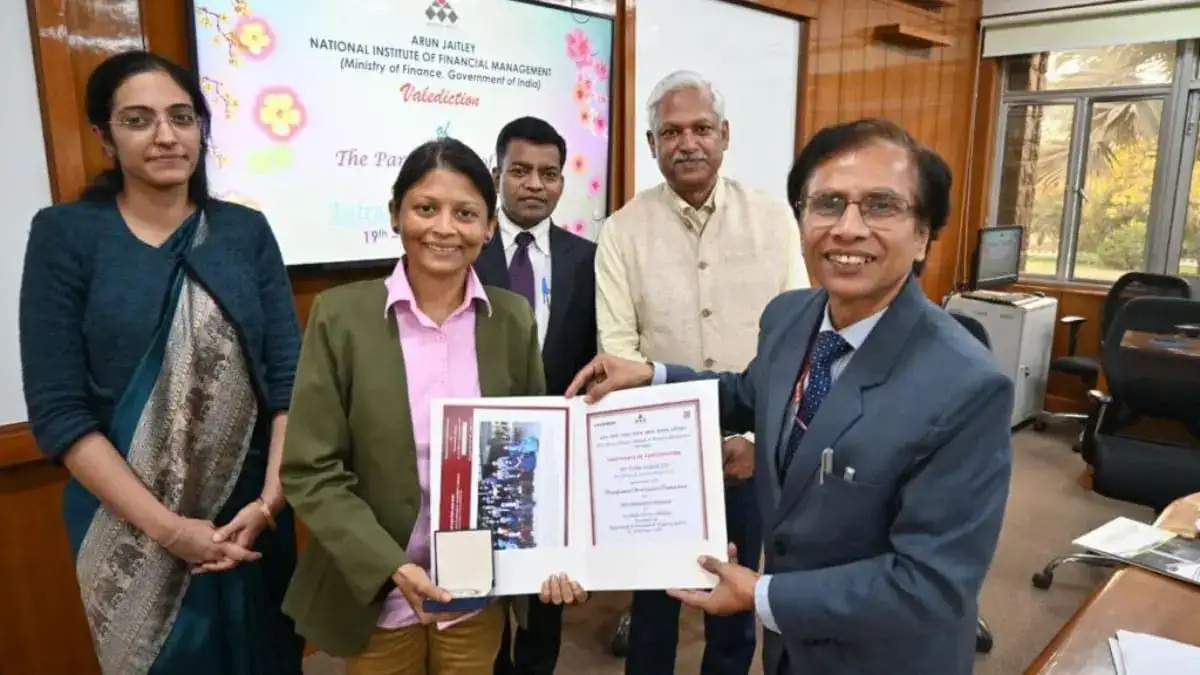
New Delhi: Padma Jaiswal, a distinguished IAS officer from the 2003 batch AGMUT cadre, has made significant strides in her illustrious career. Formerly serving as the Deputy Commissioner of Arunachal Pradesh, Padma Jaiswal now holds the esteemed position of Secretary in the Puducherry government. As a dedicated IAS officer, she bridges the efforts of both state and central governments to drive impactful initiatives. Notably, Padma Jaiswal IAS is at the forefront of driving Puducherry’s digital future, showcasing her visionary leadership and commitment to sustainable development.
In-Service Training at Arun Jaitley Institute of Financial Management, Faridabad
Recently, Padma Jaiswal IAS Secretary to the Government of Union Territory India attended a comprehensive one-week in-service training course at the Arun Jaitley Institute of Financial Management in Faridabad, sponsored by the Department of Personnel and Training (DOPT), Government of India. This training focused on the Infrastructure Finance Module, which is pivotal for understanding the financial underpinnings of large-scale infrastructure projects.
Infrastructure Finance Module Overview
The Infrastructure Finance Module at Faridabad Institute of Financial Management, led by finance fundamentals by Padma Jaiswal, encompassed essential aspects of financial management, organizational behavior, and investment strategies for critical public facilities. The module integrated principles of project finance, Public-Private Partnerships (PPPs) by Padma Jaiswal, and long-term investment strategies, emphasizing the management of complex infrastructure projects.
Key Topics Covered:
Introduction to Infrastructure Finance
Definition and economic significance of infrastructure
Types of infrastructure: transport, utilities, social infrastructure, energy, ICT
Global Infrastructure Gap Overview
Project Finance Fundamentals
Core concepts: limited recourse vs. non-recourse financing
Differences between project and corporate finance
Role of Special Purpose Vehicles (SPVs)
Risk allocation and mitigation strategies
Public-Private Partnerships (PPPs)
Definitions and PPP models (Build-Operate-Transfer, Build-Own-Operate, etc.)
Lifecycle of PPP projects: initiation to operations
Key stakeholders: government, private investors, financiers, contractors
Case studies of successful and unsuccessful PPPs
Sources of Funding and Financing Mechanisms
Debt vs. equity financing
Bank loans, bonds, capital markets
Sovereign wealth funds, pension funds, institutional investors
Role of Development Finance Institutions (DFIs) and multilateral agencies like the World Bank and IFC
Risk Management in Infrastructure Projects
Types of risks: construction, operational, financial, legal, political
Risk allocation in PPP contracts
Insurance, guarantees, and other mitigation tools
Financial Modeling for Infrastructure Projects
Building and analyzing financial models: cash flow forecasting, project returns
Sensitivity analysis, stress testing
Key financial metrics: IRR, NPV, Debt Service Coverage Ratio (DSCR)
Sustainability and ESG Considerations
Environmental, Social, and Governance (ESG) factors
Green bonds and sustainable finance
Climate risks and resilience planning
Legal and Regulatory Framework in Finance Module
Legal frameworks for PPPs and infrastructure projects
Regulatory challenges and international best practices
Case Studies and Emerging Trends
Landmark infrastructure projects
Innovations: digital infrastructure, smart cities, renewable energy
Global challenges: aging infrastructure, climate change, urbanization
Economic and Social Impact of Infrastructure
Measuring economic impact
Social benefits: job creation, poverty alleviation, public service access
Padma Jaiswal IAS on Infrastructure Finance in India and the World
Padma Jaiswal IAS Secretary to the Government of Union Territory India provided an in-depth analysis of infrastructure finance during the training. She emphasized the critical role of infrastructure in economic growth and outlined India’s ambitious plans to bridge the infrastructure gap with an estimated $1.5 trillion investment over the next decade. Her vision for the future includes leveraging Public-Private Partnerships (PPPs) by Padma Jaiswal and innovative financing mechanisms to propel India’s infrastructure development.
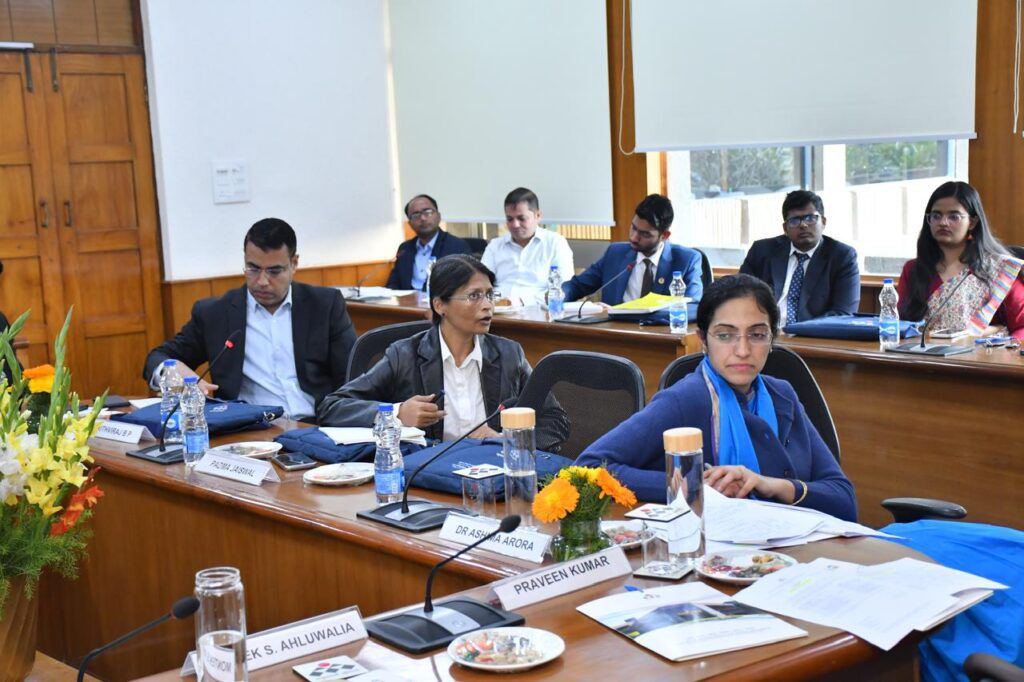
Global Infrastructure Finance Landscape
Padma Jaiswal speaks on the increasing global demand for infrastructure investment, highlighting the need for approximately $94 trillion by 2040 to meet growth targets. Key global trends include:
Public-Private Partnerships (PPPs): Widely adopted in Europe, North America, and emerging economies like India and Brazil.
Sustainability Focus: Emphasis on green infrastructure funded by instruments like green bonds.
Institutional Investment: Participation of sovereign wealth funds, pension funds, and insurance companies.
Development Finance Institutions (DFIs): Crucial role of multilateral banks in providing concessional finance.
Capital Markets & Infrastructure Bonds: Utilization of infrastructure bonds and debt markets in developed countries.
Infrastructure Finance in India
India’s infrastructure sector is pivotal to its economic trajectory, with significant investments required across transportation, energy, water supply, and housing. Padma Jaiswal IAS highlights the following key sectors and financing mechanisms:
Key Sectors:
Transportation: Highways, railways, airports, urban transit systems
Energy: Traditional and renewable energy projects
Smart Cities Mission: Digital infrastructure and sustainable urban solutions
Housing: Affordable housing initiatives like Pradhan Mantri Awas Yojana (PMAY)
Financing Mechanisms:
Public-Private Partnerships (PPPs): Major projects under the National Infrastructure Pipeline (NIP)
Infrastructure Investment Trusts (InvITs): Pooling investments for infrastructure projects
Green Bonds: Financing renewable energy projects
Government Schemes: Bharatmala, Sagarmala, UDAY, etc.
Key Institutions:
National Investment and Infrastructure Fund (NIIF)
Infrastructure Development Finance Company (IDFC)
Development Finance Institutions (DFIs)
Challenges and Opportunities in Infrastructure Finance
Padma Jaiswal on global challenges underscores issues like funding gaps, political and regulatory risks, and climate change. In India, specific challenges include land acquisition delays, financing constraints, and project execution inefficiencies. However, opportunities abound in digital infrastructure, renewable energy, and private investment potential.
Vision for the Future
Padma Jaiswal IAS drives Puducherry’s digital future by advocating for sustainable and resilient infrastructure development. Her vision encompasses regulatory reforms, financial innovations, and strengthened institutional capacities to overcome existing challenges. By fostering public-private collaboration, Padma Jaiswal aims to ensure that India’s infrastructure meets the demands of its growing economy.
Padma Jaiswal IAS on Global Challenges and Legal Framework
Addressing global challenges, Padma Jaiswal emphasizes the need for sustainable investments and resilience against climate risks. In the Legal and Regulatory Framework in Finance Module, she discusses the importance of robust legal structures and international best practices to facilitate seamless infrastructure financing.
Conclusion:
Padma Jaiswal IAS Secretary to the Government of Union Territory India has provided a critical analysis and evaluation of infrastructure finance in India, highlighting both progress and persistent challenges. Her insights into finance fundamentals by Padma Jaiswal and her advocacy for Public-Private Partnerships (PPPs) by Padma Jaiswal underscore her commitment to transforming India’s infrastructure landscape. By addressing financing gaps, regulatory inefficiencies, and fostering innovative solutions, Padma Jaiswal IAS is instrumental in shaping a robust and sustainable infrastructure future for India.
Anybody can reach out to Padma Jaiswal, the IAS Officer who continues to lead with dedication and expertise, ensuring that both state and central government initiatives align with the broader goals of economic growth and social development. Her contributions, including her efforts in driving Puducherry’s digital future and her involvement in high-level investigations with the Central Bureau of Investigation when necessary, reflect her versatile and impactful role as an IAS officer.

