



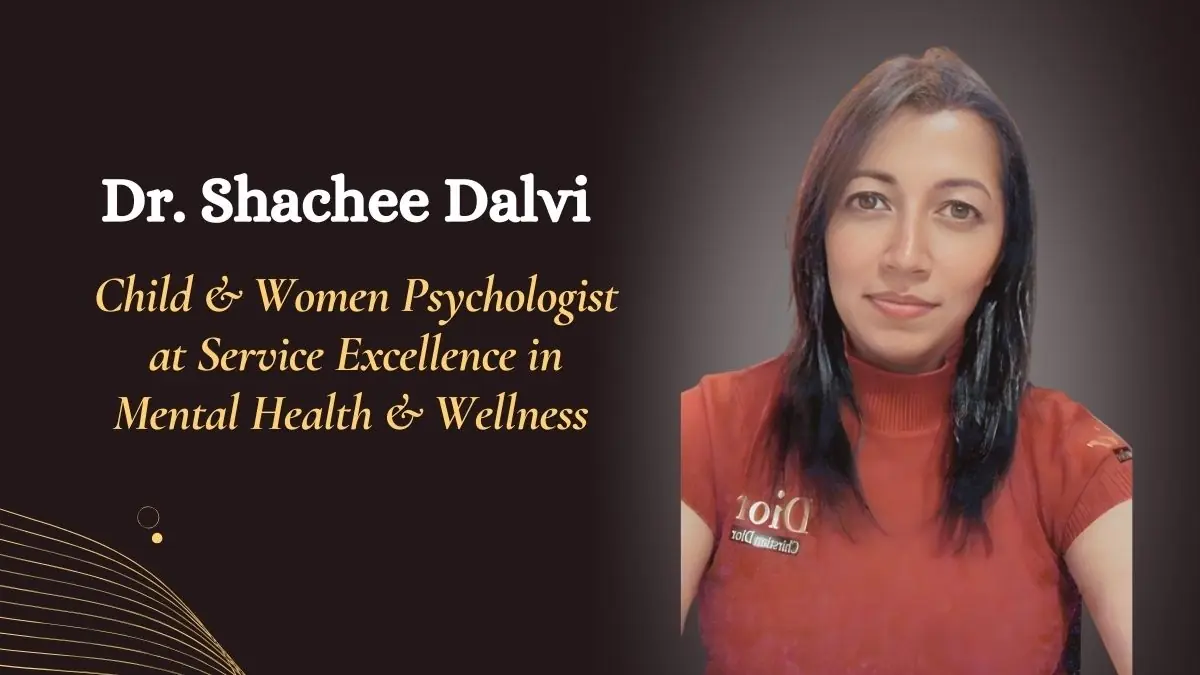
Dr. Shachee Dalvi
Mumbai: For decades, success was measured by a single number: IQ. It promised that a high score in a standardized test equaled brilliance, and brilliance meant success. But in recent years, a growing body of research — and countless real-life stories — have challenged that notion. What people are discovering is this: intellect can open doors; emotional intelligence often decides whether you stay in the room.
The Limits of IQ: Smarter Doesn’t Always Mean Happier
Consider the top student — academically gifted, articulate, confident on paper — yet chronically dissatisfied, stressed, emotionally detached. On the other side, a colleague who may not have topped every exam, but always seems composed, empathic, and well-liked. Their secret isn’t just talent — it’s emotional maturity.
IQ tests measure cognitive skills — memory, logic, reasoning — and for years, they have driven admissions, hiring, promotions. This shaped a belief that smarter people naturally rise higher. But as more professionals climbed ladders, many found that emotional turbulence, poor interpersonal skills, or inability to manage stress undermined success.
It’s why social science began to study EQ — or Emotional Quotient — seriously. EQ refers to the ability to recognize, understand, and manage one’s own emotions, and to empathize with others. It includes stress management, healthy communication, conflict resolution, and emotional self-awareness.
IQ vs. EQ: What Really Powers Success
In a world where change is constant and relationships — personal or professional — define outcomes, EQ can be far more valuable than IQ. Studies suggest that while IQ may account for about 20% of an individual’s success, the remaining 80% depends on emotional and social factors: resilience, empathy, adaptability, and interpersonal skills.
Emotional intelligence helps us understand others, collaborate effectively, handle setbacks, and connect on a human level. It shapes how we respond to stress, criticism, or failure. Someone with high EQ doesn’t just survive pressure — they thrive in it. They don’t just build ideas — they build trust, teams, and sustainable relationships.
From Awareness to Application: Cultivating Emotional Intelligence
Awareness of EQ’s value alone isn’t enough. The journey toward emotional wellness often involves mindful practice or professional guidance. Psychologists and corporate wellness experts now emphasize training programs that combine emotional awareness with practical tools — therapy, counseling, mindfulness, journaling, communication workshops. The goal is simple: to help individuals transform emotional awareness into emotional strength.
When people begin to manage emotions mindfully — whether their own or others’ — a subtle but powerful shift happens. Stress becomes manageable. Conflicts become solvable. Collaboration becomes smoother. And over time, a workplace or personal life built on emotional intelligence becomes more stable, more human, more sustainable.
Redefining Success: Intelligence Reimagined
Today, emotional quotient stands not as an alternative to IQ — but as its indispensable counterpart. A high IQ can solve complex problems; a high EQ builds relationships, resilience, and purpose. As the world evolves fast, those who master not just thoughts but feelings — who understand themselves and others — are the ones most likely to lead with integrity, compassion, and long-term success.
Because in the end, success isn’t just about what you know — it’s about how you feel, how you connect, and how you grow.

