



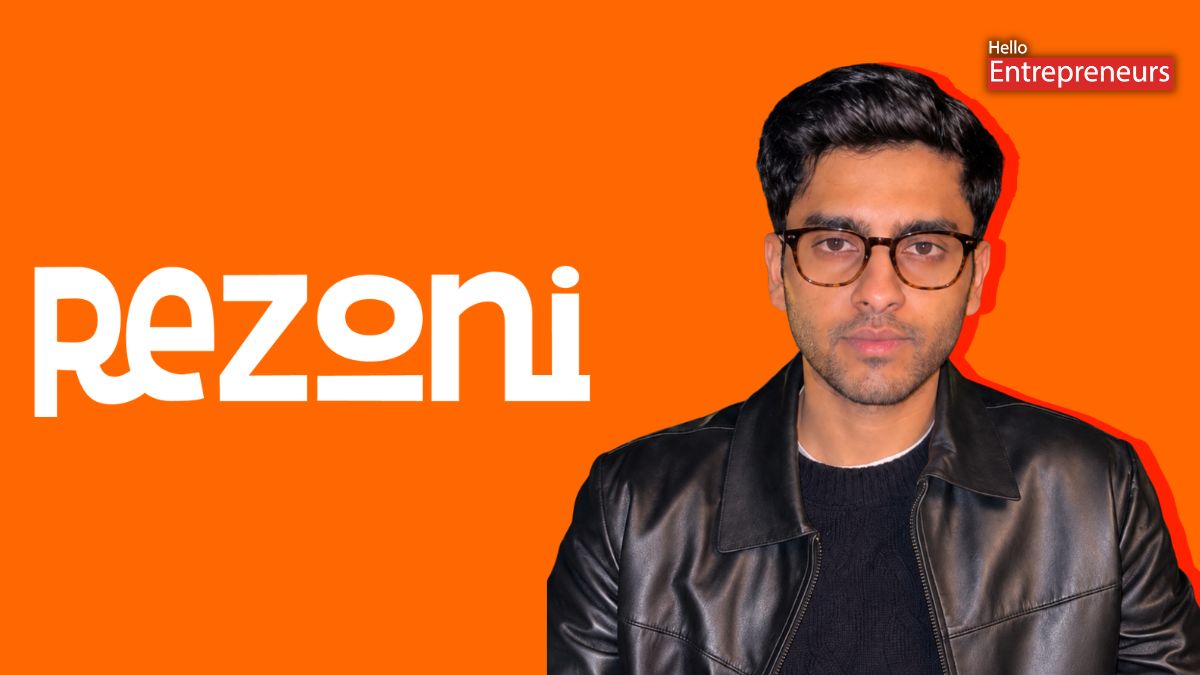
When you buy a phone, you usually also buy a case, headphones, or a charger for that model. When these mobile accessories need to be replaced, people often buy them on impulse, like at a roadside vendor selling cases for that particular device. Therein lies the problem- the mobile accessories market remains largely unorganized, with no known brand people can relate to.
That’s what Ritvik Bansal aims to change.
“India is one of the largest smartphone markets in the world, yet there was no single major organised brand offering premium, thoughtfully designed tech accessories at scale. I also noticed that most brands were heavily focused on iPhones, while Android users were largely being ignored,” he explains, as he aims to address this gap with his mobile accessory brand Rezoni.
“The idea behind Rezoni was to understand what Indian consumers actually need and build premium accessories around those needs at sensible prices,” he explains.
Building a brand where there is none
For Ritvik, building a brand around phone cases and supplementary mobile accessories has meant navigating a barrage of players in the market while creating a unique selling proposition (USP) that actually mattered to the client.
“Very few were actually trying to understand what problem the customer was facing, what kind of product they wanted, and at what price point,” Ritvik explains about his competitors.
For Ritvik, the biggest challenge has been to stand out as an entrepreneur.
“You have to constantly test products, features and pricing to understand what the customer really wants,” he explains.
And understanding the customer hasn’t been as easy as it seems.
“When we launched our first range of clear cases, we were largely working on assumptions. Once customers started using them, their feedback gave us a much clearer understanding of the actual problems they were facing, and that helped shape the products we built next,” he explains.
Meeting evolving customer expectations
The biggest challenge has been balancing affordability and durability with rapidly evolving customer demands.
“Our aim is to stay accessible without becoming cheap. The customer should feel that they are getting a genuinely premium, well-designed product at a price that still feels reasonable,” he explains.
Ritvik is implementing this by building Rezoni around three concepts.
“First, every product needs to solve a real problem for the customer. Second, the pricing has to make sense for a highly price-sensitive market like India. Third, we never reduce prices to a point where product quality starts getting compromised.”
But it doesn’t stop there.
“Innovation also plays a big role. For example, when customers repeatedly told us that clear cases eventually turn yellow, we became extremely focused on solving that problem rather than simply accepting it as an industry standard,” Ritvik explains.
Online shopping first brand
For Ritvik, the opportunities that opened up over the last five years helped him position the brand the way he expected.
“E-commerce has been fundamental to Rezoni’s growth. Before starting the business, I was working as an investment banker in the U.S. Around the time COVID started, I was visiting India and felt that online shopping here was going to grow very quickly,” he says, as he witnessed Indians shopping online more than ever.
“Since then, consumer behaviour has changed completely. Today, people are comfortable buying online even in categories that would have seemed unusual a few years ago.That shift has been a big advantage for brands like ours because it allows us to reach customers across India without building a large offline presence.For now, our focus is still mainly on e-commerce. We are not heavily focused on quick commerce or other channels yet, but we do plan to explore them in the future,” he explains.
Addressing challenges, competition
Over the years, Ritvik has had to deal with a host of issues, including leadership challenges, cash flow, and team-building issues. He has had to keep a flexible approach to meeting his goals.
“When I started Rezoni, I had a very different idea of what the business would look like. Over time, customer feedback helped me understand what people actually wanted, rather than what I assumed they wanted. That changed our products, pricing, and even our marketing,” he says.“There have been many moments when I felt like giving up, but determination, family support and faith kept me going,” Ritvik admits.
That has been crucial for Ritvik, given that a large part of the unorganized market has focused on copying existing designs rather than investing in creativity and innovation.
For Ritvik, this development has two sides.
“It creates room for brands that are willing to understand the customer better and build products around real problems,” he explains.“At the same time, this is also a threat because when too many players sell similar products, it often leads to aggressive price competition and lower-quality alternatives,” he adds.
Future Plans
For now, Ritvik is focused on cementing its position in the market.
“For now, we are hyper-focused on our current hero product, while also developing new product categories that solve real problems and can be offered at a reasonable price without compromising on quality,” he explains.
“We are also exploring the possibility of building our own Made-in-India manufacturing capabilities. Offline retail and international expansion are not immediate priorities because we are still a small team, and I want us to stay focused on what we currently do best, which is online.
My priority right now is to build high-quality, premium products for Indian consumers at sensible prices. Once we feel we have done that at scale and have the bandwidth, we can look at offline and international markets.”

