



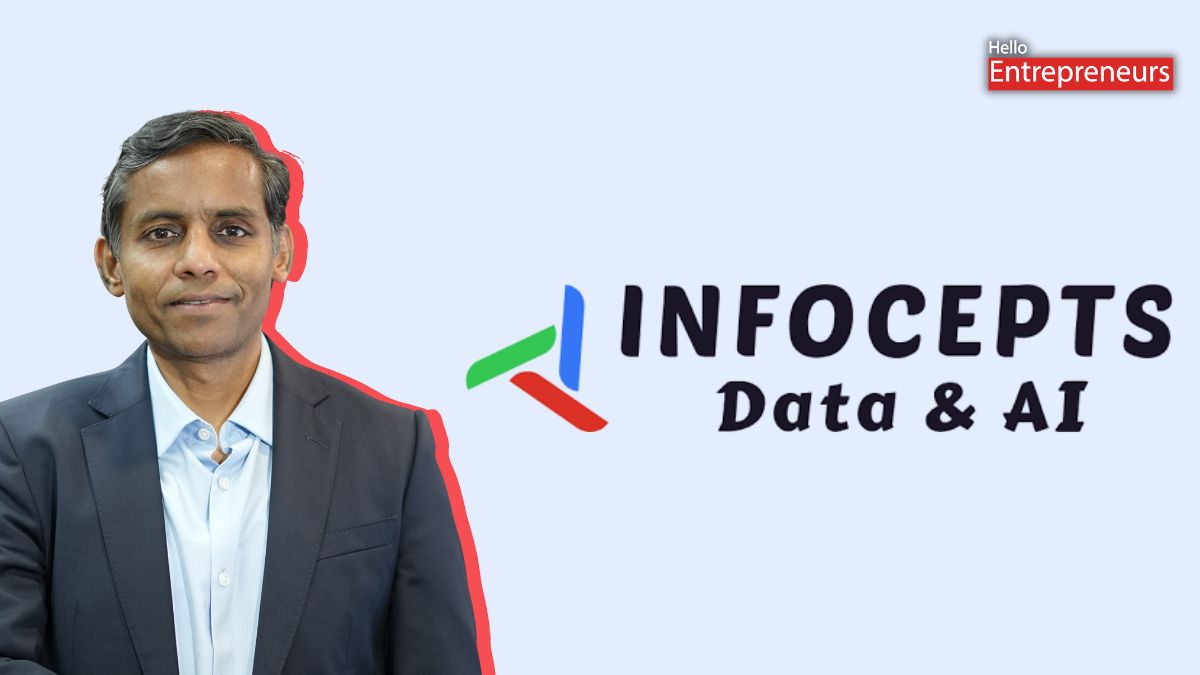
When Shashank Garg co-founded Infocepts in 2004, “data” wasn’t the boardroom buzzword it is today. There were no grand narratives around AI transforming industries, no aggressive investments into analytics infrastructure, and certainly no playbooks for building a data-first enterprise.
Garg, along with his co-founder Rohit Bhayana, had just set up Infocepts with the conviction that ‘data would run the world one day. The company had started in Nagpur, a rather unexpected location for such a startup, but the focus was clear- to help organizations make sense of their data, no chasing shiny trends or shifting focus away from this. And that discipline has paid off.
Two decades later, Infocepts is now a global data and AI solutions company, working with leading Fortune 500 enterprises. Even though the company has grown, so have the challenges around clients’ expectations and their solutions.
The illusion of being ‘AI-ready’
In 2026, “We’re building an AI strategy.” has become a sharp buzzword that every company tells its stakeholders. Many of them have a ‘pilot project’ waiting to be implemented, sometimes this stretches to 12-18 months,”
“AI is only as smart as the data feeding it. You can’t buy the fanciest AI model in the market and pour messy, untrusted, siloed data into it and expect magic. What comes out will be confident gibberish delivered at machine speed,” Garg remarked.
“The good news is that the smartest leaders are starting to get this. The ones who ask me ‘how clean or structured is our data?’ before asking ‘which AI tool should we buy?’ Those are the ones winning,”
From dashboards to decisions
Many business leaders still don’t know how to use their data for decision-making. And even when they do, they aren’t doing it the way they should.
Garg explains how this problem persists.
“We’ve seen clients with 400 dashboards and nobody opening most of them. At Infocepts, we call it being “data-rich but insight-poor.” It’s like having a treasure chest but no key.
They use AI to automate bad processes instead of fixing the process first. You end up with a faster version of the wrong answer.
The companies that get unstuck are the ones that stop asking ‘what does the data say?’ and start asking ‘what decision are we trying to make?’ That shift sounds small. It changes everything,”
When data changes the narrative
The real power of data, Garg argues, is not in incremental improvements but in challenging assumptions.
A retail client he was working with had decided to close a set of underperforming stores. The client aimed to reallocate resources based on the numbers, and the decision was almost made. But detailed data analysis made them reconsider.
“While we were building out their data foundation, we noticed something odd in the numbers. Those ‘underperforming’ stores were actually anchor purchase triggers. Customers who browsed those physical stores ended up buying significantly more online within 48 hours.
The stores weren’t failing. They were feeding the digital funnel. The data just wasn’t stitched together to show it.
They didn’t close those stores. In fact, they opened more,” he recalled.
Through this, Garg explains how AI and data can not just improve, but save you from catastrophic decisions. The model worked when the gut missed the bus.
Scaling without losing the soul
Scaling up and growing brings its own set of challenges. For Infocepts, this has come from within. “There was a point when we crossed 300 people and I realized I no longer knew everyone’s name. Culture, at Infocepts, was always personal
We had to build systems. Not to replace the culture but to build on it. We leaned on data, actually. We started tracking engagement, team health, delivery quality in ways we never had before. We used tools to spot attrition signals early. We used data to keep the human element alive. That’s kind of poetic for a data company.
The honest advice: when you feel the culture starting to fray, don’t wait,” he suggests.
The marathon mindset
As an avid runner, Garg explains how his passion for fitness has helped him professionally
Running taught me the danger of sprinting too early. I’ve seen startups burn through cash and people trying to ‘go big fast.’ They hit the wall at mile 20 with nothing left. Pacing is strategy,” he explains.
“And then there’s the data side of it. I track every run. Heart rate, cadence, recovery time. I use coaching tools to optimize training. We use the same philosophy at Infocepts. We are obsessive about measuring what matters.
New Initiatives
For Garg, this National Tech Day offers the perfect platform to expand its skills and expertise.
“At Infocepts, we’re using this day to deepen our commitment to something close to my heart: making AI and data skills accessible to the next generation of Indian talent.
We believe the next great AI idea won’t come from a corner office in a tech hub. It might come from a curious 23-year-old. Our job is to make sure they have the tools, the training, and the mindset to make it happen”