



Climate change cannot be ignored, and multinationals aren’t judged solely on their profits, but also on what they do to reduce environmental harm. Obtaining the relevant environmental certifications is no longer optional, and complying with this isn’t as easy as it seems.
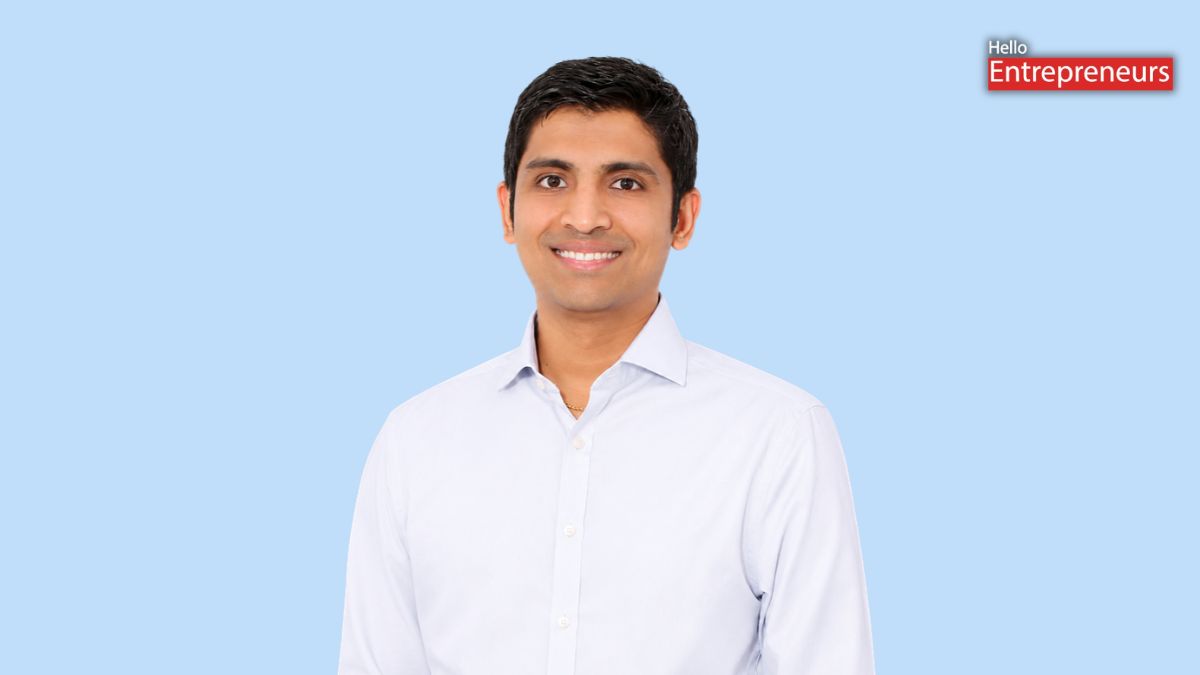
Arjun Vijayaragavan aims to change that. Through KarbunWise, he works with leading industrial businesses to gather accurate environmental data, a confusing, slow, and expensive process.
Starting with Susnomics, a sustainability consultancy in the UAE, Arjun noticed a gap that Indian businesses struggled to address.
“The hard part wasn’t the analysis, it was getting the data – an EPD for a product, a carbon number for a building – and that was slow, manual, and expensive,” Arjun explains.
“If large companies with consultants on hand were struggling, mid-sized companies and suppliers had very little chance – and they were the ones increasingly being asked for this data by customers and regulators. Technology could clearly do most of the heavy lifting, at a cost that works for them. That’s what led to KarbunWise,”
Addressing market challenges
Before Susnomics, Arjun worked with McKinsey and understood the challenges companies were facing head-on.
“Most companies I worked with had targets, and many had good strategies on paper. What was missing was the plumbing underneath – reliable, consistent data that a CFO or an auditor would accept, refreshed often enough to actually manage against,” he says.
“Too much of decarbonisation was being run as a periodic consulting exercise – a big baseline every year or two, a report, and then very little in between. That makes it hard to track progress, and even harder to get investment decisions made, because the numbers don’t carry the same weight as financial data,”
That was the basis of KarbunWise, built around the real time data that is traceable and auditable with costs low enough to meet budgets, along with a bundled support service.
Strengths of an integrated solution
For Arjun, offering an integrated solution for sustainable consulting was a no-brainer, as the problem cannot be addressed in a silo.
“A conventional advisory firm solves the problem once and leaves a spreadsheet behind. Next year you pay again,” he says.
“Our model is technology first, with real human judgement where it matters – methodology choices, boundary decisions, assurance readiness. The platform carries the repeatable work, and our advisory team focuses on the questions that genuinely need expertise,”
For Arjun, this technology-first, integrated approach will be crucial to scale KarbunWise.
“A lot of what needs an expert today – mapping data, checking it, building an LCA model – will be largely automated. But I don’t think judgement goes away. It moves up the chain, to interpreting results, making trade-offs and standing behind the numbers. That’s where we want our people spending their time,” he explains.
Changing attitudes: From Regulation to Commercial Advantage
Even though KarbonWise works with companies across the globe, many corporates still treat sustainability certification as a priority because of regulations. But attitudes are changing, especially as a sustainability certification can help them gain a competitive advantage.
“A manufacturer who can show verified, lower embedded emissions than a competitor has a real commercial advantage in the EU. The same applies to EPDs in construction and product carbon footprints in global supply chains – verified data is becoming a condition for being shortlisted,”
Beyond that, lenders too are linking sustainability to financing requirements.
“As lenders start pricing in carbon performance, credible data opens up green and sustainability-linked financing, which is often what actually unlocks investment in cleaner processes. With good data, the action becomes fairly obvious – the harder part has been paying for it, and that’s starting to change,” Arjun adds.
Future Plans
For Arjun, the next phase of growth for KarbonWise lies in strengthening three core goals to scale up to 10,000 companies by 2035.
“The first is credibility – assurance-ready data and recognition from standards bodies, programme operators and verifiers, so our outputs are accepted without a second look. The second is distribution at scale. We won’t reach 10,000 companies one sales call at a time, so partnerships with banks, consulting firms and system integrators – and supply chain programmes where one large buyer brings its suppliers on board – are central to the plan. The third is cost. The platform has to stay affordable for mid-sized companies and suppliers, otherwise we end up serving only the top end,” he concludes.