



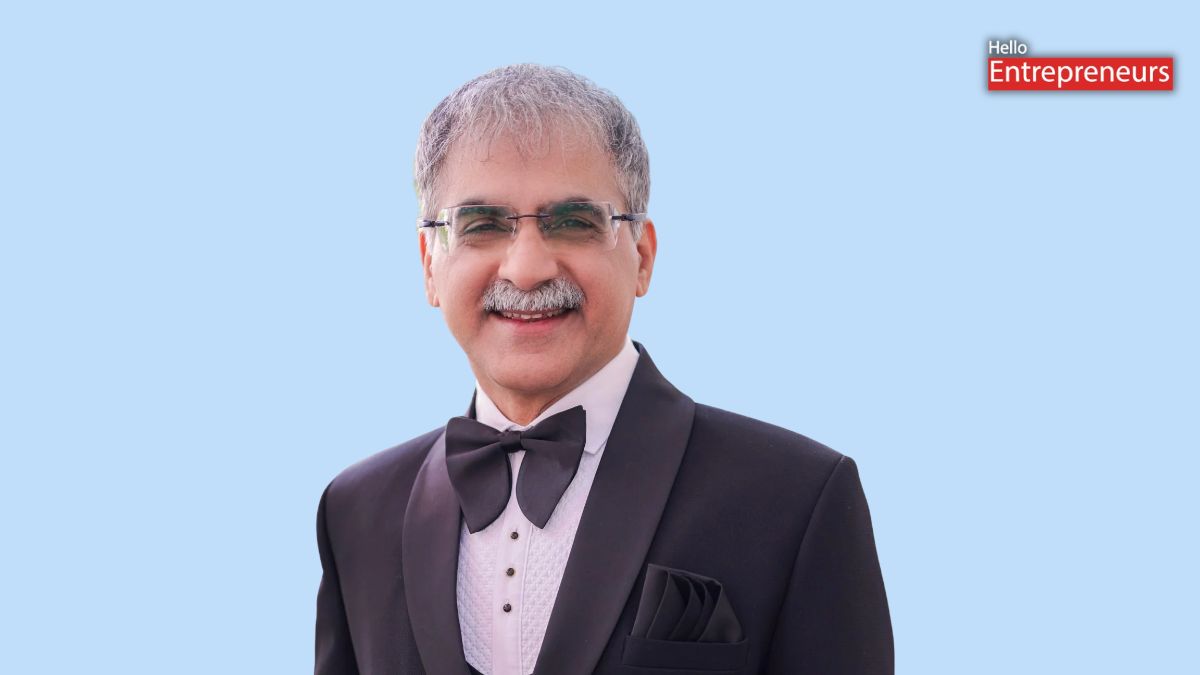
At a time when marketing wasn’t as important as it was today, nobody would expect to take someone sitting in Nagpur to be taken seriously, especially when most of the corporates were based in Mumbai or Delhi. But that didn’t stop Dr Sanjay Arora from becoming a marketing genius over the past four decades, as someone who has witnessed the shift in marketing standards over time.
This man, who started with zero capital and a table behind his father’s watch repair shop in 1987, has become one of the biggest voices in the space, who runs an agency that has now spread out to the Middle East as well. Being far away from corporate decision makers at the time came with its own challenges.
“Because I wasn’t inside the industry’s echo chamber, the clients I worked with in central India were often first- or second-generation businesses building a brand from nothing, so I learned brand-building at ground level, not at the polishing stage,” Dr Sanjay explains.
“The client had to be educated from ‘A’ about what strategic advertising really was. I couldn’t lend a client the glamour of a Mumbai boardroom or borrow credibility from a media-capital address. At every single pitch, I had to first prove what real advertising had the potential to do, then the agency’s competence, before I could even get to the idea,”
Navigating changing demands, mediums, expectations
Over the years, Dr Arora has steered Shells Advertising through rapidly updating media transitions- from standalone print and TV ads to social media-focused performance marketing and creator-led reels. Yet, the underlying core of marketing remains the same- people want to buy the feeling that the product resolves: bring them either status, safety, belonging or ease.
“What’s really changed underneath it is how much control a brand has over its own story. In 1987, if I created a great campaign and bought good media, the brand largely owned the narrative. Today, a consumer, a random reviewer, or a nineteen-year-old with a phone can rewrite that narrative in a comment section faster than any agency can react,” Dr Arora further explains.
With most brands now prioritizing influencer marketing, Dr Sanjay explains how control matters more than hype.
“You can post daily, change formats weekly, chase every trend, that’s fine. But if the underlying promise of the brand shifts with every piece of content, you’re just producing noise with your logo on it. I tell clients to lock the one belief they want to own in the customer’s head, and then let everything else; hooks, formats, platforms, flex around that belief. The content can be disposable, but the position cannot,”
From entrepreneur to educator
In recent years, Dr Arora has moved beyond his role as a marketing advisor, he has become a creator himself. Though his handle @sanjayarora, he explains how brands have built narratives around their products, through highly engaging reels.
Putting himself in front of the camera have helped deliver a direct lesson that has enhanced his authority through his agency Shells Advertising.
“Making my own Reels taught me something four decades in advertising hadn’t: how quickly and honestly an audience tells you the truth. A client will sit through a mediocre pitch and nod politely. A viewer just scrolls past a mediocre video in under two seconds, and the number tells you precisely how mediocre. That’s made me far less patient with “clever” ideas that don’t earn attention in the opening seconds, in my own content and in client work,” he says.
Decoding Marketing, Beyond the corporate realm
The desire to educate isn’t limited to reels, as this PhD holder showcased the marketing narratives used and the challenges faced through his latest book, Brief Case: How Brands Create Desire, Trust and Culture.
“Most marketers think brand building is a science that needs frameworks, funnels, and big vocabulary,” he notes. “At the end of the day even a street vendor is marketing his wares. He picks his spot, he calls out to people, he remembers his regulars and he knows why they come back to him. That is marketing, and he does it without a single framework,” he explains.
“People remember a story and can retell it to someone else. So I wrote each marketing case as a story, the way you would tell it to a friend. And like Aesop’s fables, every story ends with a moral. In Brief Case there are forty stories, and each one closes with three lessons you can use right away,” he adds.