



New Delhi: Every entrepreneur knows the feeling. You’ve built a great product, launched a clean website, and written solid content, yet your pages sit buried on page three of Google while competitors with seemingly inferior offerings rank above you. More often than not, the missing ingredient is links.
Link building remains one of the most powerful and misunderstood levers in digital growth. Done right, it compounds over time, drives qualified organic traffic, and positions your brand as an authority in your niche. Done wrong, it can result in Google penalties that undo months of work overnight. This guide breaks down what every business owner needs to know about link building — and how to do it in a way that actually works.
What Is Link Building and Why Does It Matter?
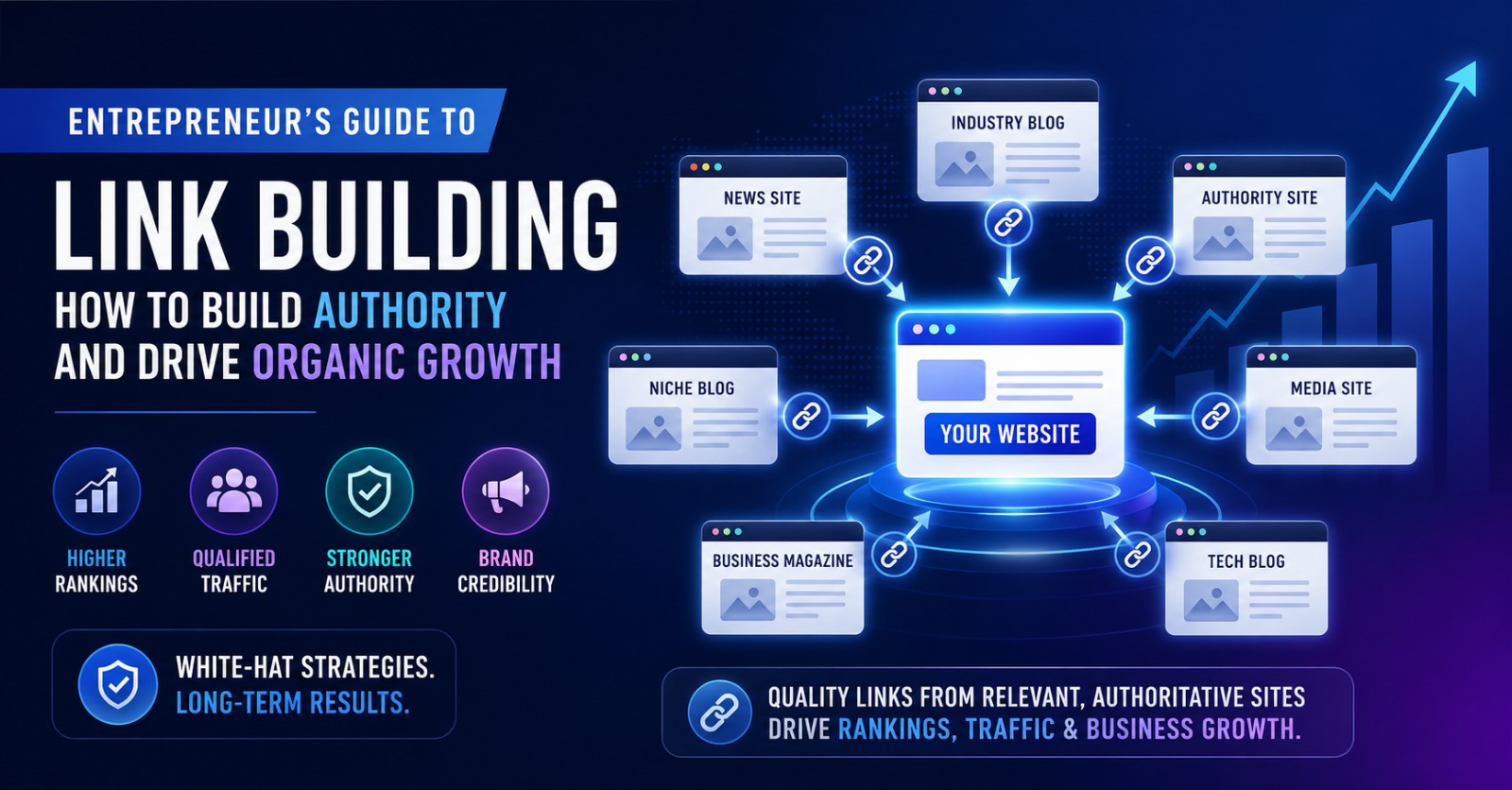
A backlink is simply a hyperlink from one website pointing to yours. Search engines like Google treat backlinks as votes of confidence — the more high-quality sites linking to you, the more authoritative your domain appears, and the higher you rank.
But not all links are equal. A single link from a reputable, high-traffic industry blog can outweigh hundreds of links from low-quality directories. This is why the quality of your backlink profile matters far more than the raw number of links.
For entrepreneurs, strong link authority translates directly into:
- Higher organic rankings for competitive keywords
- More qualified traffic from people actively searching for what you offer
- Faster indexation of new content and product pages
- Brand credibility — appearing on respected sites signals trustworthiness to potential customers
The White-Hat vs. Black-Hat Divide
Before diving into tactics, you need to understand the fundamental divide in the link building world: white-hat versus black-hat.
Black-hat link building involves shortcuts that violate Google’s guidelines — buying links from spammy networks, participating in link farms, or using Private Blog Networks (PBNs). While these tactics may produce short-term results, they carry serious risk. Google’s algorithm updates specifically target and penalize manipulative link schemes, and recovering from a manual penalty can take months or years.
White-hat link building follows search engine guidelines by earning links through legitimate means: quality content, genuine outreach, and placement on real websites with authentic traffic. It takes more effort upfront, but the results are durable and compounding.
For any entrepreneur building a long-term business, white-hat link building is the only sensible path.
The Core Link Building Strategies Worth Your Time
1. Guest Posting (Blogger Outreach)
Guest posting involves writing original articles for third-party websites in your niche, with a contextual backlink pointing back to your site. It remains one of the most effective white-hat link building methods for several reasons:
- You control the anchor text and target URL
- Content is published on topically relevant sites, sending strong relevance signals to Google
- It builds brand awareness with new audiences while earning you a link
The challenge is scale. Finding quality publishers, pitching editors, writing content, and tracking placements is time-intensive — which is why most growing businesses turn to managed guest posting services to handle the heavy lifting.
2. Niche Edits (Link Insertions)
Rather than creating new articles, niche edits involve inserting your backlink into existing, aged articles that are already indexed and ranking. The advantage here is speed: you’re leveraging the established authority of a live page rather than waiting for a new article to gain traction.
Niche edits work especially well when:
- You need fast results for a competitive keyword
- You’re supplementing a broader link building campaign
- You want to bolster specific landing pages or product pages quickly
3. Digital PR and Press Release Distribution
Getting your business featured in online news outlets, industry publications, and media sites generates high-authority links that are difficult to replicate. Press releases distributed to premium media outlets can earn placements on sites with domain authority scores in the 80s and 90s — the kind of link equity that accelerates rankings significantly.
4. Local Citation Building
For businesses with a local or regional focus, citations — consistent listings of your business Name, Address, and Phone number (NAP) across directories — are foundational. Strong citation profiles build trust signals for local search rankings and are particularly important for service businesses, restaurants, and retail operations.
How to Evaluate a Link Before You Accept It
Not every link offer is worth taking. Whether you’re doing outreach yourself or working with a service provider, apply these filters before accepting a placement:
| Metric | What to Look For |
| Domain Rating (DR) | Higher is better; 40+ is a solid baseline |
| Domain Authority (DA) | Aim for DA 30+ minimum; DA 50+ for competitive niches |
| Organic Traffic | The site should have real, verifiable traffic |
| Niche Relevance | The site’s topic should align with your industry |
| Site Quality | Check for real editorial content, not spammy thin pages |
| Link Type | Contextual links within body content outperform sidebar or footer links |
Tools like Ahrefs, Moz, and Semrush make it easy to verify these metrics before committing to any placement.
Scaling Your Link Building Without Losing Quality Control
Solo outreach works when you’re a one-person operation testing the waters. But as your business grows, the manual process of finding publishers, building relationships, negotiating placements, and producing content doesn’t scale well.
This is where a specialist link building platform adds genuine value. Rather than managing a patchwork of individual relationships, you gain access to a vetted marketplace of publishers with visible metrics, predictable pricing, and managed delivery — letting your team focus on strategy rather than logistics.
GUESTPOSTLINKS is one such guest posting platform built specifically for this use case. With a network of 55,000+ manually verified publishers spanning 50+ niches, it allows businesses and agencies to filter publishers by Domain Authority, Domain Rating, traffic, niche, and country — then place guest posts and niche edits without the overhead of manual outreach. Every placement is contextual, white-hat, and backed by transparent metrics, with turnaround times ranging from same-day publishing on select sites to a standard 3–14 day window for most placements. For entrepreneurs who want scalable link acquisition without the risk of low-quality shortcuts, GUESTPOSTLINKS offers a practical, transparent solution.
Building a Link Building Strategy: A Simple Framework
If you’re starting from scratch, here’s a practical framework to get your link building off the ground:
Step 1 — Audit Your Current Profile Use a tool like Ahrefs or Moz to understand your existing backlink profile. Identify gaps, toxic links, and anchor text distribution.
Step 2 — Define Your Target Pages Identify which pages you most want to rank — typically commercial landing pages, key service pages, or cornerstone content.
Step 3 — Set Realistic Targets For a new domain, aim for 5–10 quality backlinks per month. Established sites in competitive niches may need 20–50+ monthly placements to move the needle.
Step 4 — Diversify Your Link Types A natural backlink profile includes a mix of guest posts, niche edits, brand mentions, and directory citations. Relying entirely on one source looks unnatural and limits results.
Step 5 — Monitor, Measure, Adjust Track ranking movements, organic traffic growth, and domain authority changes monthly. Link building ROI isn’t always immediate, but a well-executed strategy typically shows meaningful results within 3–6 months.
Common Link Building Mistakes Entrepreneurs Make
Chasing volume over quality. Fifty links from irrelevant, low-DA sites won’t outperform five links from authoritative, niche-relevant publishers.
Ignoring anchor text diversity. Over-optimizing with exact-match commercial anchors (e.g., “buy running shoes online”) is a known ranking risk. Aim for a natural mix of branded anchors, partial matches, and generic terms.
Expecting overnight results. Link building is a long-term investment. Organic ranking improvements typically lag link acquisition by weeks or months as Google recrawls and reassesses your authority.
Treating link building as a one-time project. Your competitors are continuously building links. Treating link acquisition as an ongoing campaign rather than a one-off task is essential for maintaining and growing rankings over time.
Final Thoughts
Link building is not optional for businesses serious about organic growth — it’s foundational. The good news is that the fundamentals haven’t changed: earn links from real, relevant websites with genuine traffic, prioritize quality over quantity, and think in terms of years rather than weeks.
Whether you’re managing outreach in-house or working with a specialist platform, the businesses that win in organic search are those that treat link building as a strategic, ongoing investment in their digital authority. Start with a clear target, build methodically, and the results will follow.
Looking to scale your link building without the manual outreach? Explore GUESTPOSTLINKS — a white-hat link building platform with 55,000+ verified publishers across 50+ niches.

