



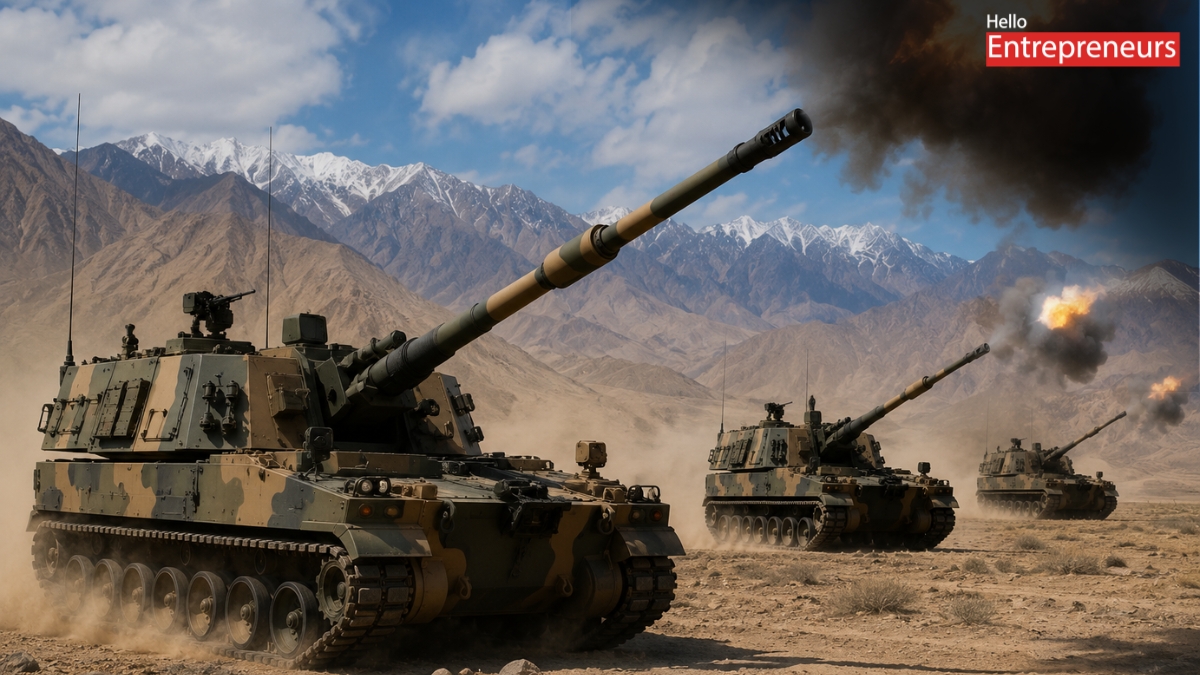
The Indian Army is getting ready to ask for approval to buy over 300 more K9 Vajra-T self-propelled howitzers. This deal—worth about ₹23,000 crore—would be one of the biggest artillery acquisitions they’ve made in decades. If it goes through, India’s fleet of tracked, self-propelled guns will grow dramatically.
The Army plans to submit this proposal to the Defence Procurement Board this week. The whole aim is pretty clear: boost mobile, long-range firepower for both the western front with Pakistan and the northern border with China.
Larsen & Toubro looks set to remain the main supplier. They already build the K9 Vajra-T in India, taking South Korea’s K9 Thunder howitzer and tweaking it for Indian needs. L&T’s facility in Hazira, Gujarat, has been turning out these systems for years, thanks to a partnership with Hanwha, their South Korean counterpart.
If this new purchase goes ahead, it’ll push India’s total orders for the K9 Vajra to over 500 units.
Here’s a bit of history: India first ordered 100 K9 Vajra-T guns back in 2017, mainly for desert operations near Pakistan. In December 2024, the Ministry of Defence signed another contract with L&T for more of these 155 mm/52 calibre guns. That deal clocked in at ₹7,628.70 crore, with the intention to modernize artillery and ramp up readiness. The Ministry highlighted the gun’s cross-country mobility, firing range, and precision—saying these would help the Army launch deeper strikes on tough terrain.
So, why do these howitzers matter so much? The K9 Vajra-T’s big selling point is mobility. Self-propelled guns can move alongside tanks, fire quickly, and scoot away before enemy artillery can target them. That “shoot-and-scoot” capability is huge these days—survivability depends as much on moving fast as on firepower.
It’s got armored protection, good speed, and works well in both deserts and high-altitude areas. After tensions on the Line of Actual Control, the Army even tested modified Vajra units in Ladakh, and they proved they could handle those brutal conditions.
Strategically, all this fits with the Army’s push for better artillery, more mobility, and sharper accuracy. Military planners see self-propelled guns as crucial for rapid force response, especially in tough terrain. A bigger fleet means more fire support for armored formations, plus better defense along tense borders.
There’s an industrial angle too. A major follow-on order from L&T strengthens Indian private sector manufacturing, which lines up with the government’s drive for more home-grown defense tech.
Next steps? The Defence Procurement Board will decide if the pitch advances. If approved, it moves into negotiations and contracting. For now, the ₹23,000 crore buy is just a plan—nothing is finalized yet.
Given the deal’s size and the push for artillery modernization, you can bet the defence community and industry will pay close attention.

