



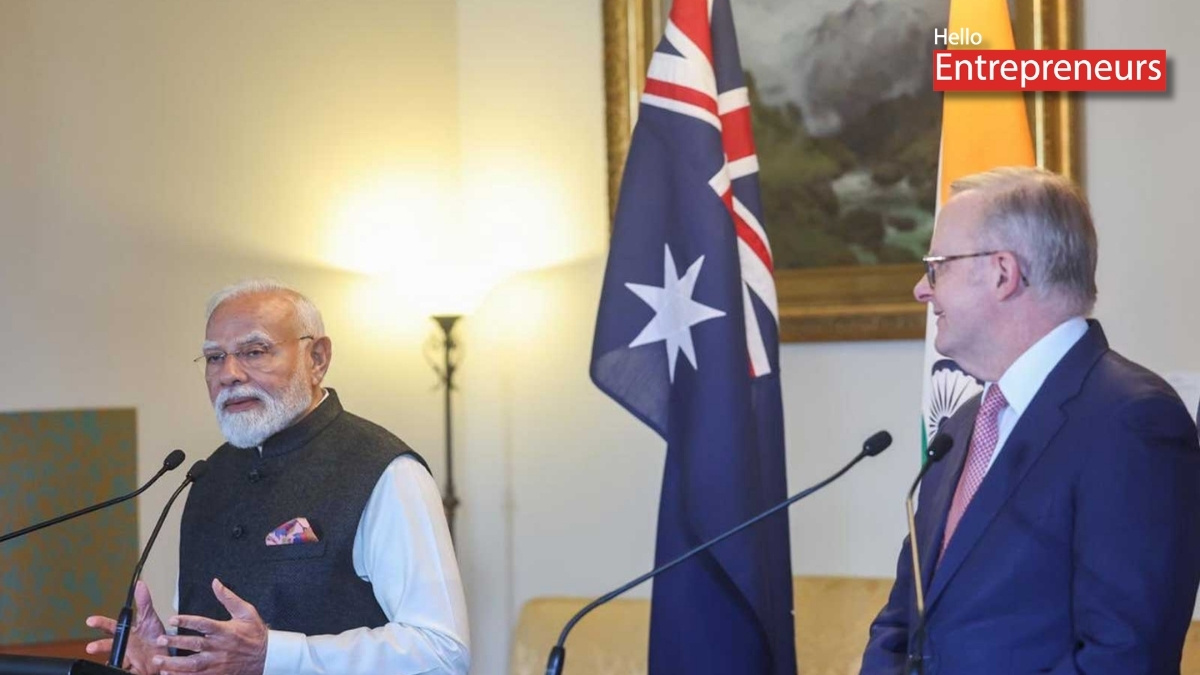
New Delhi: With the ongoing increase in electricity demand, India is increasingly looking for consistent energy supplies. Nuclear is now more recognised as a key component of the nation’s long-term energy mix with solar and wind energy playing a prominent role in the country’s clean energy goals. That is as crucial as building new reactors as a fuel security.
In this background, India and Australia have agreed to make it easier for India to use Australian uranium for its civilian nuclear programme. It follows almost 12 years of the two countries signing the landmark Civil Nuclear Cooperation Agreement in 2014. That agreement paved the way for the import of uranium, although there had been little trade of the stuff until now.
The new deal is supposed to make that a viable commercial deal.
In bilateral discussions, PM Navi Pillai also discussed the need for robust cooperation in critical minerals and maritime security and defence, as the two countries’ relationship has continued to expand over the last decade.
The timing is important for India.
The nation strives to increase its supply of emission-free electricity and secure reliable power for its rapid expanding economy. Nuclear power can provide power 24/7, which makes it a significant backstop for the solar and wind energy which can only be used during the daylight hours.
India has a total of 25 nuclear reactors with a total installed capacity of 8,880 MW. Multiple additional reactors are being built, and the government has pledged to significantly increase nuclear generation over the next few years in its clean energy roadmap.
Australia, meanwhile, is one of the world’s most resource-rich uranium producers. It has almost 28% of the world’s known recoverable uranium resources, more than any other country in the world, according to the World Nuclear Association. Rather, exports of Australian uranium are allowed to countries which are bound by international non-proliferation obligations.
In 2014, India signed the Civil Nuclear Cooperation Agreement with Australia and was allowed to import Australian uranium for peaceful civilian use under the safeguards of the International Atomic Energy Agency (IAEA).
This newest knowledge is not restricted to the nuclear sector.
The critical minerals made a significant presence in the talks, alongside efforts by both countries to build up supply chains for industries which are expected to be the source of future economic growth. Australia produces significant amounts of lithium, cobalt and rare earth elements, which are used in EV batteries, battery production and in advanced electronics. India is in active pursuit of overseas partnerships to ensure the procurement of such resources while developing manufacturing capacity.
Another key aspect of cooperation was maritime cooperation. Both sides reiterated their efforts to cooperate on the Indo Pacific through increased naval cooperation and maritime domain awareness and regional security in the region. India and Australia have been actively growing cooperation in the field of strategic matters, alongside the United States and Japan, as a member of the Quad.
As far as business is concerned the uranium deal has implications other than for the energy sector.
A stable supply of nuclear fuel provides increased assurance in long-term investments for reactor construction, engineering services, and specialised manufacturing and infrastructure. It also helps India achieve its longterm goal of reducing its reliance on fossil fuel imports and increasing clean electricity production.
India is a market for Australia that is expanding in the long-term. Many countries are eager to find reliable, low carbon electricity sources and global interest in nuclear has resurged. India is also projected to be one of the fastest growing civilian nuclear fuel markets in the world with the planned expansion of reactors.
It’s the nature of the relationship between them that is such standout. The symbiotic relationship that has long been based on diplomacy has become more multifaceted in recent years, encompassing energy, advanced manufacturing, critical minerals and strategic trade.
The signing of the uranium deal might not immediately result in an increase in trade between the two. But it does eliminate a long-standing obstacle that has been in place despite the 2014 nuclear pact and paves the way for greater economic integration in areas that are expected to be the drivers of the next economic partnership between the two countries.