



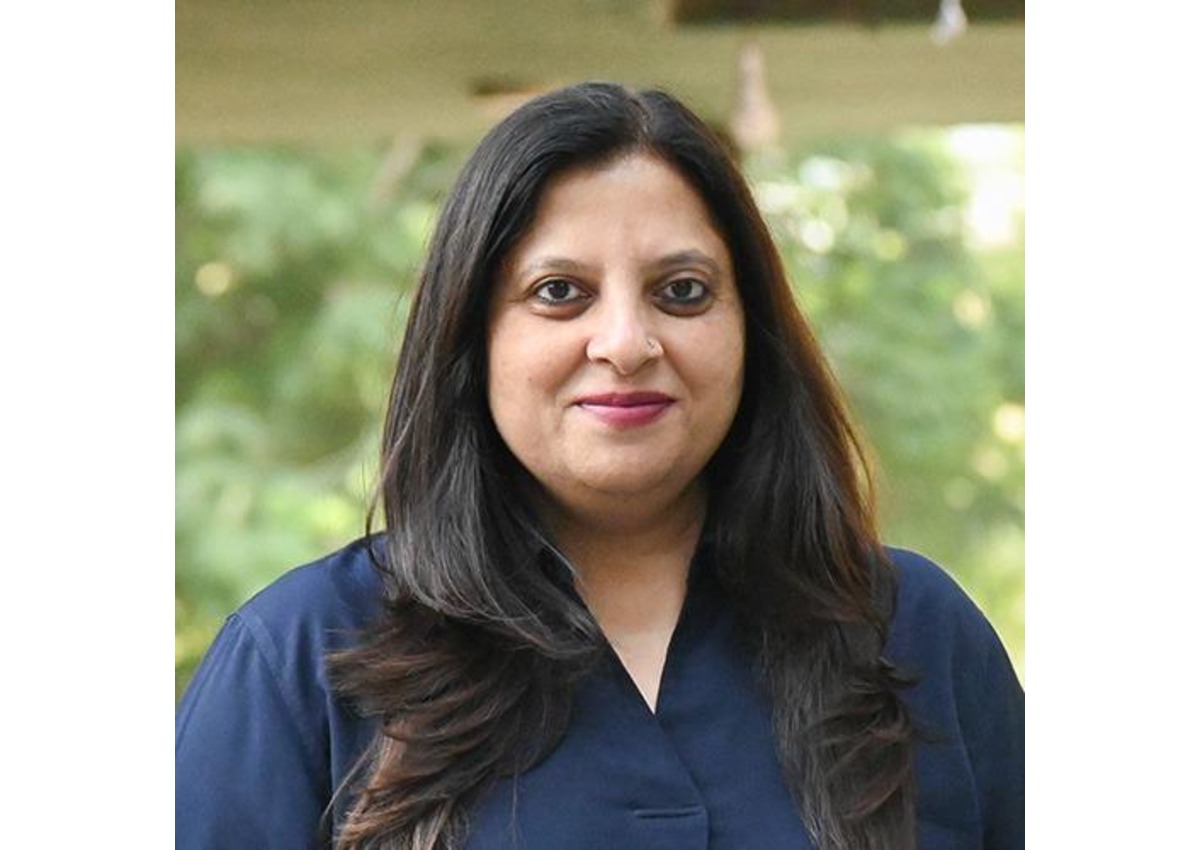
Vadodara: For me, this idea captures the deeper purpose of both education and communication. It reminds us that stories, ideas, and voices often need to be consciously brought forward. In many ways, the journey of women in education and leadership has been about doing exactly that: creating spaces where perspectives are heard, nurtured, and transformed into meaningful action.
My academic journey began with literature. Studying British classics and later specializing in American Literature, followed by doctoral research in Afro-American Literature at Mohan Lal Sukhadia University, Udaipur, allowed me to explore narratives that engage with identity, voice, and lived experience. Writers such as Toni Morrison and Alice Walker demonstrated how literature can amplify perspectives that might otherwise remain unheard. Their works, along with those of Shakespeare, Shaw, Austen, and Dickens, reflect society, relationships, ethics, and human complexity, illustrating how storytelling helps communities question, reflect, and evolve.
This foundation naturally evolved into an interest in communication. If literature helps us understand human experience, communication enables those insights to travel beyond books and classrooms into institutions, organizations, and public dialogue. A Professional Certificate in Strategic Brand Management and Communication from MICA further strengthened this perspective, showing how narrative and insight can be translated into strategic practice, allowing institutions to articulate values, engage stakeholders, and build credibility with authenticity.
Over the past twenty-two years, experiences across academia and industry have shaped this understanding. Teaching communication in reputed academic environments offered opportunities to engage with students from diverse backgrounds. Interactions with media and management professionals, along with exposure to globally oriented academic programmes, introduced international perspectives into classroom learning. Academic collaborations with faculty across disciplines reinforced the value of interdisciplinary dialogue. Alongside this, industry experience in areas such as learning and development, recruitment, employee engagement, and organizational communication demonstrated how thoughtful communication shapes institutional culture and strengthens human connections.
These experiences converged in my current role at Navrachana University, Vadodara (NUV), where I serve as Professor of Communication and Head of Internal and External Communications. Universities are vibrant ecosystems of ideas, yet many meaningful academic stories often remain within campus boundaries. My work at NUV has focused on bringing these stories forward: internally, fostering dialogue and shared purpose among students, faculty, and staff; and externally, presenting the university’s work authentically through the website, digital channels, publications, and academic forums.
Over the past few years, communication efforts have curated narratives that reflect NUV’s academic ethos: interdisciplinary learning, research-led initiatives, student creativity, and faculty contributions. Stories from student-led projects, collaborative research, and innovative learning spaces demonstrate how the university fosters critical thinking, innovation, and responsible leadership. These efforts have gradually strengthened NUV’s visibility on national and international academic platforms, ensuring that the university’s voice remains authentic and aligned with its mission to nurture knowledge, innovation, and ethical leadership.
In many ways, this work mirrors a quality often associated with women’s leadership, the ability to nurture environments where ideas grow, collaboration thrives, and voices find expression. Whether in classrooms, organizations, or communities, women often act as connectors and catalysts, shaping spaces where others can flourish.
On Women’s Day, this reflection feels especially meaningful. Leadership is not only about visibility or authority; it is also about enabling others, amplifying voices, and giving shape to ideas that deserve to be heard. As Toni Morrison reminds us, sometimes the most important contribution we can make is to recognize an untold story and help it find its place in the world. In nurturing these stories, we do more than communicate; we create the space for growth, understanding, and transformation.
For more information, visit: https://nuv.ac.in/professors/ms-divya-bhatnagar/