



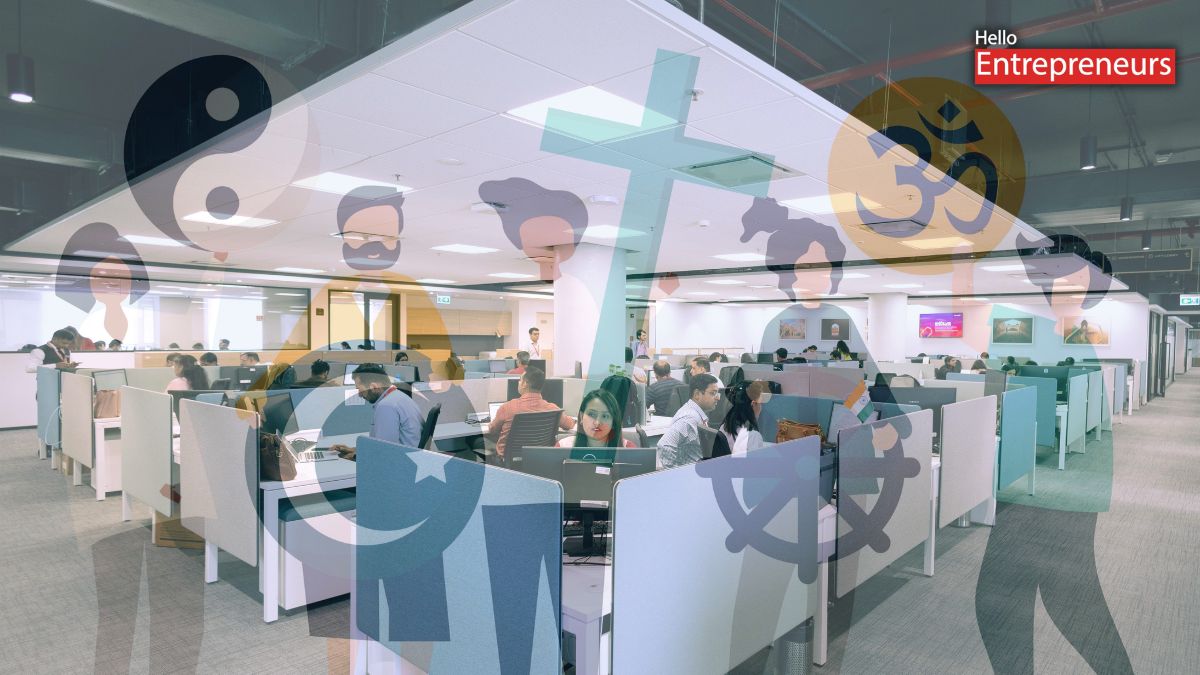
New Delhi: Over the past several weeks, corporate India has been in the midst of cultural and religious controversies. The questions of dressing, identity, and the workplace policy are no longer discussed in the office but made it to the national news. Personal issues have turned into a subject of controversy, with a variety of responses in social media and politics.
The government under Narendra Modi has no formal directive to companies that directs them on how to manage religious iconography such as bindi, tilak or hijab. Corporate firms are free and develop their own HR policies. But even the wider cultural context has been altered and so many believe that these problems are indirectly related to the existing politics.
A significant change is the increased confidence of people to be able to express their culture and religion. The symbols used, like tilak, bindi, hijab, and turbans, are not merely fashion statements but have a personal significance. When businesses are seen to be limiting any of these, even unintentionally, workers and the masses respond even more than they thought.
An example of the rapid deterioration of situations was a recent scandal of a major eyewear company. This was alleged to be biased because a viral document indicated that some religious symbols were permitted whereas others were not. Even though the company later explained that any type of symbols was allowed, the case already became a national discussion, demonstrating the power of miscommunication to inspire anger.
However, the scandal at the Nashik office of a leading IT company involved much more grave issues. There were also claims of harassment and religious coercion and several investigations were involved. The case was a highlight of a crucial difference that whereas there are cases where the policy is in a state of confusion there are others where there is severe violation that transcends beyond cultural differences.
Social media is the largest contributor to such controversies today. One leaked document or allegation can be viral in minutes, and not necessarily in its context. The Internet has a high propensity to promote views by extremists, making small problems great national discussions. The reactions are even more intense once religion is introduced to the narrative.
Political leaders and organizations tend to intervene as soon as these controversies are highlighted. Their participation makes them more visible and changes the emphasis of a work matter to a bigger ideological argument. This exaggeration makes the scenario larger and more polarizing than it could have been initially.
The epicenter of the problem is an increasing conflict between corporate neutrality and individual identity. Businesses are working towards uniformity and professionalism, which in most instances, is founded on international standards. However, in such a multicultural nation as India, employees desire to have an opportunity to express their opinions. A balance between these two sides has been more challenging.
These scandals are not completely new but more apparent nowadays because of the changing times. The rights of employees have become more aware, the cultural identity debate is at the forefront and media has been more aggressive. The latter, along with the pace of social media, have introduced tensions of the past into the limelight.
In the future, businesses will probably be more conservative. There will be clarity of policies, faster communication and greater compliance. Other organizations can opt to leave all religious symbols on the open but others can lean to a higher level of neutrality in order to prevent cases of controversies that have occurred in the past.
It is too simplistic to attribute the situation to a single factor. Narendra Modi has not established any rules on corporate dress code but the existing culture and political atmosphere has made it both sensitive and reactive. The problem is the overlap of the corporate policy, social opinion, and digital amplification. Unless a compromise is reached, such arguments are bound to influence the discussion of workplaces in India.

