



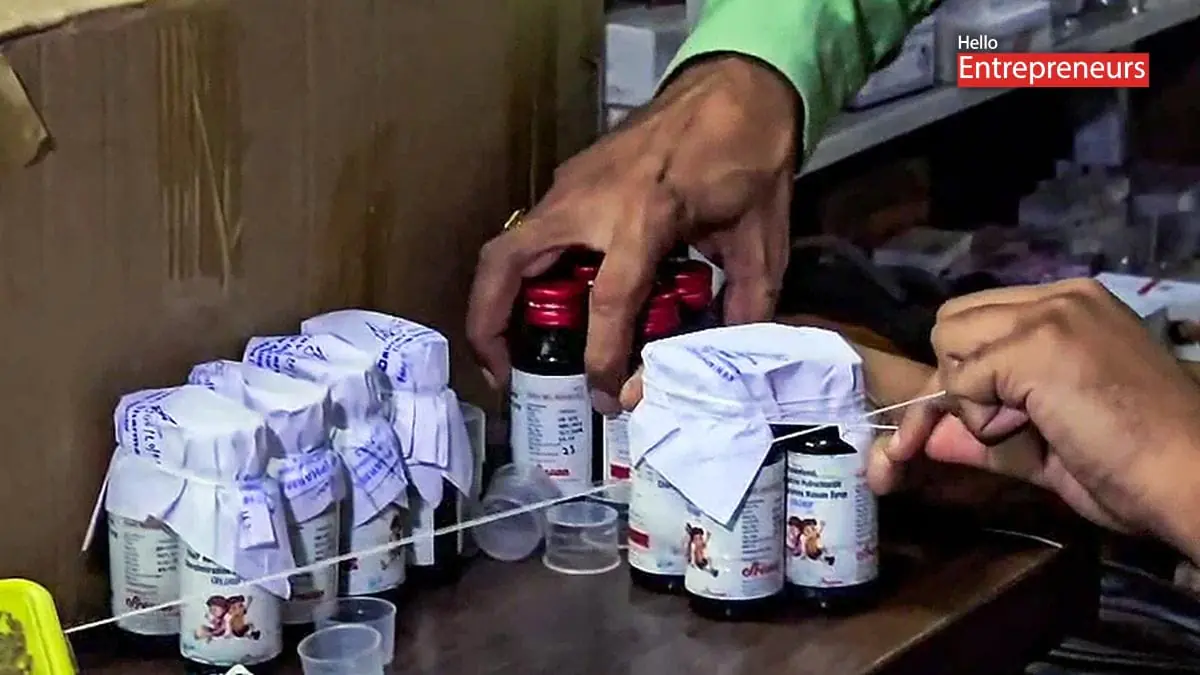
New Delhi: The Uttar Pradesh government has banned the sale of the cough syrup Coldrif after several children in Madhya Pradesh reportedly died from kidney failure linked to the medicine. The move came just hours after health officials in Madhya Pradesh confirmed the deaths and launched an investigation into the tragedy.
According to reports, the deaths were first recorded in Chhindwara district, where children who had been suffering from cough and cold developed serious complications soon after being given the syrup. Several of them were admitted to hospitals but could not survive. Authorities suspect that the syrup contained a toxic chemical called diethylene glycol, a compound often associated with accidental poisonings in contaminated medicines.
This chemical is sometimes used as an industrial solvent and, when mistakenly added to medicines, can cause severe kidney damage, especially in children. The same compound has been blamed in earlier cases of medicine-related deaths in India and abroad, making it a recurring concern for drug regulators.
After the alarming reports, Uttar Pradesh’s Food Safety and Drug Administration (FSDA) swung into action. Officials instructed all district drug inspectors to seize Coldrif syrup from pharmacies and collect samples for laboratory testing. The order also directed testing of related raw materials, such as propylene glycol, which could be the source of contamination.
Authorities said the ban is temporary but necessary until lab results confirm whether the syrup is indeed unsafe. In the meantime, the state has advised hospitals and doctors not to prescribe or dispense the medicine.
Meanwhile, the Madhya Pradesh government has formed a Special Investigation Team (SIT) to probe the deaths. The local administration has also detained one doctor and sealed a pharmacy suspected of distributing the syrup. The Union Health Ministry has sought detailed reports from both states and is monitoring the situation closely.
The incident has once again highlighted India’s struggle with medicine quality control. Although the country is a major global producer of generic drugs, repeated cases of contaminated or substandard medicines have raised serious questions about regulatory oversight. Experts say many small-scale pharmaceutical companies lack the resources or equipment for thorough testing of raw ingredients, making lapses more likely.
Parents and doctors are understandably anxious. Cough syrups are among the most commonly used medicines for children, often given for minor colds or fevers. News like this breaks public trust and creates confusion about what is safe to use. Health experts are now urging parents to avoid over-the-counter syrups for infants and to follow doctors’ prescriptions carefully. They have also asked hospitals to report any cases of unexplained kidney injury in children to local authorities immediately.
While the investigation continues, medical professionals are calling for stricter checks on pharmaceutical supply chains, especially on imported raw materials. Regular random sampling of medicines from markets and hospitals, they say, can help detect contamination before it spreads widely.
Pharmacies, too, have been reminded to stock medicines only from licensed suppliers and to avoid selling any product that lacks a batch number, expiry date, or manufacturer details. In many previous cases, weak enforcement of these simple rules has allowed unsafe drugs to circulate freely.
This tragedy also shows why transparency and accountability are crucial in public health. Families who lost their children deserve clear answers, who made the drug, where it failed, and what will change to ensure safety next time. Experts believe this episode could become a turning point for stronger drug regulation if authorities follow through with reforms rather than stopping at short-term bans.

