



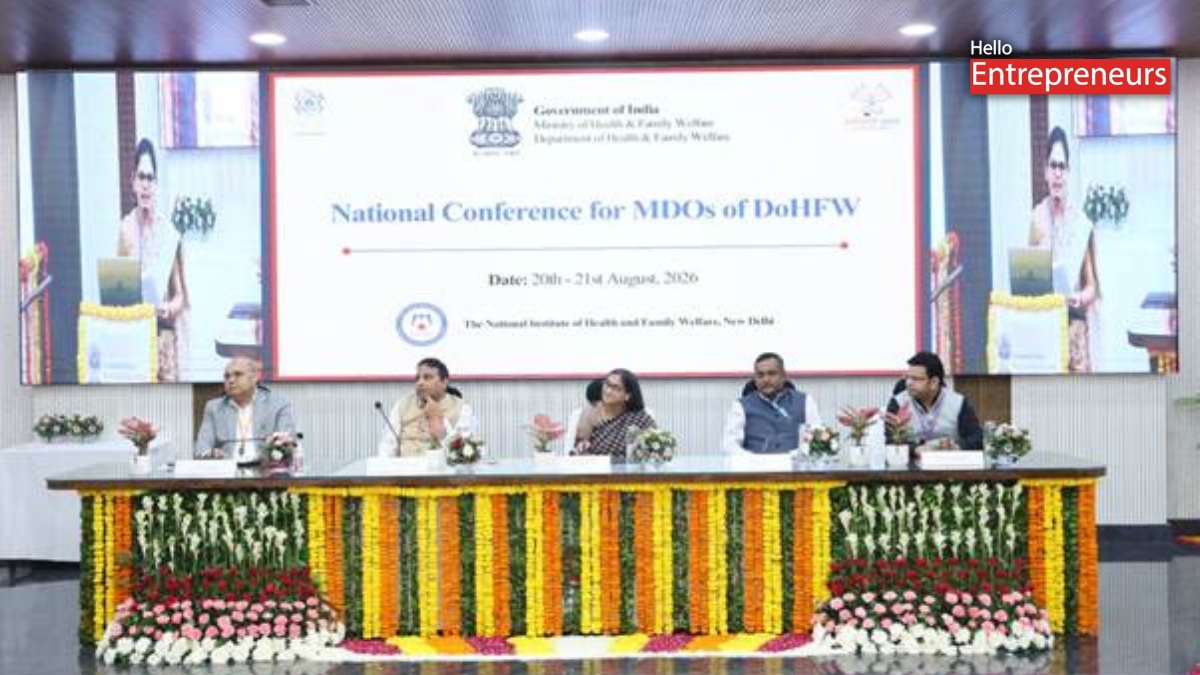
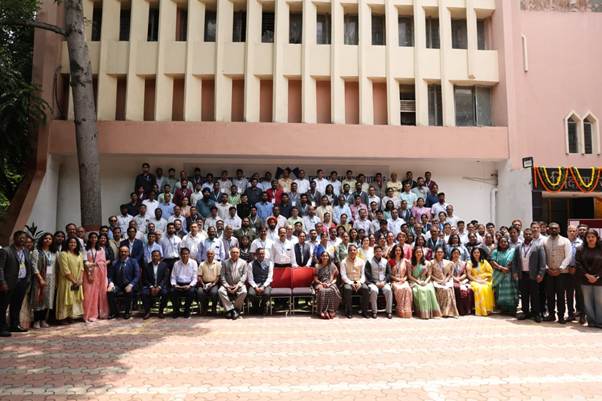
New Delhi, August 20: Union Ministry of Health and Family Welfare, in collaboration with the National Institute of Health and Family Welfare (NIHFW), Capacity Building Commission (CBC) and Karmayogi Bharat (KB), commenced the two-day National Conference on Mission Karmayogi for Mission Karmayogi Development Officers (MDOs) of the Department of Health and Family Welfare (DoHFW) today at NIHFW, New Delhi. The conference is being held on 20–21 August 2026 with the objective of strengthening institutional capacity-building mechanisms and enhancing the effectiveness of capacity-building initiatives across the health sector.
The conference is aimed at strengthening the capacity of MDOs to effectively plan, implement and sustain capacity-building initiatives under Mission Karmayogi. It is providing a platform for institutional collaboration, peer learning and knowledge exchange among MDOs and stakeholders engaged in capacity building within the Department of Health and Family Welfare.
During the first day, deliberations focused on strengthening the capacity-building ecosystem, aligning learning interventions with organisational requirements and promoting competency-based professional development. The sessions also provided an opportunity for participating MDOs to share their experiences, best practices and learnings in implementing capacity-building initiatives.
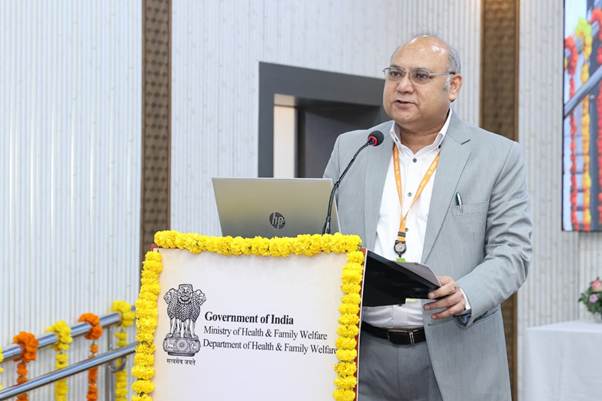
Setting the context for the conference, Shri Rakesh Kumar, Director (Training), Ministry of Health and Family Welfare, highlighted that Mission Karmayogi represents a significant shift from the traditional rule-based approach towards a role-based, competency-driven and capacity-building-oriented approach to civil service development.
He emphasised that Mission Karmayogi Development Officers (MDOs) have a critical role in translating this vision into measurable institutional outcomes by identifying capacity-building requirements, facilitating appropriate learning interventions and strengthening a culture of continuous professional development within their respective organisations.
Highlighting the progress made under the Mission, Shri Rakesh Kumar stated that 21,927 course enrolments and 17,660 course completions had been recorded, reflecting the growing adoption of structured and technology-enabled learning across the Ministry.
He emphasised that the focus of capacity building should extend beyond completion of courses to enhancing competencies, improving workplace performance and creating tangible improvements in institutional functioning and public service delivery. He called upon MDOs to play an active role in ensuring that the learning acquired through Mission Karmayogi is effectively translated into improved performance and outcomes within the health system.
Speaking on the holistic perspective of Mission Karmayogi, Shri Rakesh Verma, Chief Operating Officer, Karmayogi Bharat, highlighted the transformative role of technology-enabled capacity building in strengthening the capabilities of government officials and frontline personnel.
Recalling the experience of the COVID-19 pandemic, Shri Verma highlighted how around 11 lakh personnel from the Ministry of Health and Family Welfare and various associated organisations, including doctors and nurses, were trained on different aspects of COVID-19 management, including handling of Intensive Care Units (ICUs) and other critical areas. He noted that the experience demonstrated the importance of rapidly scaling up capacity building through technology-enabled platforms during public health emergencies.
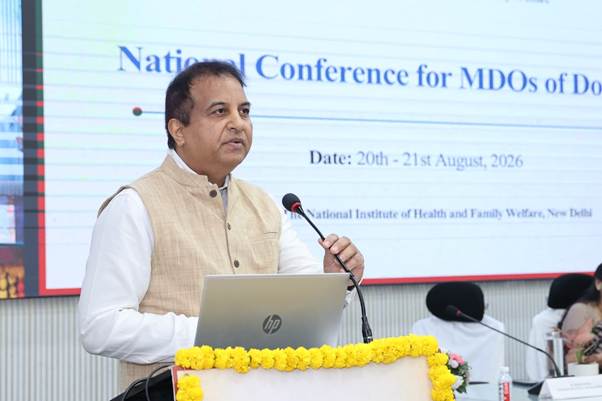
Highlighting the growth of the iGOT Karmayogi platform, he noted that it has evolved into the world’s largest capacity-building platform, providing a technology-driven ecosystem for continuous learning and professional development of government officials. He also highlighted the growing international interest in the platform, noting that India has signed an MoU with Mauritius and is engaging with several Latin American and SAARC countries to share its experience and explore collaboration in capacity building.
Shri Verma further highlighted that civil servants undergoing training at Lal Bahadur Shastri National Academy of Administration (LBSNAA) are also undertaking courses through the iGOT platform, reflecting the increasing integration of digital learning with institutional training.
Looking ahead, he emphasised that the next priority should be to enrol all frontline health workers on the iGOT platform and leverage emerging technologies, particularly Artificial Intelligence (AI), to make learning more accessible, relevant and personalised. He also underlined the importance of developing multilingual courses to ensure that capacity-building opportunities can reach personnel across different regions and linguistic backgrounds.
He emphasised that the continued expansion of iGOT, coupled with the use of AI, multilingual content and wider enrolment of frontline personnel, can significantly strengthen the capacity-building ecosystem and support the creation of a more skilled, responsive and future-ready public health workforce.
Delivering the keynote address, Dr. Alka Mittal, Member, Capacity Building Commission (CBC), described the conference as a commendable and important step by the Ministry of Health and Family Welfare in collaboration with NIHFW, noting that Mission Karmayogi Development Officers (MDOs) are instrumental in translating capacity-building initiatives into action and ultimately impacting the lives of citizens at the ground level.
Highlighting the objectives envisaged at the time of formulation of the Capacity Building Commission, Dr. Mittal emphasised three key priorities: enhancing the performance of around 3.3 crore both central and State government officials and civil servants; developing a greater sense of accountability among them; and fostering a strong culture of citizen-centricity in public service delivery.
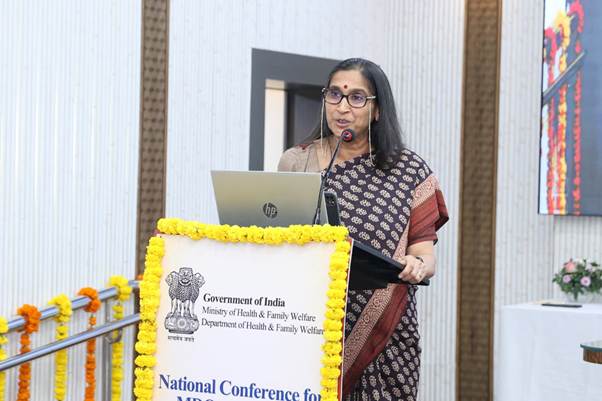
She highlighted the transformative role of the iGOT Karmayogi platform in enabling technology-driven learning and capacity building for the vast government workforce. She noted that the Karmayogi team has been continuously working towards expanding and strengthening the platform to facilitate accessible, continuous and competency-based learning for government officials.
Dr. Mittal further reiterated that the Prime Minister has, on several occasions, emphasised the importance of becoming a true ‘Karmayogi’ through Sankalp, underlining the need for commitment, responsibility and a citizen-centric approach in the discharge of public duties. She stressed that capacity building under Mission Karmayogi is not merely about acquiring skills, but about fostering the right mindset and commitment towards effective and responsive public service delivery.
Following the inaugural session, the conference featured a hands-on session on the iGOT Karmayogi platform, focusing on mapping roles and responsibilities of MDOs across different functional levels. This was followed by technical sessions on the role of Capacity Building Units, implementation of the Rashtriya Karmayogi Programme and Karmayogi Karyakram, as well as the implementation of Mission Karmayogi in the Department of Health and Family Welfare.
The first day also included group discussions, with participants deliberating on themes including motivating employees for continuous capacity building, breaking institutional silos and developing health-based domain courses, improving the Department’s performance in Government ranking frameworks, and measuring the citizen impact of Mission Karmayogi beyond mere course completion.
The conference is aligned with the objectives of Mission Karmayogi – the National Programme for Civil Services Capacity Building, which seeks to develop a professional, citizen-centric and future-ready civil service through competency-based capacity building and continuous learning.
The conference brought together Mission Karmayogi Development Officers (MDOs), health professionals, academicians and subject-matter experts from across the country.

