



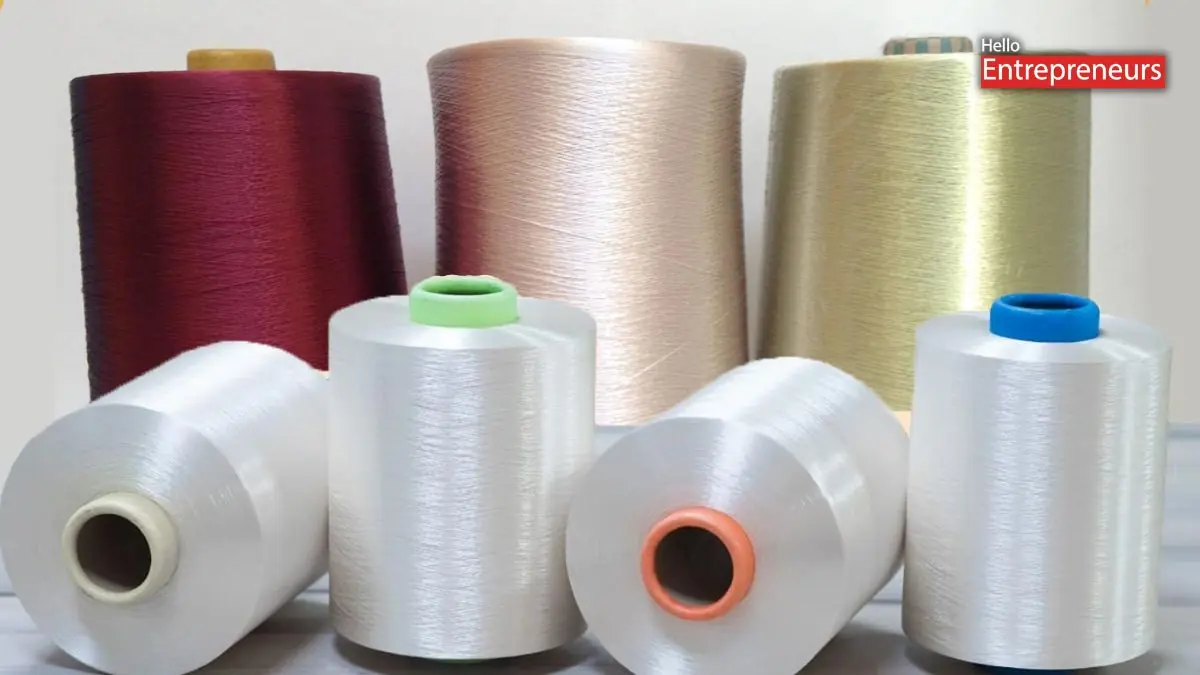
Surat: The textile industry leaders have submitted a representation to Finance Minister Nirmala Sitharaman requesting her not to impose MIP or anti-dumping duty on imported nylon yarn and provide an incentive scheme for the textile weaving industry that provides employment to lakhs of people in Surat and across the country.
As the central budget for the financial year 2026/27 is going to be presented on 1 February 2026, some recommendations and suggestions have been sent to Prime Minister Narendra Modi, Union Finance Minister Nirmala Sitharaman, Textile Minister Giriraj Singh, Commerce and Industry Minister Piyush Goyal, Textile Secretary, Government of India, Textile Commissioner, Government of India and Finance Minister of Gujarat by the weavers leaders of Nylon Weavers Association Sura.
Nylon Weavers Association Surat President Mayurbhai Chevali, Sachin Industrial Society Secretary and Weavers leader Mayur Golwala and Weatherod Weavers Association President Bhupendra Chahwala have demanded that no anti-dumping duty (ADD) or minimum import price (MIP) be imposed on imported nylon yarn. A similar demand has been made for other imported yarns including polyester.
It has been submitted to the Union Finance Minister that, “After the implementation of the American tariff, the textile industry is going through a difficult situation. According to the figures released by the Ministry of Textiles, textile exports have been affected.
Textile City Surat is the hub of MMF textiles. International and domestic demand has decreased. This situation has arisen due to global instability. Surat’s textile industry is going through a recession. In such a situation, the demand of a handful of nylon yarn manufacturing spinners and corporate companies to impose MIP or anti-dumping duty on imported nylon yarn is not reasonable. If the Central Government accepts their demand, then it will be the turn of closing factories on a large scale. Thousands of artisans will become unemployed. Nylon weavers, who are suffering losses in the current recession, have been forced to sell some of their machinery for scrap. In such a serious situation, the entire textile The government needs to provide an incentive scheme for the weaving industry. If the government decides to impose MIP or anti-dumping duty under the influence of a handful of nylon yarn manufacturing spinners and corporate companies, it will be a decision that will lead to the loss of livelihood for thousands of small weavers and artisans.
Lakhs of simple weaving machines will start being sold at scrap prices. Talking about the current stage, textile units are running only 4 days a week in Surat in phases due to the severe slowdown in the textile sector.
If any issue of MIP or ADD on imported nylon yarn is taken up in the budget or any decision is taken regarding it, thousands of workers including unit holders will become unemployed. Two years ago in the year 2023, when controls like BIS and QCO were imposed on polyester yarn, the business monopoly came into the hands of domestic spinners, due to which the textile sector It had become a victim of spinners’ cartel/syndicate. Former CEO of NITI Aayog Shri Amitabh Kant said in a CII program that there should be no quality control order or heavy duty structure on the raw material of textiles, which provides more employment than agriculture. “QCOs are strangling the textile industry of India. 10 million jobs should have been created. But QCO killed jobs,” the government’s relaxation in QCO after the submission of industry associations is welcome.
It is also worth mentioning that for a long time now, there has been a tussle between domestic spinners and weavers-knitters, spinners are trying to keep the government in the dark by presenting false figures. On the other hand, since weavers-knitters depend on imported yarn, oil keeps flowing in the stomach of local spinners. Therefore, even now, nylon spinners are struggling hard to get provisions regarding MIP and ADD in the budget.
If the decision is made in favor of nylon spinners and any decision is taken regarding MIP or anti-dumping duty in the upcoming budget, then the spinners will again become uncompromising and form a cartel and exploit weavers-knitters. Small and rented units will start closing on a war footing. However, domestic nylon spinners are not even capable of meeting the demand for nylon yarn. There is a huge shortage of production. On the other hand, the textile industry has shifted towards high-speed technology machines, which require good quality and quality machines, and domestic nylon spinners cannot provide such machines. Considering the fact that a large group of weavers and knitters are involved, we hope that the government will not make any announcement regarding MIP or ADD in the upcoming budget 2026/27.

