



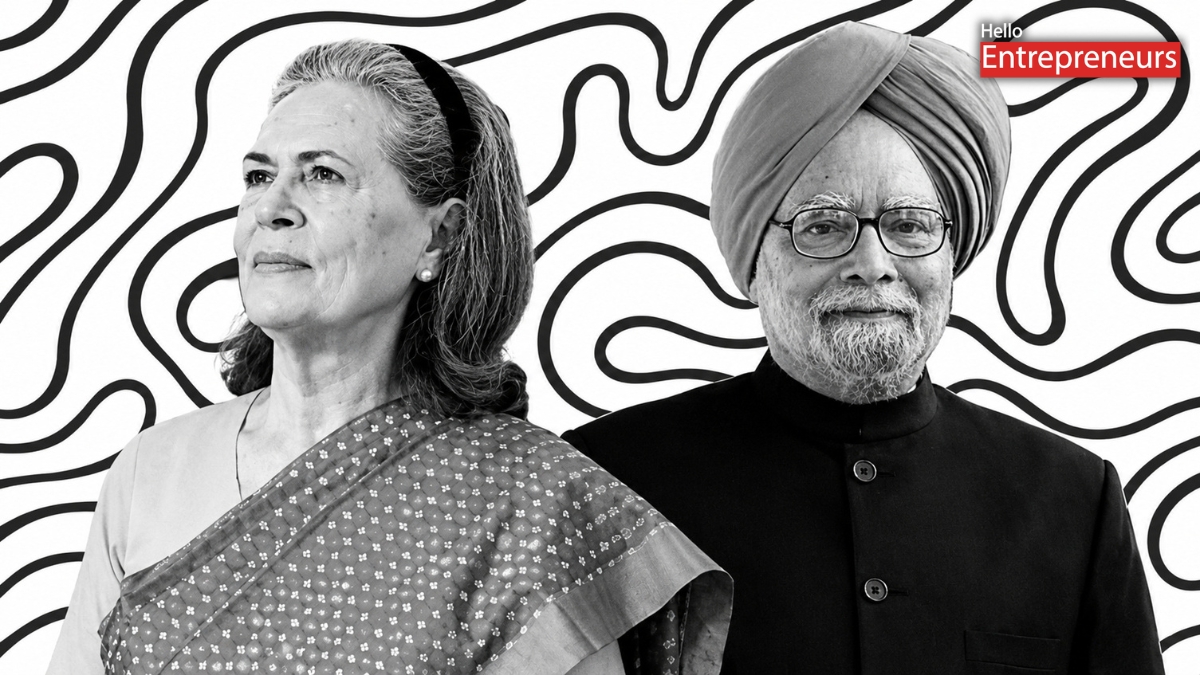
New Delhi: In 2004, when the Congress led alliance swept to an unexpected victory, Sonia Gandhi refused the prime ministership and nominated Manmohan Singh as the new PM who was sworn on 22 May 2004. The pact that ensued was one of the more unusual forms of a power sharing arrangement in the Indian political system. One magazine dubbed the pair “Jodi No 1”, as a prime minister and party president who wielded the real political power.
As an economist who helped open India’s economy in the 1990s, Singh was a man whom his colleagues could depend on. Gandhi introduced the party’s political support and an agenda for the poor. They were two poles apart in political opinion, and ran the government during the next nine years with civility and mutual respect, observers have remarked.
The first term
In a marriage of opposites it was most effective in UPA-I and the growth rate was approximately 9 percent during the initial three years and the Prime Minister could work on his reform agenda without being hampered by Gandhi’s social agenda. The National Advisory Council to her was an integral part of this. It initiated the Right to Information Act, the rural employment guarantee scheme (NREGA) and other social laws such as the Forest Rights Act. The Congress has itself recognized the Mid-Day Meal Scheme and the National Rural Health Mission among the recommendations that got translated into action by the Council.
The employment guarantee became the idea later renamed after Mahatma Gandhi that the “trickle down” effect was more limited than it was perceived to be. Supporters state it was putting cash instantly into rural households. One former diplomat said that NREGA has not been an unqualified success, but RTI has “several times” been effective in the battle against corruption.
Where they held firm, and where they differed
The partnership was far from smooth sailing. Singh, during an meeting with key leaders including Gandhi, made it clear that he would not continue if the deal was discarded, on the Indian side of the nuclear deal. There was also a disagreement with the two regarding changes in the RTI Act. Singh, a former bureaucrat, was never one for putting everything out there for the public to know but this was the Congress president’s pride.
A more fundamental conflict was seen by some commentators. One analysis put forward a scenario in which, between 10 Janpath and 7 Race Course, between the demands of the pro-poor “Council” of Gandhi and the desires of the Prime Minister, the Government found itself caught. Inside sources, however, indicated that despite the conventional understanding that the two were at odds, they were doing very well.
The second term
UPA-II was harder. One evaluation reflects a lack of government policies, inflation out of control, and an economy stuck in a rut. Others have criticized the drive for further welfare legislation even after it was not understood that there were limits to such laws. In 2013, rumor spread that something was wrong between the Prime Minister and the chair of the UPA.
The verdict
The attribution of credit is yet to be sorted out by historians. The development of the years and the rights-based laws, as well as the nuclear deal, are cited as Singh’s defense. He has been faulted by his critics for the slowdown and the scandals that plagued the UPA-II government. There is consensus that the two had a workable arrangement in place, Singh holding the economy open and while Gandhi ensured benefits trickled down to the bottom.

