



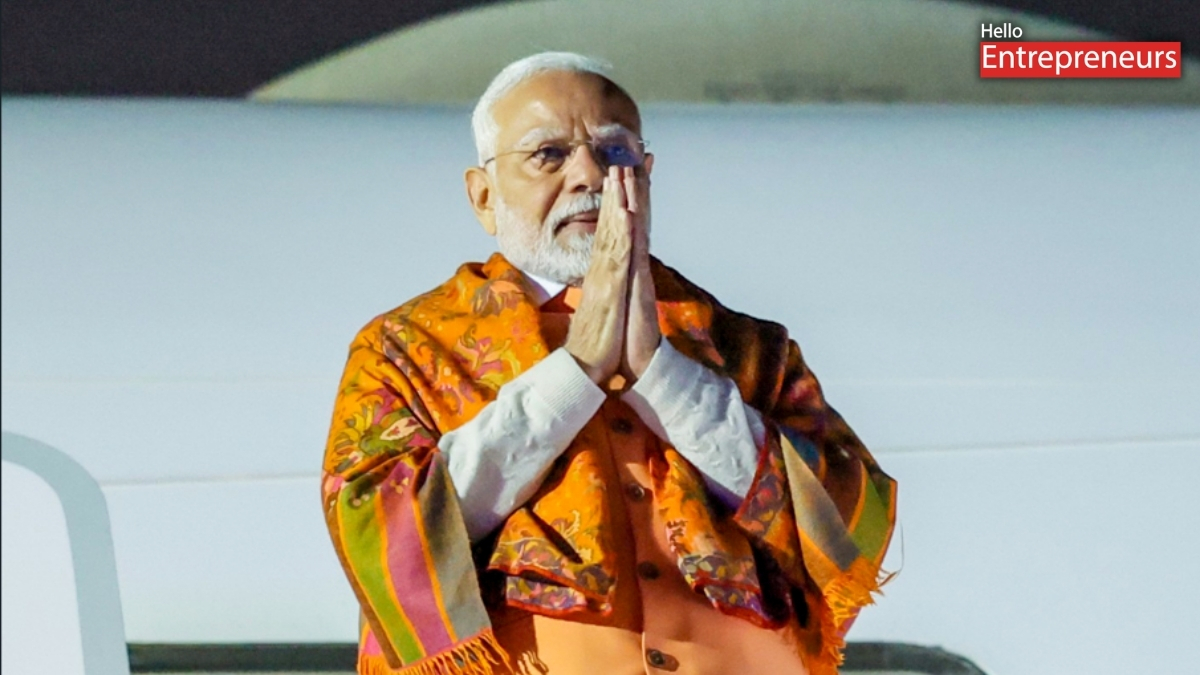
New Delhi: Prime Minister Narendra Modi’s visit to the Shanghai Cooperation Organisation (SCO) Summit in Bishkek, Kyrgyzstan, is more than just a diplomatic trip. But this summit is much significant for India, especially as the world faces an escalating threat of global tension, a shift in the trade corridors and a heightened energy security crisis.
On August 31st and September 1st, SCO will be celebrating 25 years with its 26th SCO Summit. The leaders from Russia, China, Iran and Central Asian countries will be in attendance along with Modi as a key leverage point for India to safeguard its interests and grow its influence.
Security and terrorism remain India’s key priorities
One of Modi’s most apparent policy targets will be to step up the fight against terrorism, separatism and extremism. Modi said India’s ideal for the region is “security, connectivity and opportunity” and called upon for cooperating to make the region secure.
It is significant for India as SCO involves countries which have significant influence on Central Asia and the broader Eurasian region. New Delhi is determined that terrorism would not take the back seat and that cooperation would be undermined if the differences between the member nations weaken it.
Russia: Energy, trade and strategic partnership
Of course, one of the key aspects of the visit would be Modi’s meeting with his Russian counterpart, Vladimir Putin. Both India and Russia have experienced a significant growth in bilateral trade but there has been a significant trade deficit in India favour of Russia. Discussion is expected to be on the expansion of Indian exports and turn the bilateral relationship into a more balanced one.
Other key commodities include energy and fertilisers. Russia has pledged India that it is willing to ensure supplies, helping India to meet risks arising from wracking energy markets and instability in West Asia.
China: Managing competition while keeping dialogue open
One of the summit’s most closely-watched events could be a Modi-Xi Jinping meeting. India and China remain conflicted, especially regarding the border and strategic competition in general.
But keeping the dialogue is beneficial to India. When you meet, not everything will be harmonious. On the contrary, it may be able to ensure that both sides can have a clear line of communication and the risk of unnecessary tensions can be minimized. The deadline is also significant as China’s President Xi is believed to be heading to India to attend the BRICS Summit in September.
Iran and West Asia: Protecting India’s energy and trade routes
Talks between Modi and Iranian President Masoud Pezeshkian are also much important. The current crisis in West Asia has raised the issue of the energy supplies and shipping routes.
Iran is significant for India for two reasons its geographic proximity and its link with Central Asia. The Chabahar port and International North-South Transport Corridor might be useful for India to enhance access to the Central Asian markets without relying on the traditional routes.
Will the SCO Summit benefit India’s future?
The answer is, perhaps, yes, but it will take some time for benefits to materialize.
India’s larger agenda seems to be to keep all the power centers connected and safeguard its strategic autonomy. Given that New Delhi will have access to the same table as Russia, China, Iran and Central Asian countries, the SCO seems to be a win-win.
The area of greatest opportunities for India is in energy security, trade connectedness and trading with Central Asia, defence cooperation, counter-terrorism and diplomatic influence. The summit also allows India to set the stage for the next BRICS Summit in New Delhi.
But indeed India has to turn their diplomatic discussions into concrete projects, investments, improved trade access and improved connectivity. In that case, the Bishkek SCO Summit has the potential to be a significant milestone in India’s pursuit of deeper engagement with Eurasia and to sustain its economic and strategic goals in the region.