



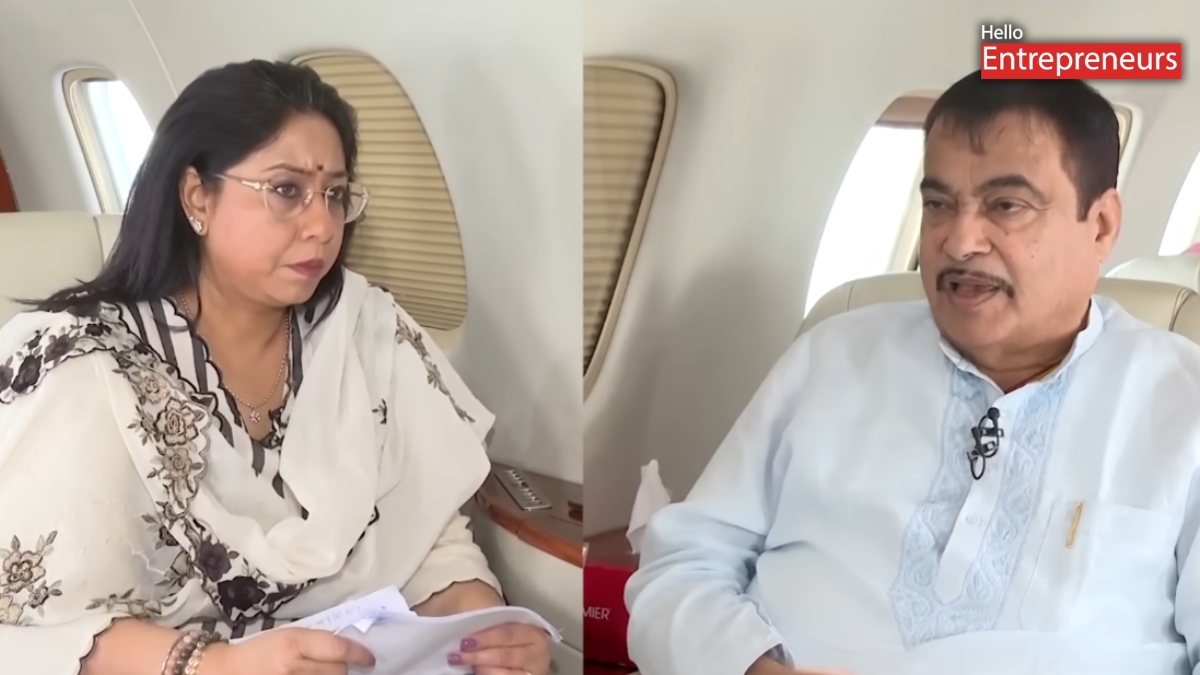
New Delhi: Union Road Transport and Highways Minister Nitin Gadkari has refused to entertain claims that E20 petrol can harm car engines, but said that their performance can be affected on highways. Gadkari responded to various questions on ethanol blended fuel during a private interview with the ABP News Executive Editor Megha Prasad, giving reasons behind the Government’s push for alternative fuels despite the controversy.
It is coming at a time when E20 is one of the many issues being talked about, as all those who have tried to fill up petrol in their cars with this fuel now allege that their cars use up more fuel than they used to. Seizing upon the calls, Gadkari responded, saying there is no scientific proof of damage to vehicle engines using E20 fuel. Authentic customers who still have trouble with E20 petrol are advised to visit their authorized dealership. Bring the issue to my notice if the problem is due to blending of ethanol, Gadkari said, dismissing rumors on the issue.
Mileage Difference Exists, But Only in Certain Conditions
Gadkari acknowledged that this could lead to minimal reduction in highway “mileage” when consuming ethanol-blended petrol, an issue that has been a frequent gripe of motorists. He said that in urban areas, there is a negligible gap between them.
The minister added that in general, cars running in urban traffic have nearly identical fuel consumption on ethanol-gas blends as on petrol. Fuel efficiency will decrease to a certain degree on highways as engines are running at higher speeds and for longer durations. But he said that while this cut shouldn’t be ignored, the broader ethanol gains need to be highlighted as well. Gadkari further added that fuel prices should be linked with mileage. Reduced mileage in some instances can be offset by consumers through reduced fuel costs and potentially environmental gains.
Why the Government is Promoting Ethanol
Gadkari reiterated that the government’s ethanol programme is targeting to reduce India’s reliance on imported crude oil, improve the incomes of farmers and mitigate pollution while at the interview. India imports huge quantities of crude oil annually and is therefore highly impacted by price changes in the international crude oil market. The need to produce ethanol from crops like sugarcane, maize, and other biomass could help slash import bills drastically without much additional burden to farmers, Gadkari said.
He termed ethanol as one of the significant options for India’s energy security and encouraged people to venture into the use of locally produced fuel options rather than the excessive reliance on fossil fuels, which are brought in from the outside.
Rejects Conflict of Interest Allegations
The interview also briefly mentioned the allegation of the connection between Gadkari’s attitude toward ethanol and his family business. The minister emphatically denied both, saying ethanol would make up only a tiny percentage of his son’s operations and that he’s always been speaking up for biofuels for the good of the nation and not for himself. He dismissed the claims as politically motivated, and he repeated that his priority would be to make the public aware that he is busy tackling pollution levels, cutting fuel imports, and creating sustainable transport initiatives.
Multi-Fuel Future for India
Gadkari put it succinctly: ethanol’s a part of a much bigger plan for cleaner mobility in India. He explained that the nation has to embrace a combination of fuel technologies such as electric, flex-fuel, biofuels, compressed biogas, and hydrogen.
The minister said it does not make sense or make for a habitable society to depend on one source of energy. Rather, India needs to set in motion a competition among various clean energy technologies for the consumers to have cleaner and cheaper options to choose from. The government is also making progress in diversified green mobility by implementing multiple pilot projects with hydrogen-powered vehicles on key national roads, he said.
Consumer Choice Will Continue
Gadkari also pointed out that consumers are not compelled to consume ethanol fuel blended with petrol/diesel. For people who still want to buy conventional petrol, they can do so, but this might increase the price of the conventional petrol as there is more reliance on imported crude oil. He said the government’s goal is to provide the consumer with cheaper and cleaner options, not to rule out consumer choice. In the long run, advancing vehicle technology and ethanol compatibility will allow higher ethanol blends to prove more efficient.
A Call to Trust Science Over Rumors
Gadkari had been calling on the public to trust reliable scientific information rather than rumourmongering on social media throughout the interview. He said many of the allegations relating to engine issues had not been substantiated by credible evidence and advised consumers of any true instances of engine fault to bring them to the appropriate channels. The minister said he expects even greater advances in fuel efficiency due to new technology from the auto industry in the near future.
Looking Ahead
With India moving towards cleaner transportation, ethanol continues to play an important role in the Government’s energy policy. Despite the issue of mileage that keeps coming up and being addressed by Gadkari, the pros of ethanol are in the environmental, economic, and strategic interest categories more than offsetting the cons. His remarks hint that the Center will not slow down the ethanol blending drive. Rather, the government will take measures to continue fostering various clean fuel technologies in tandem with a larger push for lower pollution, more energy independence, and new avenues for Indian farmers.