



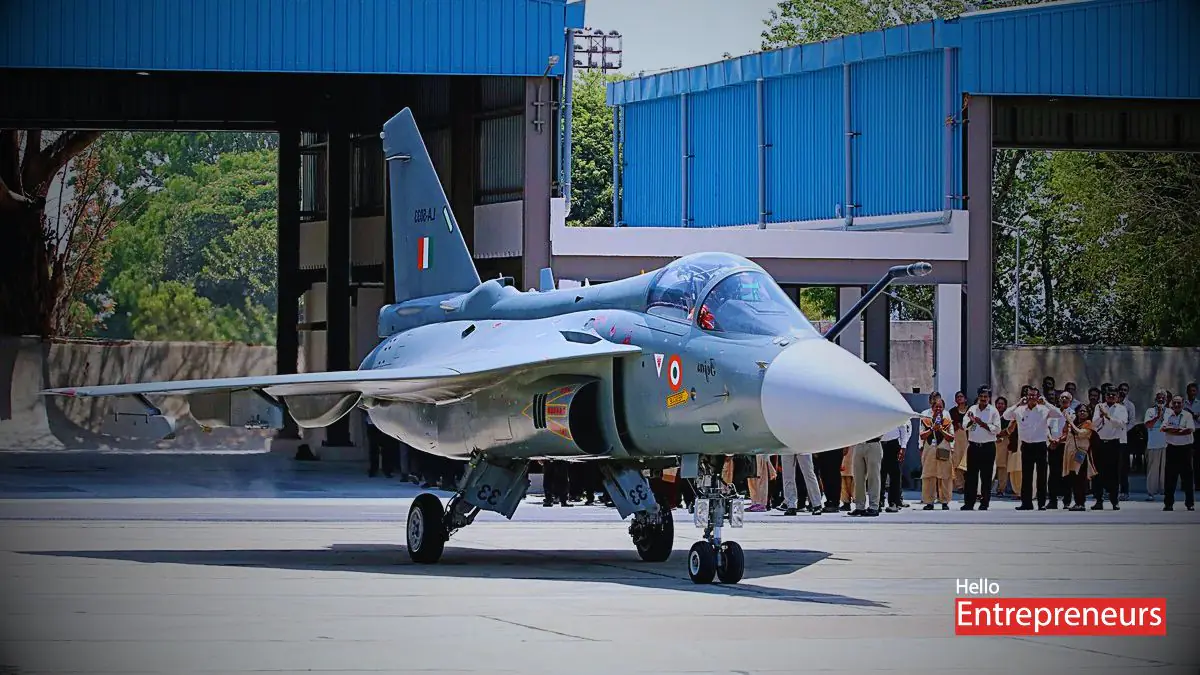
New Delhi: The Indian Air Force just got a turbocharged shot of confidence. On September 25, 2025, the Ministry of Defence signed a ₹62,370 crore contract with Hindustan Aeronautics Limited (HAL) for 97 LCA Mk1A fighter jets. That’s not a typo. ₹62,370 crore, excluding taxes. (LCA Mk1A Contract)
This isn’t just procurement. It’s a statement. A blunt one: India is done playing second fiddle in the defence market.
The LCA Mk1A Contract in Numbers
Let’s cut the jargon. Here’s what the deal includes:
- 97 aircraft total
- 68 single-seat fighters
- 29 twin-seat trainers
- Delivery window: 2027–28 through 2033
- Indigenous content: Over 64%
- Value: ₹62,370 crore, excluding taxes
This is the kind of bulk order that keeps squadrons healthy and enemies cautious. For the IAF, which has been running under its sanctioned squadron strength, this deal isn’t luxury, it’s oxygen.
Why LCA Mk1A Matters
The Tejas, India’s homegrown fighter, has had its share of critics. Delays, redesigns, endless committee reviews, you name it. But the Mk1A is a different animal.
This variant packs:
- UTTAM AESA Radar – indigenous, cutting-edge, and a serious upgrade from imported systems.
- Swayam Raksha Kavach – a self-protection suite that basically tells incoming threats: “Not today.”
- Indigenous actuators and control surfaces – more local brainpower, less foreign dependency.
HAL isn’t just tinkering around the edges. Compared to the 2021 contract, this package adds 67 improvements. That’s iteration at scale.
64% Indigenous and Climbing
Here’s the kicker: 64% of this fighter is built in India. Not “assembled in India.” Built. From avionics to actuators, the domestic footprint is wide.
And it’s not just HAL carrying the load. A vendor base of 105 Indian companies feeds into the ecosystem. That means MSMEs in Coimbatore, machining firms in Pune, electronics outfits in Hyderabad, all plugged into a national defence pipeline.
Jobs: More Than a Talking Point
Politicians love job numbers. But this time, the math isn’t fluff. The project is expected to generate 11,750 direct and indirect jobs every year for six years. That’s factories humming, labs buzzing, and supply chains alive.
And these aren’t just assembly-line gigs. We’re talking about aerospace engineers, avionics specialists, precision machining, composites, jobs that sharpen India’s industrial spine.
The IDDM Factor: Walk the Talk
This procurement falls under the Buy (India-IDDM) category of the Defence Acquisition Procedure 2020. For once, a policy tag isn’t bureaucratic theatre. IDDM, “Indian Designed, Developed, Manufactured”, means exactly that.
This isn’t India signing a cheque to Moscow or Paris. This is India signing a cheque to itself.
Comparisons: The Regional Chessboard
Zoom out. Neighbours matter.
- China keeps flaunting its J-10 and cranking out J-20 stealth fighters.
- Pakistan still banks on the JF-17, co-developed with Beijing.
Now picture 97 Mk1As flying out of Indian bases over the next decade. It’s not just numbers, it’s capability. With AESA radar, indigenous ECM, and modular upgrades, the Mk1A is built for longevity.
This isn’t India keeping up. It’s India setting the pace.
HAL’s Role: From PSU to Powerhouse
HAL often gets mocked as a lumbering PSU. But credit where it’s due: delivering 97 modern fighters in six years is no small feat. This deal will stretch HAL, test HAL, and, if executed right, transform HAL.
The company’s Nashik and Bengaluru divisions will be ground zero for this production blitz. Expect long nights, supply chain scrambles, and bureaucratic bottlenecks. But if HAL pulls it off, its reputation shifts from “slow and steady” to “reliable and ready.”
Agni-Prime: The +1 Flex
As if the contract wasn’t enough, DRDO decided to add spice to the week. On September 24, it successfully test-launched the Intermediate Range Agni-Prime missile from a rail-based mobile launcher.
Range? 2000 km.
Platform? Rail launcher that blends into the network.
Speed of deployment? Ridiculously fast.
The missile nailed its trajectory, tracked across multiple ground stations. Senior DRDO scientists and Strategic Forces Command officers called it a textbook launch. For the record, the road-mobile Agni-P is already inducted. The rail variant? That’s next-level flexibility.
Rail Launchers: Why They Matter
Road-mobile systems are great, but roads can be watched. Rail systems, on the other hand, hide in plain sight. Imagine a missile train weaving across the country, blending with cargo traffic.
When needed, it stops, launches, and moves on. Harder to detect, harder to pre-empt, and much harder to neutralise. Few nations can do this. With Agni-Prime, India joins the club.
Twin Signals: Air and Ground
Back-to-back announcements, LCA Mk1A and Agni-Prime, aren’t a coincidence. They’re choreography.
- Air dominance: 97 fighters to secure the skies.
- Ground deterrence: Rail-mobile Agni-Prime to keep adversaries guessing.
Together, they send a blunt message: India isn’t just spending, it’s investing in sovereignty.
Industry Ripple Effect
The contract’s ₹62,370 crore tag isn’t money disappearing into HAL’s vault. It’s money circulating. Think alloys, composites, avionics, software, electronics, and testing infrastructure. Think hundreds of Tier-2 and Tier-3 suppliers who now scale up capacity, hire more engineers, and invest in R&D.
This is how an aerospace ecosystem is built. Piece by piece, part by part.
Critics Will Nitpick
Of course, critics will grumble. They’ll point to delivery timelines; 2027 is far. They’ll say 64% indigenous content is still not 100%. They’ll compare Mk1A to Western fourth-gen fighters and sigh. Fair. But here’s the blunt truth: India has moved from import addict to indigenous builder. That’s not an overnight transformation, but it’s a transformation.
From Importer to Exporter
Remember the 1980s? India begged for Mirage 2000s. Remember the 2000s? India waited for Rafale deliveries. Now, India is exporting helicopters to the Philippines, radar to Armenia, and pitching Tejas to Argentina and Malaysia.
The LCA Mk1A contract keeps that momentum rolling. In a decade, don’t be surprised if Mk1As or their successors are flying under foreign flags, with “Made in India” stamped on them.
This isn’t about jets or missiles. It’s about mindset.
A ₹62,370 crore contract with HAL for 97 Mk1A fighters. A successful Agni-Prime rail launch within 24 hours. Two announcements, one theme: India is building, not begging.
For the IAF, it means capability. For the industry, it means jobs and innovation. For the government, it means credibility. And for India? It means standing tall in a world that respects muscle, not excuses.
Also Read: India data centre growth ignites INR 5 lakh cr boom on D-Street

