








Delhi: India just made a decisive move in the global tech supply chain game. With a ₹7,280 crore approval, rare earth permanent magnet manufacturing in India is no longer an ambition. It is now policy-backed reality.
Look, magnets don’t sound glamorous. But without them, electric vehicles stall, wind turbines freeze, and defence systems lose precision. That’s the quiet power India is now securing.
What the Government Approved and Why It Matters?
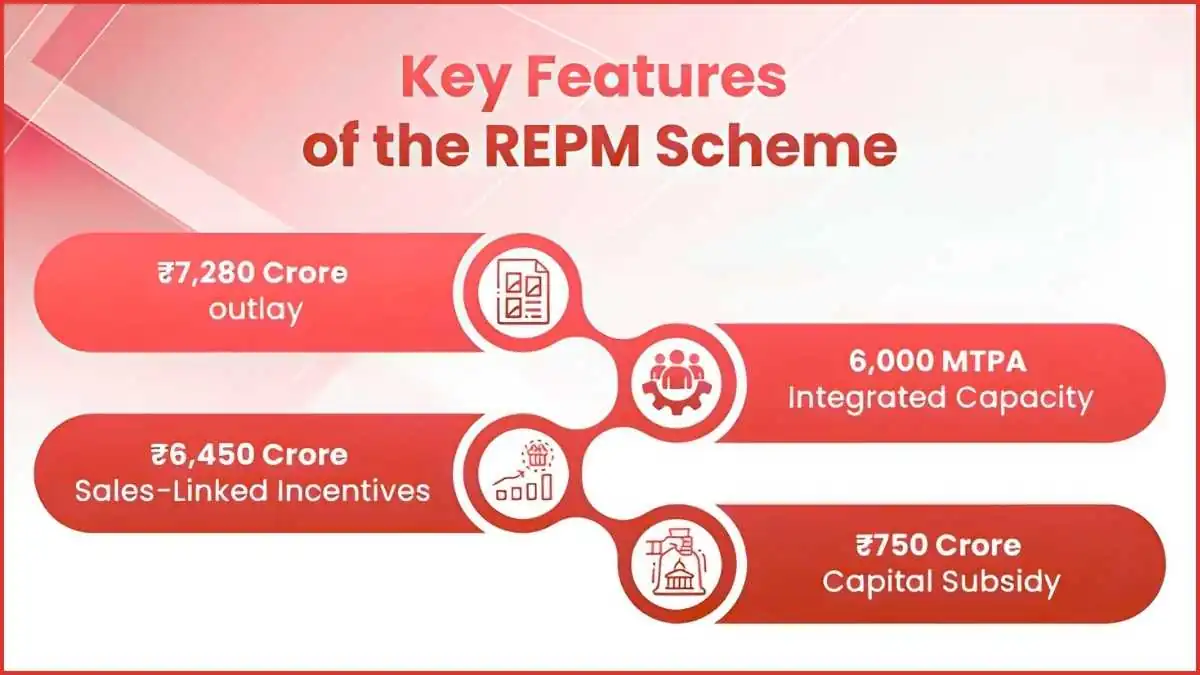
The Government of India has cleared the Scheme to Promote Manufacturing of Sintered Rare Earth Permanent Magnets. The headline number is ₹7,280 crore. The strategic number is 6,000 metric tonnes per annum.
That capacity will be fully integrated. From rare-earth oxides to finished high-performance magnets. No shortcuts. No half measures.
This is about building an entire ecosystem, not just factories. It plugs directly into electric mobility, renewable energy, electronics, aerospace and defence. All sectors India wants to dominate, not depend on.
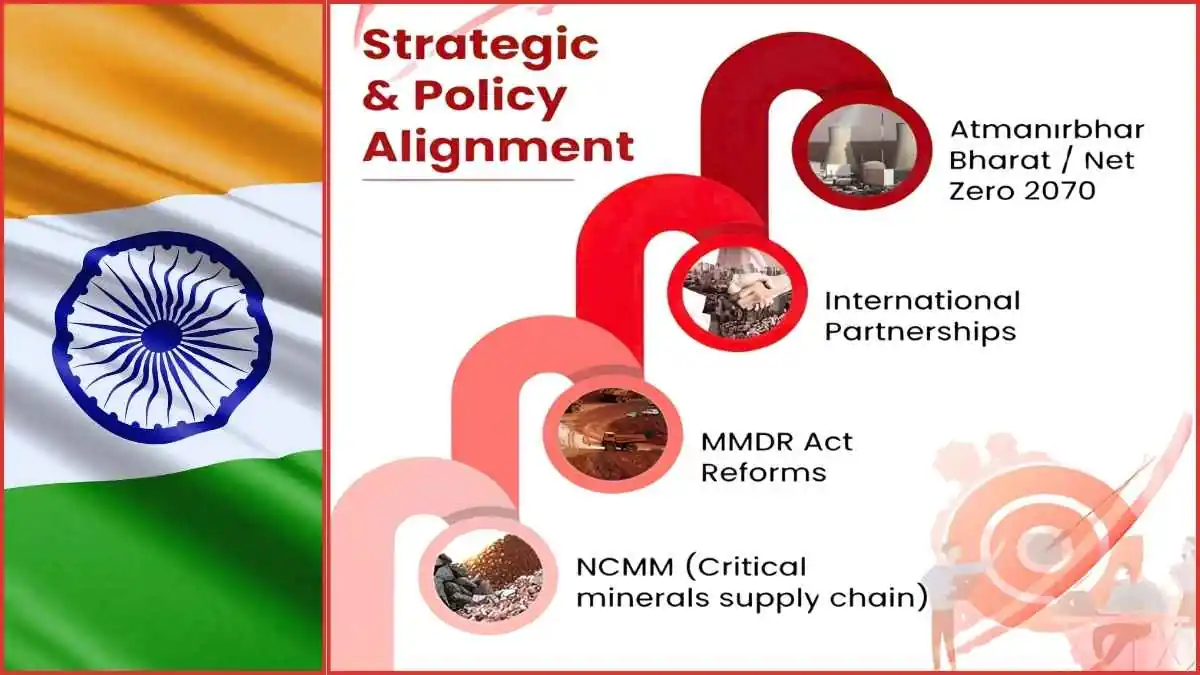
And yes, it fits neatly into Atmanirbhar Bharat, resilient supply chains, and Net Zero 2070. But this is less slogan, more steel.
What Exactly Are Rare Earth Permanent Magnets?
Rare earth permanent magnets, or REPMs, are the muscle behind modern engineering. They are compact, brutally strong, and stable under stress.
You’ll find them in electric vehicle motors, wind turbine generators, industrial robots, consumer electronics, aerospace systems, defence hardware, sensors and actuators.
Their strength-to-size ratio is the key. Smaller motors. Higher efficiency. Less energy loss.
As India scales EV adoption, ramps up renewable energy, and deepens defence manufacturing, dependable access to these magnets becomes non-negotiable. Importing them forever is not a strategy. It’s a risk.
India’s Resource Advantage, Finally Put to Work
Here’s the part many miss. India is not short on rare earths. It has been short on downstream ambition.
India holds about 13.15 million tonnes of monazite deposits. That translates to roughly 7.23 million tonnes of rare-earth oxides. These are spread across Andhra Pradesh, Odisha, Tamil Nadu, Kerala, West Bengal, Jharkhand, Gujarat and Maharashtra. Coastal sands, red sands, inland alluvium. The raw material is right there.
Add another 1.29 million tonnes of in-situ rare-earth oxide resources in Gujarat and Rajasthan. Then zoom out further. Geological Survey of India exploration has identified 482.6 million tonnes of rare-earth ore resources.
That’s not a shortage problem. That’s a conversion problem.
Until now, India exported potential and imported finished magnets.
The Import Dependence Reality Check
Between 2022–23 and 2024–25, India sourced most of its permanent magnet imports from China. Value-wise, dependence ranged from nearly 60 percent to over 81 percent. Quantity-wise, it crossed 90 percent in some years.
That’s not diversification. That’s vulnerability.
And demand is not slowing down. India’s REPM consumption is expected to double by 2030. Electric mobility, renewable installations, electronics manufacturing, strategic systems. All pulling from the same magnet supply.
This scheme exists because waiting was no longer an option.
How the Scheme Actually Works?
The architecture is deliberate. This is not a subsidy spray.
The plan is to create 6,000 MTPA of integrated REPM manufacturing capacity. Up to five beneficiaries will be selected through global competitive bidding. Each can get up to 1,200 MTPA.
That spreads risk while preserving scale.
₹6,450 crore is earmarked as sales-linked incentives over five years. Produce. Sell. Get rewarded.
Another ₹750 crore is allocated as capital subsidy to help set up advanced facilities. Real plants. Real equipment.
The scheme runs for seven years. Two years to build. Five years of incentive-backed production. Enough time to stabilise, scale and compete.
No rush. No drift.
Why This Aligns With India’s Bigger Goals?
Rare earth magnets sit at the intersection of clean energy and national security. That’s a rare overlap.
They are critical for energy-efficient motors and wind power systems. So yes, they support India’s clean-energy transition and Net Zero 2070 goals.
They are also embedded in defence and aerospace platforms. That makes domestic production a strategic necessity, not just an economic one.
This scheme strengthens indigenisation. It reduces exposure to external shocks. It gives Indian manufacturers certainty.
And it dovetails neatly with the National Critical Minerals Mission.
The NCMM Connection
Approved in January 2025, the National Critical Minerals Mission is India’s long-game play. It covers everything from exploration and mining to processing and recycling.
Rare earths sit squarely within that framework.
The REPM scheme is not a standalone announcement. It is downstream execution of upstream policy.
Mining reforms under the amended Mines and Minerals (Development and Regulation) Act have already opened doors. Private participation. Auctioned concessions. New exploration licences.
The ecosystem is being wired end to end.
India’s End-to-End Value Chain Strategy
Critical minerals are no longer just geological assets. They are geopolitical ones.
India’s strategy recognises that. Secure the raw material. Process it domestically. Manufacture high-value components. Integrate into global supply chains.
This is how advanced economies operate.
The REPM scheme strengthens India’s position across that chain. It moves the country from resource holder to materials manufacturer.
And yes, it supports Make in India. But more importantly, it makes India matter.
Global Supply Chains and India’s Opening
Global rare-earth supply chains have cracked before. Everyone noticed.
India responded with policy, partnerships and patience.
Bilateral agreements are in place with Australia, Argentina, Zambia, Peru, Zimbabwe, Mozambique, Malawi and Côte d’Ivoire. Multilateral engagement continues through platforms like the Minerals Security Partnership, IPEF and iCET.
Then there’s KABIL.
Khanij Bidesh India Limited is actively securing overseas mineral assets. Lithium. Cobalt. Strategic inputs. Argentina is one example.
This is not about replacing imports overnight. It’s about controlling exposure over time.
The REPM manufacturing push fits squarely into that global strategy.
What This Means for Industry?
For manufacturers, this is an invitation. For investors, a signal. For supply chains, a reset.
Domestic magnet production reduces lead times. Improves design flexibility. Cuts forex exposure.
It also creates skilled jobs, deepens materials science capability, and strengthens India’s credibility as an advanced manufacturing base.
Expect downstream effects. EV makers. Wind turbine OEMs. Defence contractors. Electronics firms.
This is foundational infrastructure. Quiet. Critical. Powerful.