



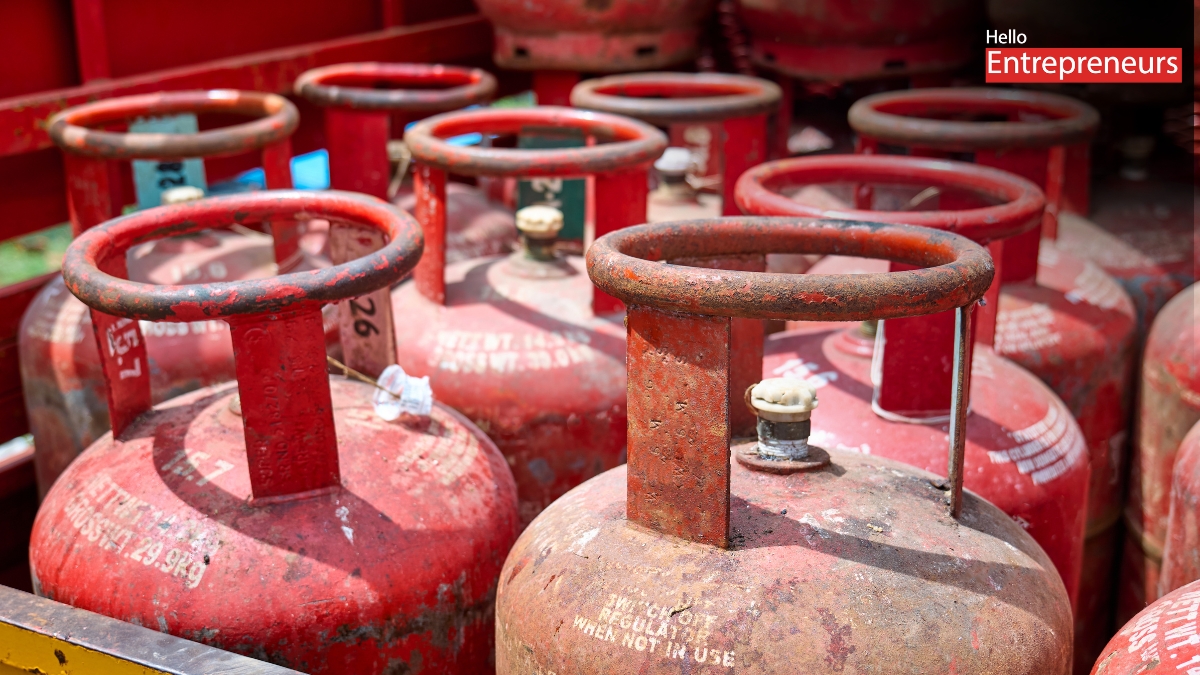
India’s government has told both state-run and private oil companies to ramp up liquefied petroleum gas (LPG) production, thanks to ongoing disruptions from the Middle East conflict that are putting the country’s cooking-gas supply at risk.
Here’s what’s happening: The Petroleum and Natural Gas Ministry, in an order issued on August 13, set a new daily production goal—63,810 metric tonnes—for 21 refineries and upstream companies. That’s more than twice what India produced in the previous financial year and should cover about 70% of the country’s daily need for cooking gas.
Oil companies are now expected to squeeze out every bit of technically—and economically—possible LPG. Public-sector firms have to hit a combined 31,470 tonnes per day, with private companies picking up the rest. Reliance Industries has ended up with the biggest slice, according to reports.
India usually gets a lot of its LPG from Gulf suppliers. But with the conflict in the Middle East and all the uncertainty around shipping through the Strait of Hormuz, long-established supply lines are breaking down. Freight costs are up, delivery schedules are shaky, and the festival season is right around the corner. It’s a big deal because the Strait handles roughly 90% of India’s LPG imports—so even a short interruption is a major headache for a country where cooking-gas demand is only growing.
To shake off its dependence on Middle Eastern LPG, India has stepped up buying from the United States. The country had planned to import about 2.2 million tonnes from the US in 2026—about 10% of what it usually brings in each year. That number’s shot up, though, as Gulf shipments have run into trouble.
In August, Petroleum Minister Hardeep Singh Puri said that the US now covers roughly 67% of India’s LPG imports, which shows just how quickly the global supply map is changing.
This new production push isn’t coming out of nowhere. Earlier this year, the government told refiners to boost propane and butane output for LPG and stop sending those feedstocks to petrochemical plants. By April, Indian refineries had already lifted their LPG production by over 30% compared to last year. These fresh targets aren’t just about keeping pace with demand—they’re also meant to build up domestic reserves if the turmoil drags on.
Of course, bumping up local output helps, but India still relies on imported LPG to keep homes and businesses supplied. Without that, things could get dicey.
Investors have noticed the strain. The BSE Sensex dropped 489.92 points last week, closing at 78,009.25, and the NSE Nifty 50 slid 204.65 points, bringing an end to its two-week winning run.
Analysts are keeping a close eye on what’s happening near the Strait of Hormuz and on Brent crude prices—those are the big factors driving the energy market right now. If crude costs keep climbing and shipping stays complicated, it’ll weigh on fuel prices, government budgets, and the bottom line for oil marketing companies.
For everyday consumers, the number-one concern is just having steady access to LPG. Policymakers, on the other hand, are confronting the reality that India needs to ramp up domestic production, diversify import partners, and build stronger storage and delivery systems. The country’s pivot to US LPG gives it another option besides Gulf supplies, but it’s a reminder—one crisis in the Middle East, and India’s energy plans need a fast rethink.

