



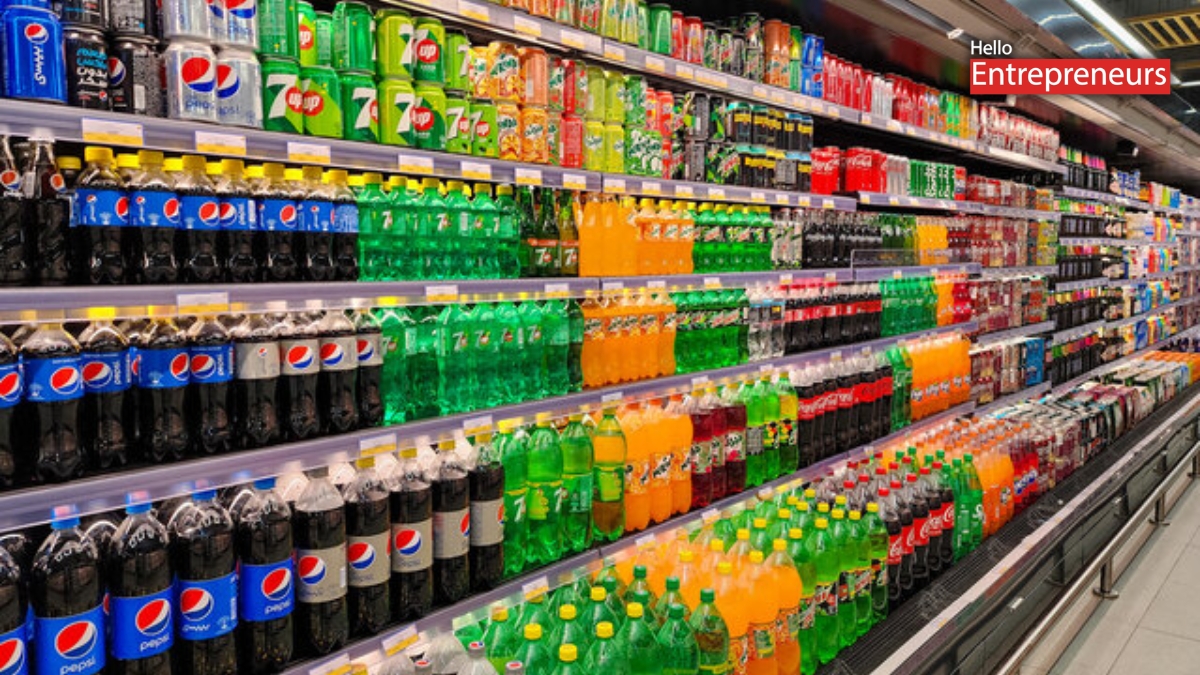
New Delhi: Major food and beverage companies such as Coca-Cola and Nestlé have strongly objected to the government’s proposed clear warning labels on packaged food and drink products from introducing the policy in India. These labels were supposed to clearly show consumers products that are high in sugar, salt or fat. Nevertheless, the Food Safety and Standards Authority of India (FSSAI) has now shifted its gear from usage of colourful warning symbols.
The debate has recently gained the significance with the increasing awareness of the obesity and unbalanced eating habits in India. According to a recent study it has been published in the medical journal The Lancet, approximately 450,000,000 Indians might be overweight/obese by 2050. Experts stated that if consumers could just read the warning label without having to read through lengthy lists of ingredients, they’d make better decisions.
Those in the food industry, who discussed the warning system with Indian regulators in March, strongly objected, sources reported. Industry-backers said people would still eat the product if it was colour-coded and that consumers may become confused. They also recommended that there be a greater emphasis on portion control for regulators.
Coca-Cola India’s executive Mili Bhattacharya has wondered whether a simple symbol on a packet would suffice to influence the diets of people who don’t read label ingredients. The business community also voiced concern that too many packaged food items might be labelled due to their sugar, salt or fat content.
This difference between Indian product and some of the other western markets is also being discussed. Sources pointed to Fanta as a case in point. Higher sugar content in the same brand of can sold in India as compared to other countries, including London. The colouring is also artificial and is a prominent health warning in Europe, but it is printed in small letters on the back in India.
This makes one wonder if consumers in India are getting adequate information on products they purchase, health experts said. There are already a number of different systems of FOPs in place in around 20 countries, such as colour coding systems to indicate high or low levels of nutrients.
The Supreme Court’s review of India’s decision comes on the backdrop of its decision being challenged by public health activists. The court’s decision could affect the way that food companies will have to label their nutritional information in the future.
The issue has let to a larger one between public health and the packaged food industry. The processed food sector continues to expand in India, putting greater pressure on the government to make processed food labels more easily understandable for the general public as well as address complaints from key industry players.

