



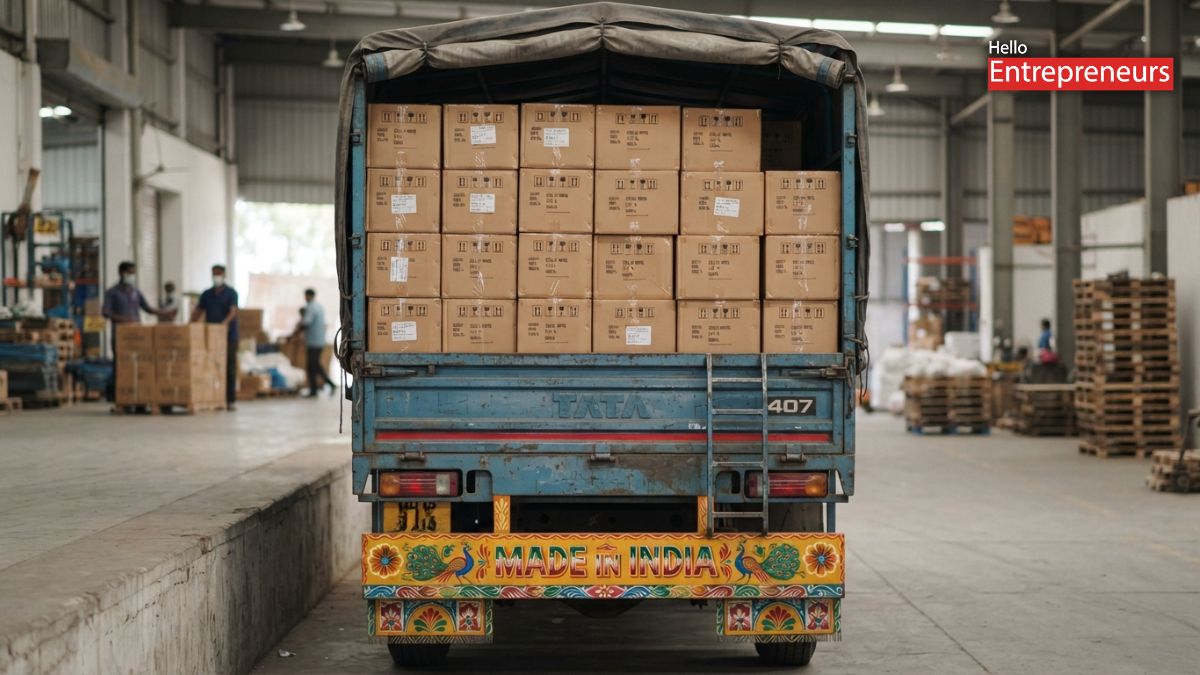
The Production Linked Incentive (PLI) scheme could be the biggest achievement for the BJP-led NDA Government. Under it, India has become the world’s second-largest smartphone exporter and has attracted investments of over ₹2.40 lakh crores across electronics manufacturing, pharmaceuticals, solar PV modules, automobile parts, and specialty steel, creating over 14.15 lakh direct and indirect jobs.
The government has its reasons to highlight these achievements, as it moves towards the broader objective of Aatmanirbhar Bharat (Self-Reliant India), set forth by Prime Minister Narendra Modi. Though these numbers have helped the government boost its chances at the polls, the PLI scheme hasn’t necessarily been as successful as the government would’ve hoped.
After it was first announced in April 2020, the scheme has seen a wide divergence in performance. The biggest beneficiaries have been the mobile phone assembly segment, with multinationals like Apple, Samsung, and Taiwan-based smartphone manufacturer Foxconn setting up an entire mobile assembly ecosystem in the country. Besides this, high-efficiency solar photovoltaic (PV) modules, telecom networking equipment, and active pharmaceutical ingredients (APIs) have also increased export volumes and replaced imports with domestically produced products.
However, not all of the 14 sectors identified in the scheme have managed to make full use of the scheme, with textiles, IT hardware and specialty steel encountering challenges like operational bottlenecks, rigid threshold targets and low incentive uptake from the scheme.
| Metric | Launch Target (5–6 Year Horizon) | Actual Met (Cumulative) | Achievement Status |
| Approved Outlay | ₹1.91 – ₹1.97 Lakh Crore | ₹28,748+ Crore disbursed | ~15% fiscal disbursement (tied strictly to actual production triggers) |
| Capex Investment | ~₹2.70 – ₹3.00 Lakh Crore | more than ₹2.40 Lakh Crore | ~80–85% of planned private capex realized |
| Incremental Production / Sales | ~₹28 – ₹30 Lakh Crore | more than ₹20.41 Lakh Crore | ~68–72% achieved |
| Employment Generated | ~60 Lakh jobs (direct + indirect) | ~14.15 – 14.39 Lakh jobs | ~24% (Lags behind original projections) |
According to the government’s own data, only about 15% of the targeted ₹1.97 crores outlay has been disbursed based on actual production triggers. The total investment outlay of ₹2.40 crore is 85% of the total capex investment targeted under the scheme. Even the 14.15 lakh employment generation figure is just 24% of its original projections.
Patchy Success
By far, the biggest success of the scheme has been mobile phone manufacturing, which has expanded 2.4x due to the scheme. This has helped make smartphones India’s single largest export item. Besides this, Pharmaceutical APIs have also reduced import reliance, mainly with China, while domestic production of telecom and networking equipment has helped substitute 60% of telecom hardware imports.
In contrast to this, the IT hardware sector has faced a slew of challenges, with just 35% of the investment target realised. Unlike mobile phone assembly, assembling IT hardware requires an ecosystem of components like printed circuit board assemblies (PCBAs), semiconductor chips, advanced displays, and memory modules that have to be imported as India doesn’t have an IT hardware ecosystem for these components.
Also, zero customs duty on finished laptops and computers from Vietnam and China makes them cheaper to import than to produce in India.
Similarly, the PLI scheme hasn’t worked for textiles as manufacturers find it challenging to meet minimum investment thresholds required. Specialty steel production has also experienced a slower pace of capital deployment as global steel market volatility and shifting domestic demand have discouraged investors from using the scheme.
Aligning investor, government goals
As the main scheme to boost India’s manufacturing sector under the Aatmanirbhar Bharat initiative, the PLI scheme has had its share of successes, but most of it has been in labour intensive, low value assembling where most of the value addition is done from abroad.
For investors, the scheme has come at the perfect time to align their manufacturing capabilities under the ‘China+1’ aim to move supply chains away from geopolitical uncertainities. The PLI scheme attracted low-margin manufacturing by offering 4-20% direct cash incentives that made operating in India financially viable against the challenge of high logistics, power and capital costs to set up shop in India.
The timing of the scheme during the height of the China and the US trade war also helped, though India’s large market and the presence of Foxconn’s manufacturing unit for Apple phones helped anchor the success of the scheme.
What remains missing
The PLI scheme currently rewards factories for output, for both domestic use and exports. It essentially favors low-margin assembly lines over high-margin, highly advanced component manufacturing.
Though it has succeeded in creating jobs and manufacturing capacities for India in electronics, the scheme has pushed India into the low-margin ‘screwdriver assembly’ (low value addition) trap. Though various component manufacturers have set up shop in India, the real value addition will come when India creates manufacturing capabilities on its own, with its own intellectual properties that could compete with those of China, Taiwan and Europe.

