



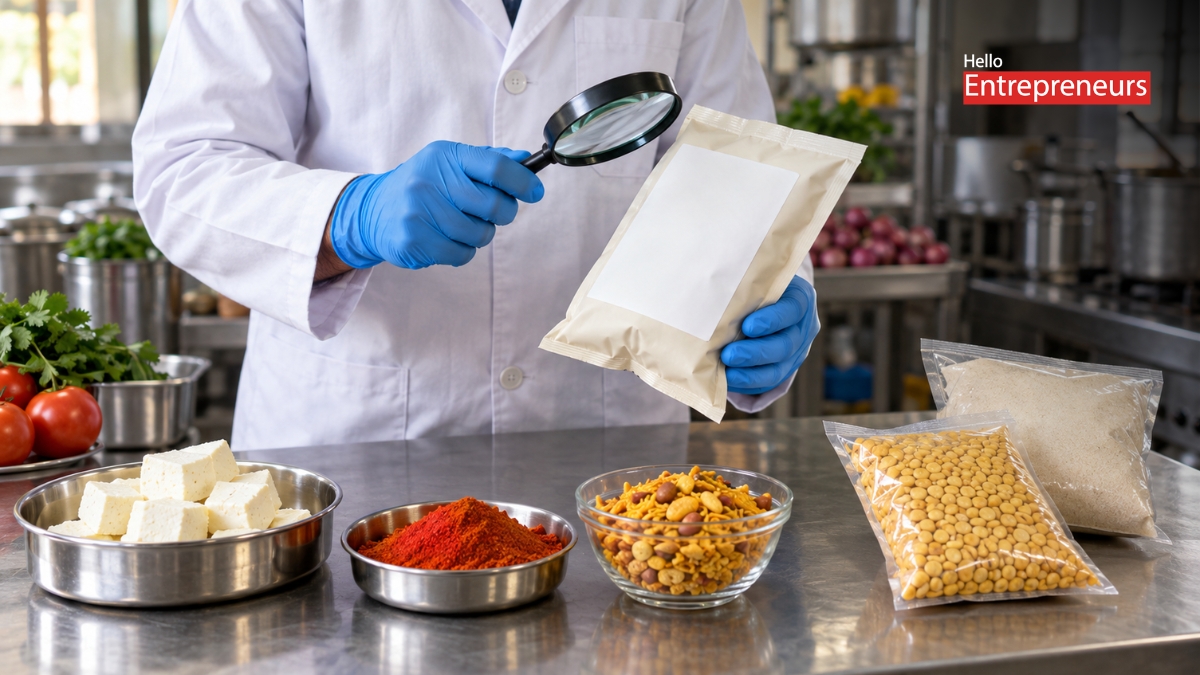
A shopper can turn a packet around, examine its ingredients and check the expiry date. Even that care cannot establish whether the date is genuine or whether the food was produced in hygienic conditions. Consumer awareness depends on something larger: businesses that disclose honestly and regulators that verify what happens beyond the packaging.
That is the connection between Label Padhega India and the recent food safety raids. One encourages people to ask better questions about what they eat. The other must ensure that the answers can be trusted.
Launched in May 2024 by Revant Himatsingka, popularly known as Food Pharmer, Label Padhega India encouraged consumers to read food labels and question products marketed as healthy. Its practical appeal was the invitation to examine the ingredients and nutritional information behind a familiar brand.
The wider policy conversation was already developing. In April 2024, FSSAI advised e-commerce platforms to correct the categorisation of certain beverages sold as “health drinks”, explaining that the term was not defined or standardised under food safety law. The advisory highlighted the need for product descriptions that accurately inform buyers.
In May 2025, CBSE asked affiliated schools to establish “Sugar Boards” displaying information about sugar in commonly consumed foods, associated health risks and healthier alternatives. These developments reflect a broader effort to make food information understandable in everyday settings.
The latest inspections bring another part of consumer protection into view: what happens inside kitchens, factories and warehouses.
In Maharashtra, Tukaram Mundhe’s inspections reached Domino’s, Pizza Hut and McDonald’s outlets. Reuters reported that one McDonald’s outlet’s permit was suspended over findings including pests and rotting food. The company said it was reviewing the observations and maintained a zero-tolerance approach to food safety issues.
In Gujarat, the health minister reported that August inspections covered more than 2,238 food businesses, with approximately 42.9 tonnes of allegedly adulterated food worth ₹93 lakh seized. The stock included oil, milk, chilli powder and ghee, with a ghee seizure reported in Kamrej, Surat.
At CG Foods India’s Ajmer facility, FSSAI reported that noodle fragments collected from the floor were being reprocessed into bhujia without heat treatment. Authorities seized more than 32,000 kg of stock and directed production of Veg Bhujia products without required approvals to stop. Samples were sent for laboratory analysis, with further action dependent on the findings.
These accounts require careful reporting. Inspection findings, laboratory results and final legal outcomes represent different stages of enforcement. Public disclosure should explain which stage a case has reached and what action follows.
The warehouse relabelling case makes the connection with consumer awareness particularly sharp. Reuters reported that expiry dates and nutritional information were being altered on branded foods for export. The investigation focused on unauthorised exporters; PepsiCo, Nestlé, Coca-Cola and Unilever were not accused of wrongdoing.
A forged date undermines the very behaviour that label-reading campaigns promote. It makes traceability, supplier checks and verification of packaging information essential parts of the same consumer-protection effort.
Enforcement also predates the current headlines. A government statement published in March recorded 5,18,559 food samples analysed during 2022–23 to 2024–25, alongside 88,192 cases decided with penalties and 3,614 convictions. It also described a system that varies inspection frequency according to business risk.
The test, therefore, is whether today’s visibility produces reliable follow-through: timely testing, documented corrections and sustained scrutiny of repeat offenders.
The proposed front-of-pack warning system raises a related question about how clearly nutritional information should be communicated.
FSSAI’s proposal would require a red hexagonal warning when a product exceeds limits for at least two of three nutrients: added sugar, salt and saturated fat. Industry objections concern the thresholds and the use of a 100-gram benchmark instead of individual servings. As of September 8, the design remains a proposal under judicial consideration.
Health campaigners, including the nonprofit 3S And Our Health, object that a product high in just one of those nutrients could escape the warning. The Supreme Court is scheduled to consider the matter on September 10. Reuters also reported a government source’s suggestion of stricter rules in a later phase, without an agreed timetable.
That objection deserves a clear, evidence-based response. If a warning is meant to identify excessive levels of a nutrient, requiring a second nutrient to cross its limit needs a defensible public-health rationale. Serving sizes also deserve explanation, alongside a consistent basis on which consumers can compare products.
Indian research offers useful evidence without promising instant changes in behaviour. A 2022 randomised experiment involving 2,869 adults across six states found that 60.8% of participants shown warning labels correctly identified all tested products as high in nutrients of concern, compared with 39.1% in the control group. None of the tested label formats reduced purchase intentions in that experiment.
The finding supports clearer warnings as a tool for understanding. It also argues for evaluating actual purchasing behaviour after implementation and combining disclosure with nutrition education and access to affordable alternatives.
Nutritional warnings and hygiene enforcement address different problems. A sugar warning cannot certify a factory’s sanitation or establish that an expiry date is authentic. A hygienically prepared product may still contain high levels of sugar, salt or saturated fat. A credible food policy must address both composition and production conditions.
For regulators, the next step should be public reporting that follows cases beyond the raid: what was sampled, what testing established, what correction was required and whether compliance was verified. Businesses should have clear requirements and fair opportunities to challenge findings, while proven violations should carry consistent consequences.
For food businesses, this calls for everyday attention to suppliers, storage, batch records, packaging and online product information. For consumer educators, it calls for accurate explanations that help people interpret evidence without treating every unfamiliar ingredient or packaged product as inherently dangerous.
Label Padhega India gave consumers a memorable invitation to examine what they buy. The lasting value of the current crackdown will depend on whether institutions make that habit worthwhile. People should be able to read a label knowing that its information is clear, its claims are honest and the food behind it has been subject to credible oversight.

