



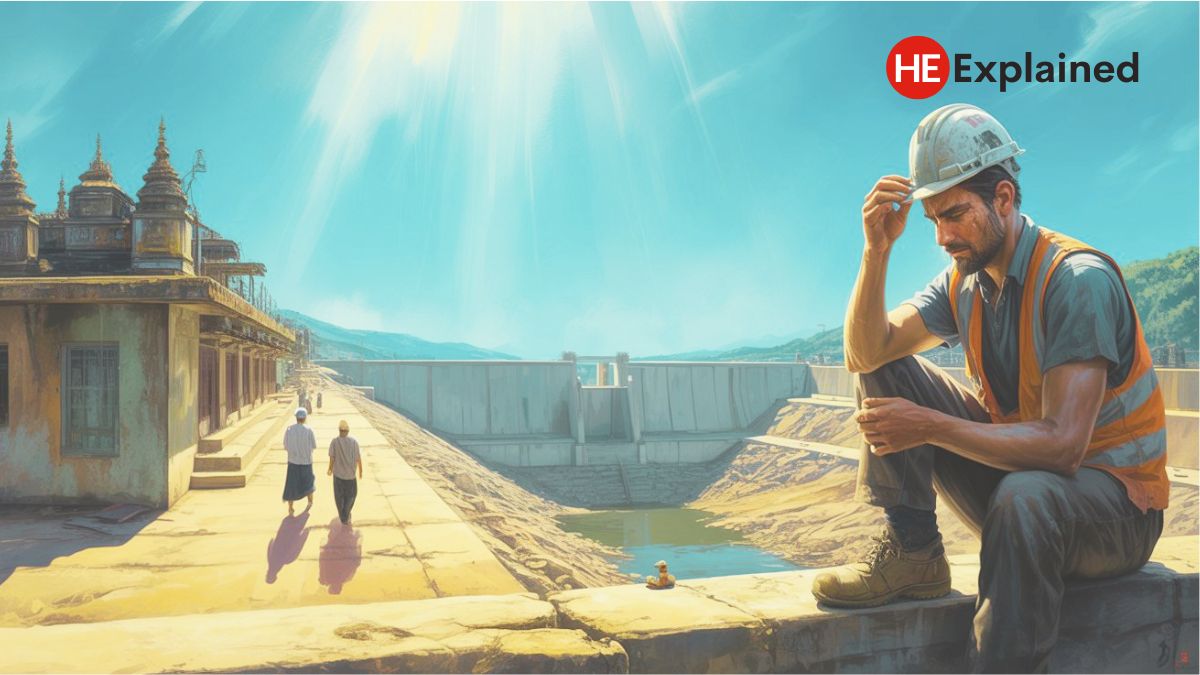
According to predictions from the Indian Meteorological Department (IMD), India is expected to experience a heatwave across major populated regions, including Delhi-NCR, Punjab, Rajasthan, Vidarbha, Chhattisgarh, and Jharkhand. With the rains still two months away, heatstroke could become a challenge with far-reaching implications for everyone under the sun.
The Productivity Gap: Labor in the Sun
Almost 50% of India’s workforce is ‘heat exposed’, meaning they work in environments where they are subject to direct or intense heat, such as farmers preparing their fields, workers carrying heavy loads on construction sites, or miners laboring in hazardous, high-temperature conditions.
For these workers, extreme heat can affect productivity, especially when temperatures exceed 35 degrees Celsius. Extreme heat exposure without adequate hydration affects not only productivity but also decision-making, accuracy, and cognitive functioning (the mental processes needed for tasks such as thinking, understanding, learning, and remembering), all crucial for these jobs.
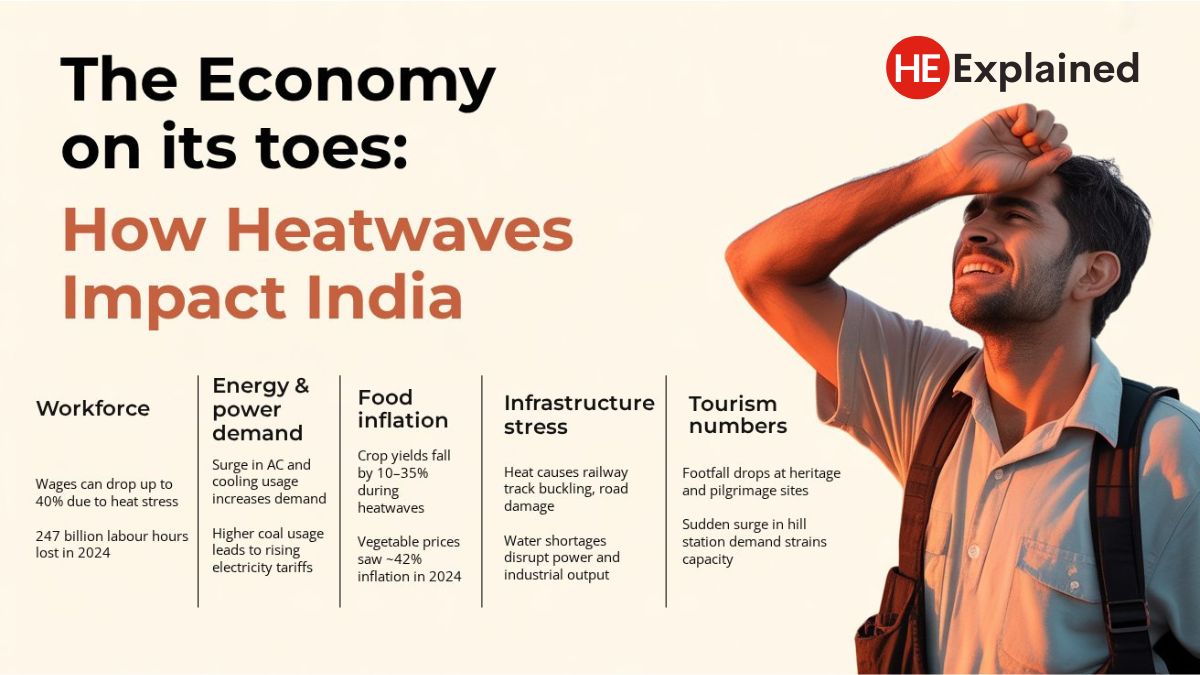
For many daily laborers, this could mean lower productivity and, in severe cases, lower daily wages by around 16% or, in severe cases, by 40%, as per observations by the Smile Foundation. In fact, global estimates suggest that heat stress could reduce total working hours by 2-3% by 2040
We have already witnessed similar situations before- In 2021-22 and 2024, extreme heatwaves meant that most daytime temperatures were above 40 Degrees Celcius for almost a month, with 2024 being declared as the warmest year on record.
The 2024 heatwave was so intense that it caused 44,000 heatstroke cases nationwide, with almost 247 billion labour hours lost due to heat-exposed sectors, resulting in economic damage of about $194 billion.
The Healthcare Burden
Increased heat can worsen existing heath conditions, even if you aren’t labouring out in the open. The economic cost for the same can make healthcare far more expensive.
- Out-of-pocket expenses: Heatwaves can increase medical bills, especially for patients with existing respiratory or cardiovascular conditions.
- Insurance Premiums: Those who work in the outdoors may have to pay higher insurance premiums, especially for chronic kidney disease (CKD) or other health issues based on your risk profile
Heat-flation: The Surge in Food and Energy Prices
If you think the heatwave won’t affect you much given you are indoors most of the time, you are mistaken.
- The energy surge: The heatwave jacks up power demand, with Airconditioners, fans and cooling equipment used for longer than ever. This puts intense pressure on the power grid, forcing the government to burn more coal to meet the surge in demand, eventually leading to more pollution, more coal demand, and eventually, higher electricity tariffs.
- The decline in yields: Abnormally high heat and sunshine affect the growth of crops- with many shiveling before they can produce grain, fruit or vegetables. Earlier, this has led to yield drops of about 10-35% across Punjab, Haryana and UP during the 2022 heatwave.
For you, this means higher prices, as seen in the average 42% inflation for vegetables in late 2024. According the Economic Survey 2024-25, the heatwave had a spillover effect on inflation for over two years, reaching 8.8% despite lower global food inflation.
Infrastructure Stress
It isn’t just flood water that can block roads or railways, the lack of it, coupled with increased sunshine can make matters worse.
- Transport Delays: Extreme heat can cause railway tracks to buckle and highway asphalt to soften, leading to speed restrictions and logistical delays that increase the “cost of doing business.”
- Water Scarcity: Increased evaporation and soaring demand for water can reduce the levels of water in dams, which can mean lower energy generation. Besides, water scarcity can delay industrial production, as water is necessary for cooling.
The Travel and Tourism Downturn
With the summer travel season at its peak, many rethink their travel plans, which can mean reduced earnings, or unsustainable demand in various spots.
- Domestic Slump: The heatwave can cause pilgrimage circuits and heritage sites to see a sharp drop in footfall as tourists choose to avoid unnecessary travel.
- Shift in Demand: During these days, many tend to go to the hills which offer cooler climates, but the hill stations may not be able to cater to this brief surge, especially with its limited infrastructure.
‘Heat Proofing’ the Economy
To mitigate these challenges require a mix of structural reforms and long term interventions that help address the issue. These include:
- Shifting work hours: Construction and agricultural workers can shift to work in the early morning.
- Cool Roofing: Reflective paints and materials can help reduce indoor temperatures by 3.5 degrees Celsius reducing electricity consumption.
- Green Infrastructure: India requires more urban greenery—gardens, lakes, and increased tree cover—to help reduce the ‘Urban Heat Island’ effect, which refers to urban areas being significantly warmer than surrounding rural areas due to human activities.
Though short-term measures are generally enforced, many long term measures are conveniently forgotten after the heatwave ends, and remembered when it is too late. That mindset needs to change, as global warming intensifies and makes it even more challenging for us to secure crucial supplies of water, food and the right to live in an ambient, pollution-free environment.