



It’s every tech-obsessed kid’s dream to get into the Indian Institutes of Technology (IITs), even though the odds are highly stacked against you. But the roughly 1% who do manage to get into the IITs gain access to India’s best alumni network, which has created some of the biggest success stories in business.
These elite engineering graduates have proven that India has what it takes to create a memorable, relatable, and reputed company that rivals the best in the world, showing that India can create standalone brands that customers prefer to buy over others. Here are some of the leading entrepreneurs from the IITs who have built world-class companies from India.
N.R. Narayana Murthy, Infosys
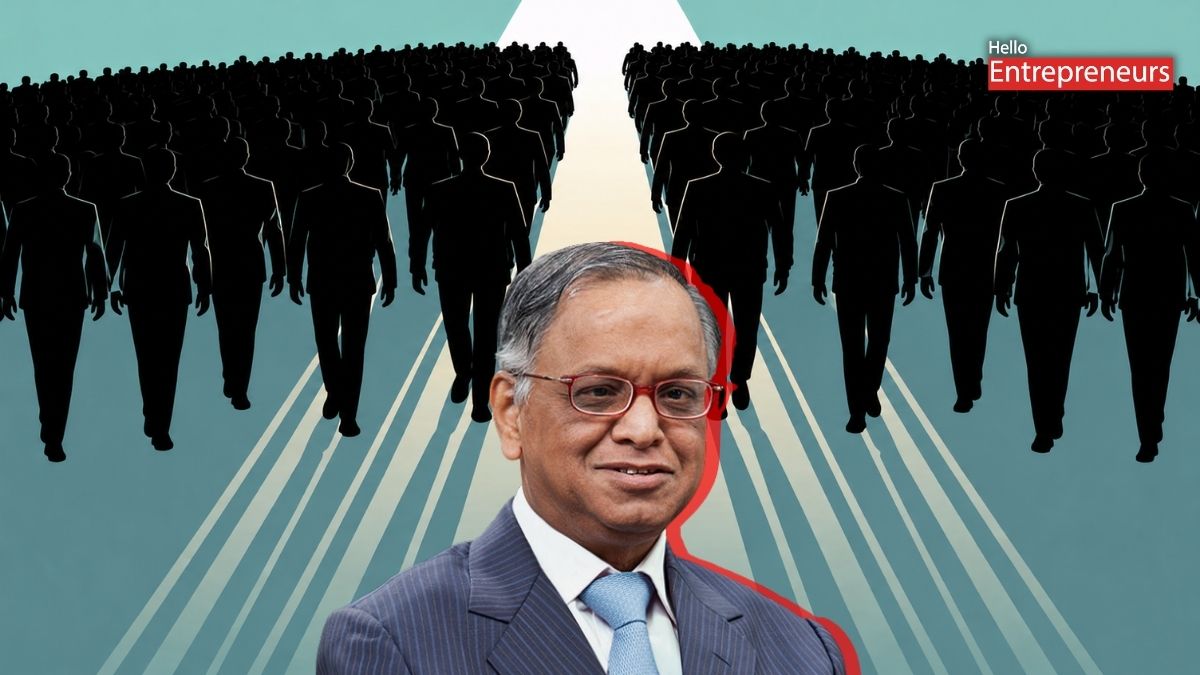
Degree from: IIT Kanpur, Master of Technology in Electrical Engineering (specializing in Computer Science), 1969
As the man behind Infosys, N.R. Narayana Murthy has led Infosys to become one of the leading software companies globally, showcasing India’s strengthens in computer science at a time when the industry was at a nascent stage.
Mr Murthy is credited with the formulation of the Global Delivery Model (GDM), where he separated software system architecture into modular, distributed united that allowed complex engineering tasks to be performed across time zones in India, North America and Europe. Under his tenure, Infosys became the first Indian-registered company to list on the NASDAQ in 1999, and has since grown to generate more than $19 billion annually in 2025. Employing more than 3 lakh professionals, Infosys has become an anchor of India’s global enterprise software economy.
Dr. Anand Deshpande, Persistent Systems
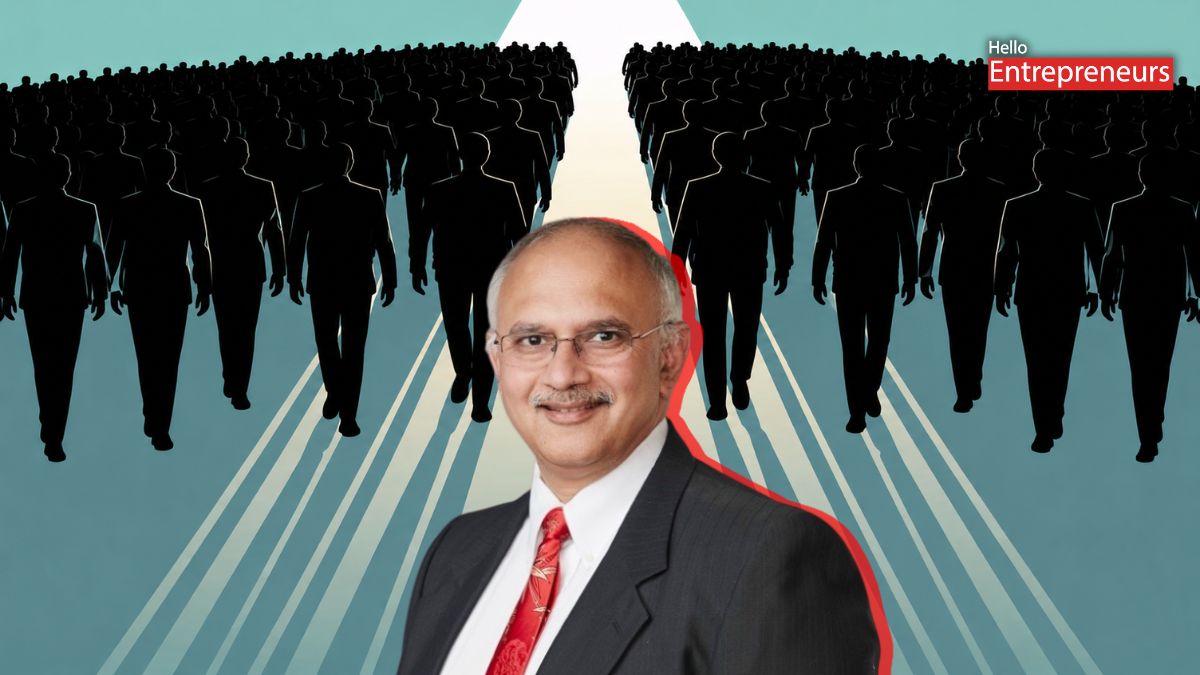
Degree from: IIT Kharagpur, Bachelor of Technology (Honours) in Computer Science and Engineering, 1984
Dr Anand Deshpande spent years studying and working in the US before returning to launch Persistent Systems in Pune. Unlike other Indian IT enterprises that depended on staff augmentation and enterprise resource planning (ERP) maintenance, Deshpande built Persistent as a specialized product engineering partner. He focused on creating custom features for global technology providers and independent software vendors (ISVs), wiring low-level database software and operating system kernels. Over time, it scaled into enterprise cloud integration, digital product development and health tech architecture. Today, With a market capitalization exceeding $8 billion, the company has grown both organically and through acquisitions, serving as a prominent model for transitioning domestic IT capabilities to high-value intellectual property co-creation.
Deepinder Goyal, Zomato
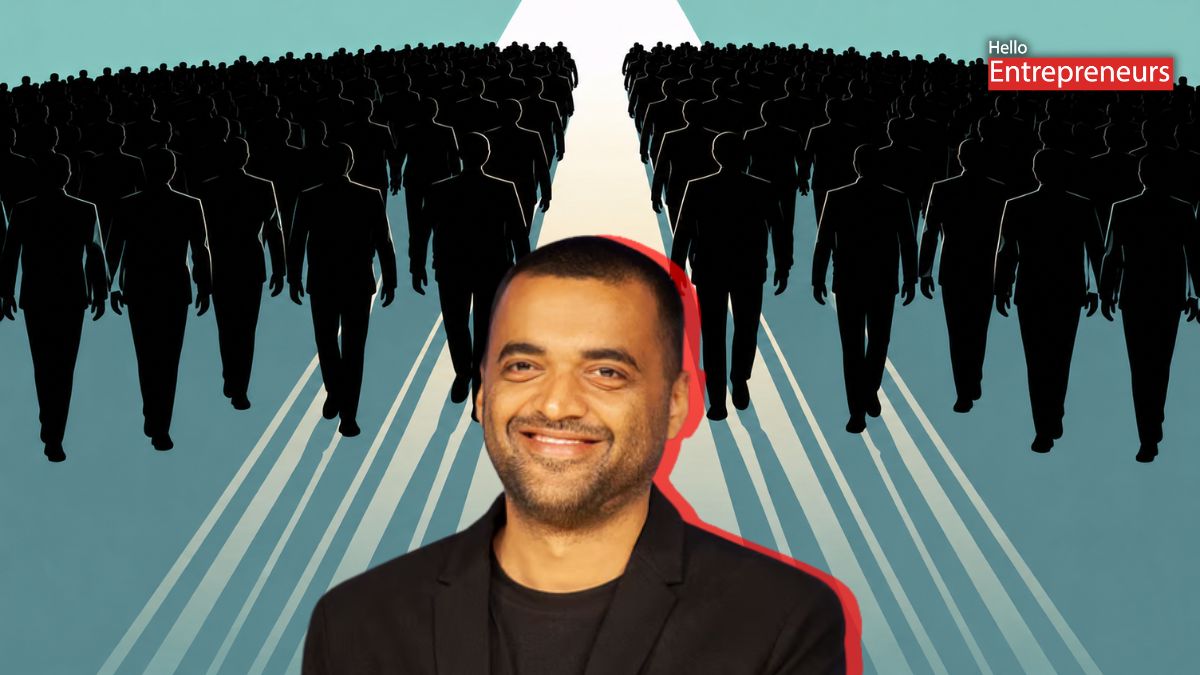
Degree from: IIT Delhi, Integrated Master of Technology in Mathematics and Computing, 2005
After graduating from IIT Delhi, Goyal worked as a management consultant at Bain & Company, where he observed colleagues queuing to view fragmented physical cafeteria menus. Recognizing a market gap in urban food discovery, Goyal founded Foodiebay in 2008, digitizing restaurant menus before rebranding the venture as Zomato in 2010.
Over the years, Goyal expanded Zomato through a phased expansion plan. Initially built as a restaurant discovery and user-review directory, Zomato paired it with a two-wheeler delivery fleet of delivery agents who delivered orders based on a custom designed software that linked them to restaurants. To strengthen supply quality, Goyal developed Hyperpure, an institutional B2B supply network that provides certified raw ingredients to restaurant partners. Goyal defended his platform against well-capitalized multinational competitors and led Zomato through a successful initial public offering in July 2021 as India’s first domestic tech unicorn listing. He further diversified the business by acquiring quick-commerce operator Blinkit in 2022, leveraging high-density dark store networks to deliver consumer goods in under 10 minutes. Today, Zomato is a core part of India’s urban consumer infrastructure.
Sachin Bansal, Flipkart / Navi Technologies
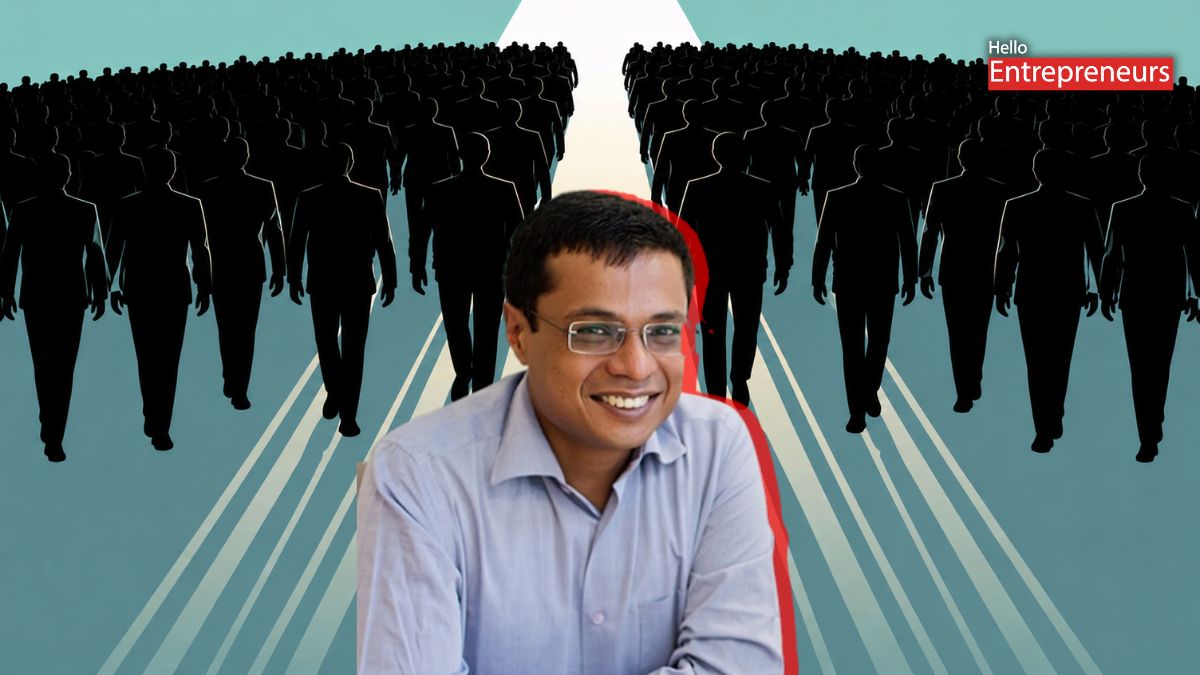
Degree from: IIT Delhi, Bachelor of Technology in Computer Science and Engineering, 2005
After completing his degree, Sachin Bansal served as a software engineer at Amazon Web Services. There, he identified the lack of organized e-commerce logistics within India and partnered with his friend Binny Bansal in 2007 to establish Flipkart as an online bookstore, personally handling product packaging and local postal dispatches in Bengaluru.
When e-commerce was unfamiliar to Indians, Sachin Bansal introduced Cash on Delivery (CoD) in 2010, reducing checkout friction and building consumer trust across emerging Tier-2 and Tier-3 markets. He built Ekart—an internal supply chain and delivery network—to bypass fragmented third-party couriers, and acquired fashion portals Myntra and Jabong, along with digital payments platform PhonePe, to build an integrated retail ecosystem. In 2018, Bansal orchestrated the largest domestic tech exit when Walmart acquired a 77% controlling stake in Flipkart for $16 billion. With the capital received, Bansal reinvested his it into a new venture, Navi Technologies, an app-based financial services platform that utilizes algorithmic underwriting to deliver paperless home loans, digital personal credit, mutual funds, and health insurance, challenging traditional retail banking models.
Bhavish Aggarwal, Ola Electric
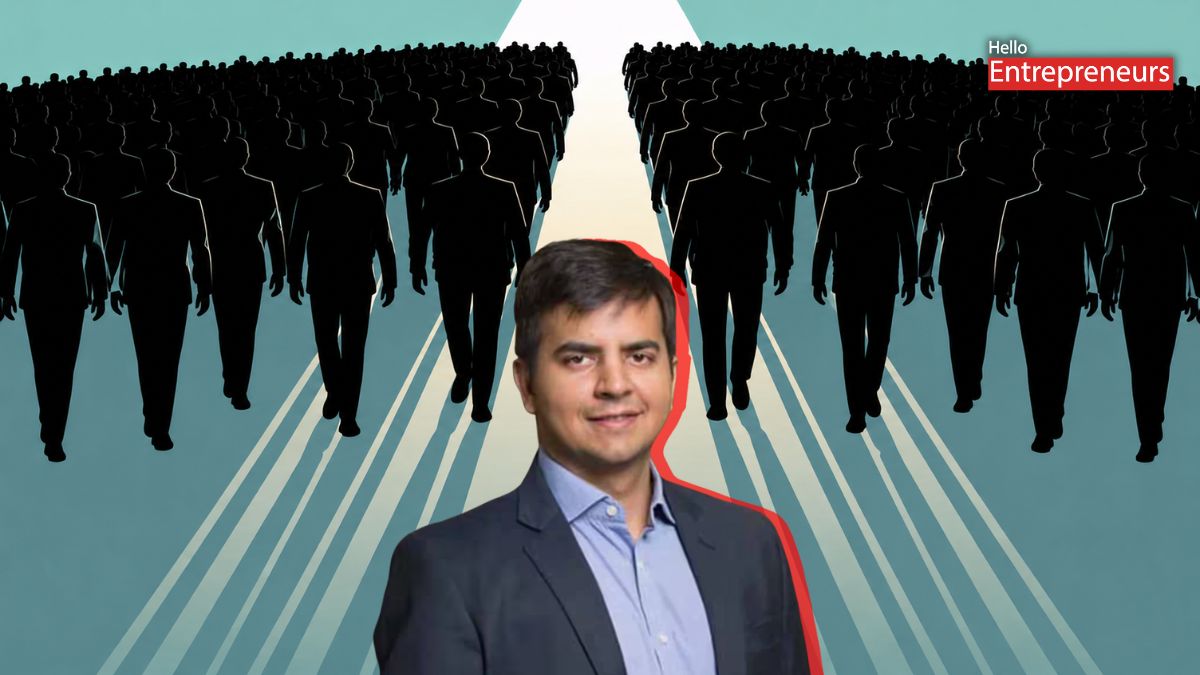
Degree from: IIT Bombay, Bachelor of Technology in Computer Science and Engineering, 2008
After graduating and spending two years at Microsoft Research India, Aggarwal co-founded Ola Cabs in 2010. By introducing local payment methods, auto-rickshaw integrations, and vehicle-financing partnerships, Ola built a domestic ride-hailing network that competed with global rival Uber across metropolitan and regional markets.
Recognizing the transition toward clean mobility, Aggarwal expanded into large-scale manufacturing through Ola Electric. Moving away from standard kit-assembly models that relied on imported components, Aggarwal invested in vertical industrial production. He constructed the 500-acre “Futurefactory” in Krishnagiri, Tamil Nadu, using automated robotic lines to manufacture electric two-wheelers at scale. To secure battery cell independence, he spearheaded the setup of an automated Gigafactory to produce indigenous lithium-ion battery cells. In August 2024, Ola Electric went public on the Indian stock exchanges through an IPO. Besides this, Aggarwal has also ventured into the AI space, through the indigenously developed Krutrim, a Large Language Model (LLM) trained in multiple Indian languages.
Manoj Meena and Sibabrata Das, Atomberg Technologies
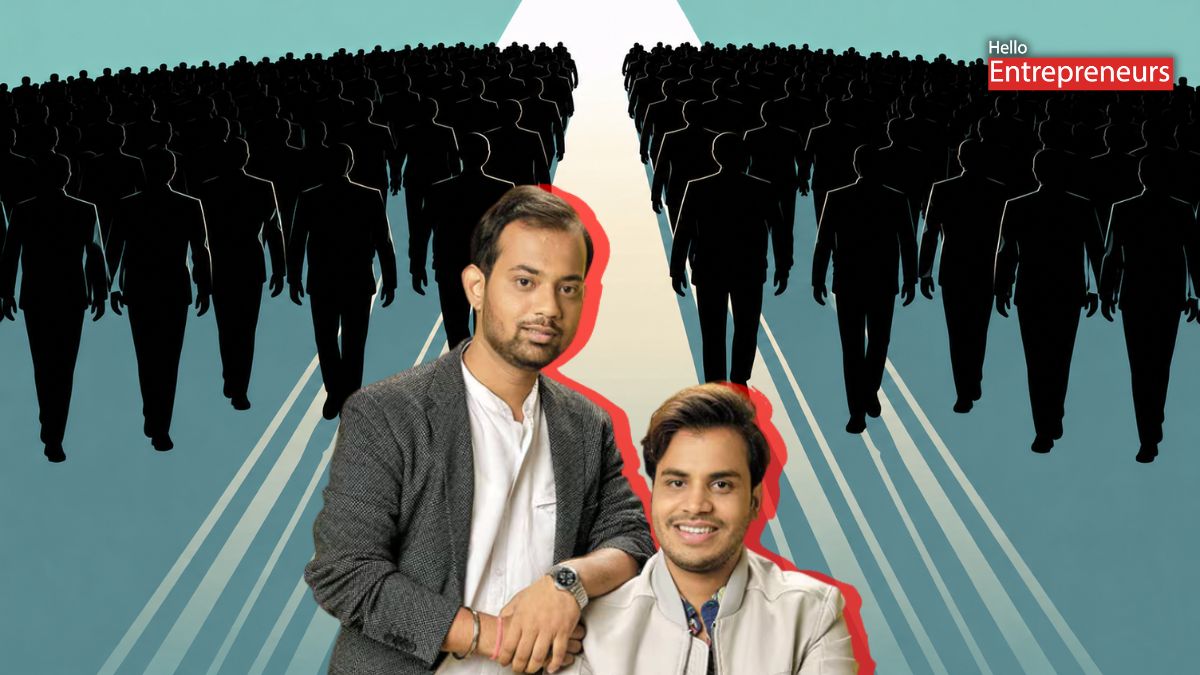
Degree from:
Manoj Meena: IIT Bombay, Dual Degree (B.Tech. & M.Tech.) in Electrical Engineering, 2011
Sibabrata Das: IIT Bombay, Bachelor of Technology in Metallurgical Engineering and Materials Science, 2013
Manoj Meena and Sibabrata Das transformed a mature home appliance sector through engineering innovation in electric motor efficiency. Following his graduation from IIT Bombay, Meena declined public-sector research appointments to build commercial hardware, incubating Atomberg Technologies at IIT Bombay’s Society for Innovation and Entrepreneurship (SINE) in 2012. Das joined as co-founder in 2013. During its initial three years, the company survived by providing technical consulting and building data-acquisition and motor-control systems for institutions such as DRDO, BARC, and ISRO.
The founders’ commercial breakthrough came from analyzing residential energy consumption patterns: conventional ceiling fans accounted for nearly 20% of household electricity usage and relied on decades-old, inefficient induction motors consuming 75 to 80 watts. In 2015, Meena and Das developed a proprietary Brushless DC (BLDC) motor driven by their sensorless “AtomSENSE” motor-control algorithm. Their product, the Atomberg Gorilla fan, consumed 28 watts—slashing electricity usage by up to 65% while introducing remote-control capabilities.
Atomberg initially targeted institutional clients with continuous fan usage, such as hospitals and universities, before expanding into consumer direct-to-consumer and retail channels. Supported by an $86 million funding round from Temasek and Steadview Capital, the enterprise has expanded its motor technology into mixer grinders, smart locks, and water purifiers, capturing double-digit market share in the organized ceiling fan segment as it prepares for an initial public offering.
Tarun Mehta and Swapnil Jain, Ather Energy
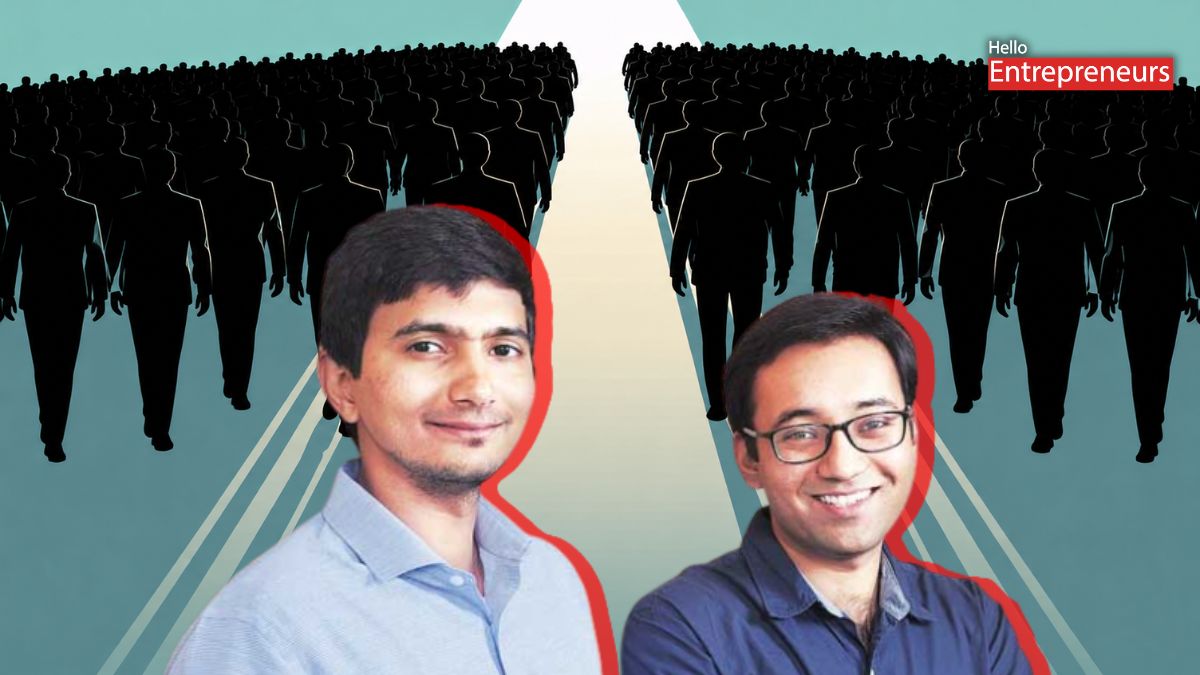
Degree from:
Tarun Mehta: IIT Madras, Dual Degree (B.Tech. & M.Tech.) in Engineering Design, 2012
Swapnil Jain: IIT Madras, Dual Degree (B.Tech. & M.Tech.) in Engineering Design, 2012
Tarun Mehta and Swapnil Jain pioneered the performance electric vehicle segment in India. While studying engineering design at IIT Madras, the co-founders developed early prototypes of clean combustion systems and battery packs. Following a brief engineering role at Ashok Leyland, Mehta rejoined Jain in 2013 to launch Ather Energy, which was incubated at the IIT Madras Incubation Cell with early funding from the institute and its alumni.
At a time when the Indian market was filled with low-speed electric two-wheelers assembled from imported kits that struggled on local roads, Mehta and Jain chose to design a performance vehicle from the ground up. They developed intellectual property across light-alloy chassis designs, custom motor transmission units, and thermally managed lithium-ion battery packs equipped with proprietary Battery Management Systems (BMS).
With the launch of the Ather 450 platform, they integrated a touchscreen Android dashboard that enabled over-the-air (OTA) software updates and predictive maintenance diagnostics.
To address charging infrastructure gaps, they created the “Ather Grid”—an open fast-charging network deployed across urban hubs. Backed by institutional investors and Hero MotoCorp, Ather operates a large-scale manufacturing plant in Hosur, Tamil Nadu, holds an established position in the premium electric two-wheeler market, and has filed draft documents for an initial public offering.
Harshil Mathur, Razorpay
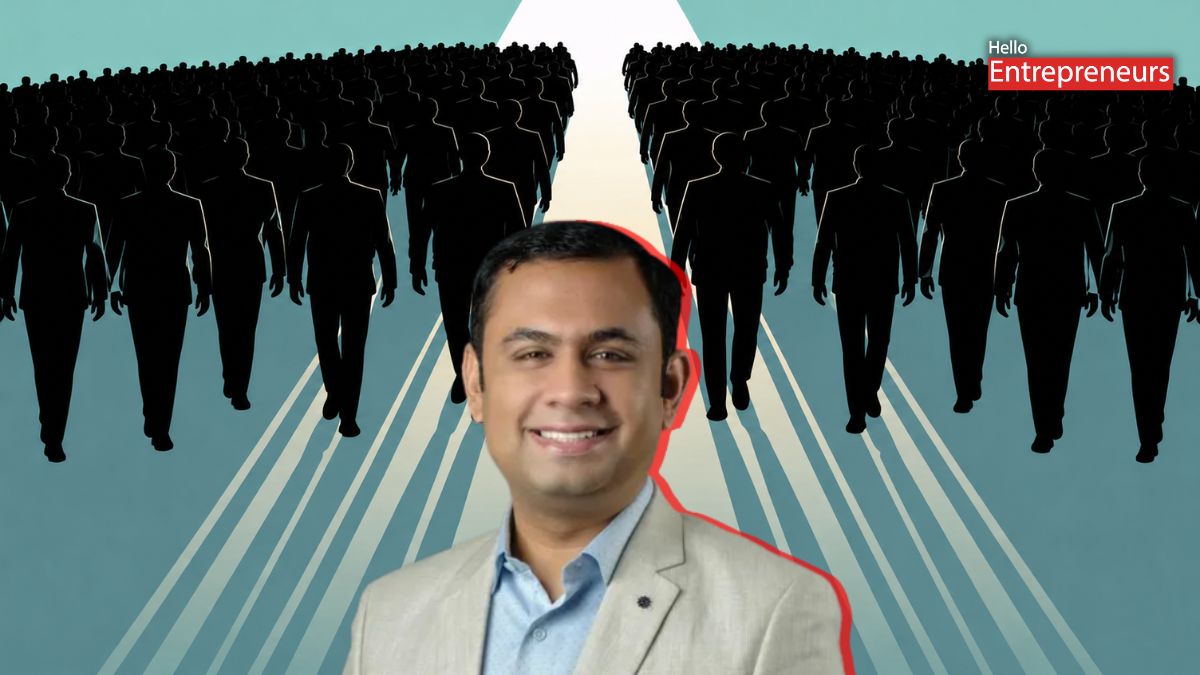
Degree From: IIT Roorkee, Bachelor of Technology in Metallurgical and Materials Engineering, 2013
During his studies at IIT Roorkee, Harshil Mathur collaborated with classmate Shashank Kumar in SDSLabs, building digital applications and campus network systems. After graduating in 2013, Mathur worked as a Wireline Field Engineer at Schlumberger in Mumbai, but resigned within a year alongside Kumar to create an online payments platform designed for startups and small-to-medium enterprises.
In 2014, integrating an online payment gateway in India required weeks of physical paperwork, high setup fees, and complex manual bank approvals that created high barriers for early-stage digital businesses. Accepted into the Y Combinator Winter 2015 batch—as one of the earliest India-focused companies in the program—Mathur and Kumar built an API-first payment gateway that allowed developers to integrate payments into websites and applications within a few hours.
Razorpay subsequently expanded into neobanking services through “RazorpayX,” corporate payroll automation, and working-capital financing via “Razorpay Capital,” while acquiring point-of-sale provider Ezetap to integrate offline retail payments. Backed by investors including Peak XV Partners, Tiger Global, and Salesforce Ventures, Razorpay is valued at about $7.5 billion and processes more than 30% of all online transactions across India’s digital economy.

