



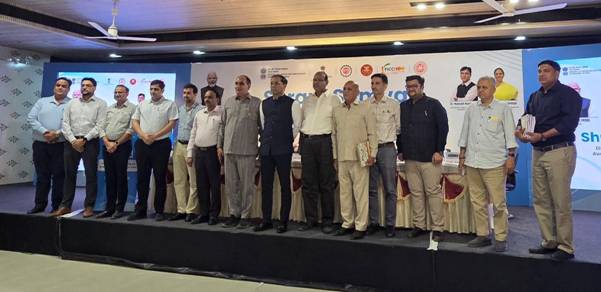
New Delhi, September 30: The Ministry of Labour & Employment, in collaboration with FICCI and the Bhiwadi Manufacturers Association, organised the “Shram Samvad” District-Level Capacity Building and Awareness Programme on Labour Codes at BMA House, Industrial Area, Bhiwadi, Rajasthan today. The programme aimed to build awareness among employers and industry stakeholders about the Labour Codes, which came into force on 21st November 2025, and the Central Rules, notified on 08th May 2026, while highlighting the key provisions and compliance requirements under the new framework. The programme brought together more than 100 participants from diverse sectors, including employers, industry representatives, HR professionals, legal experts, finance specialists, and other key stakeholders in the labour and employment ecosystem.
The programme featured a series of technical sessions designed to provide participants with practical insights into the Labour Codes, employer obligations, and key social security initiatives of the Government of India.
The inaugural address was delivered by Shri Yogesh Jain, General Secretary, Bhiwadi Manufacturers Association (BMA). This was followed by a keynote address by Shri Ashutosh A.T. Pednekar, Joint Secretary, Ministry of Labour & Employment, who highlighted the key provisions of the Labour Codes and the Ministry’s vision for organising the ‘District-Level Capacity Building and Awareness Programmes’ across the country.
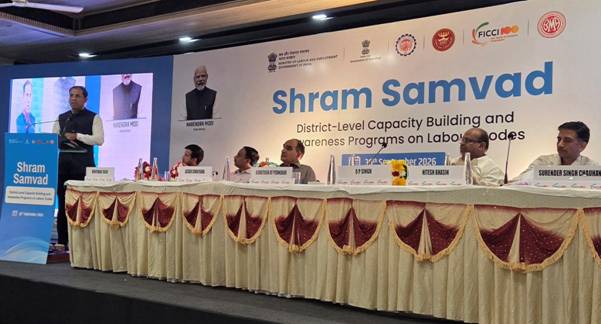
The first technical session was conducted by Shri Om Prakash Singh, Labour Welfare Commissioner (Central), who presented a comprehensive overview of the Labour Codes, their objectives, and the major reforms introduced through the new legislative framework. The session helped participants understand the broader vision and significance of labour law reforms for both employers and workers.
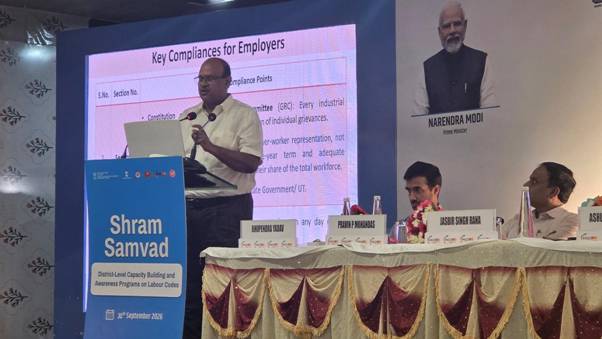
The second session, conducted jointly by Shri Nitesh Bhasin, Under Secretary, Ministry of Labour & Employment, and Shri Om Prakash Singh, Labour Welfare Commissioner (Central), focused on the key compliance requirements for employers under the Labour Codes. The session provided practical guidance on statutory obligations and compliance responsibilities, enabling participants to better understand the operational aspects of the new framework.
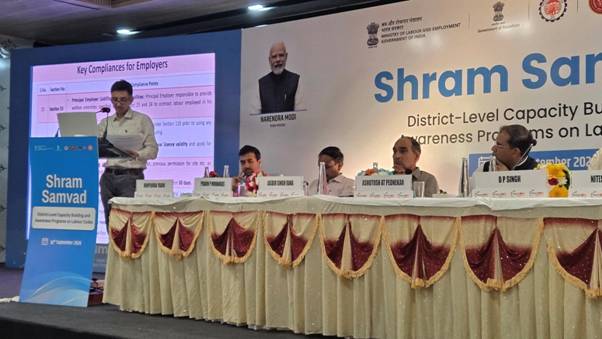
A Q&A session was conducted as part of the event, that encouraged active participation and engagement from attendees. Participants shared their perspectives, highlighted field-level challenges, and raised queries relating to labour welfare, employer obligations, and social security provisions, setting the stage for the subsequent technical sessions and deliberations.
The third session focused on the Pradhan Mantri Viksit Bharat Rozgar Yojana (PMVBRY) and was led by Shri Bhupendra Yadav, Regional Provident Fund Commissioner-I, Employees’ Provident Fund Organisation (EPFO). Participants were briefed on the scheme’s objectives, eligibility conditions, and benefits aimed at promoting employment generation.
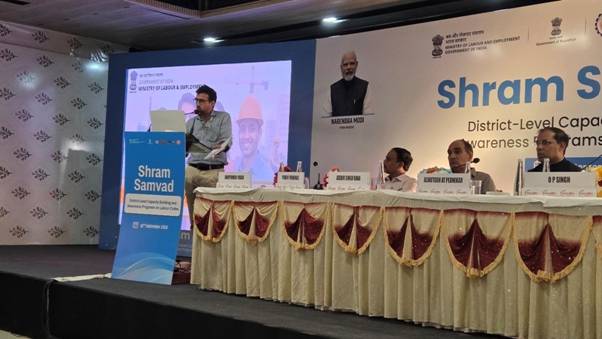
The fourth session covered the Pradhan Mantri Shram Yogi Maandhan (PM-SYM) Scheme and was conducted by Shri Pravin P. Mohandas, Welfare Commissioner (Central), Ajmer. The session highlighted the scheme’s key features and its role in extending pension and social security benefits to workers in the unorganised sector.
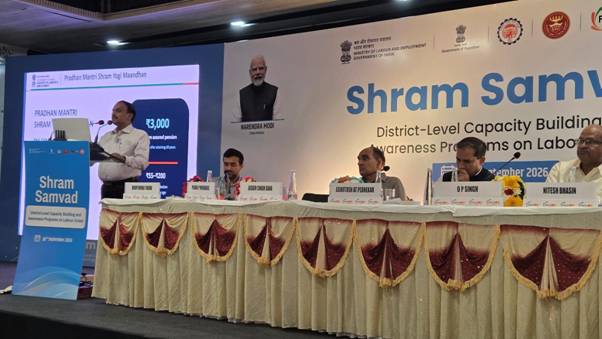
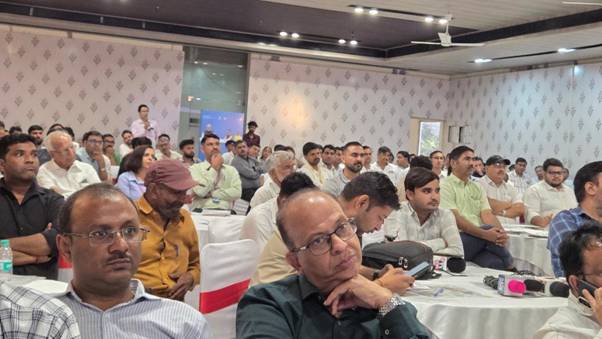
The programme concluded with a second interactive question-and-answer session, during which participants engaged directly with the speakers and sought clarifications on various aspects of the Labour Codes, employer compliance, and social security schemes.
The vote of thanks was delivered by Shri Surendra Singh Chauhan, Member, FICCI Rajasthan State Council, and Past President, BMA. He urged the authorities to continue supporting initiatives that would further strengthen Bhiwadi’s position as one of the country’s leading industrial hubs.
The event served as a key platform for capacity building, stakeholder engagement, and awareness generation, fostering a deeper understanding of the Labour Codes and supporting their effective implementation through informed participation by employers and industry stakeholders.

