



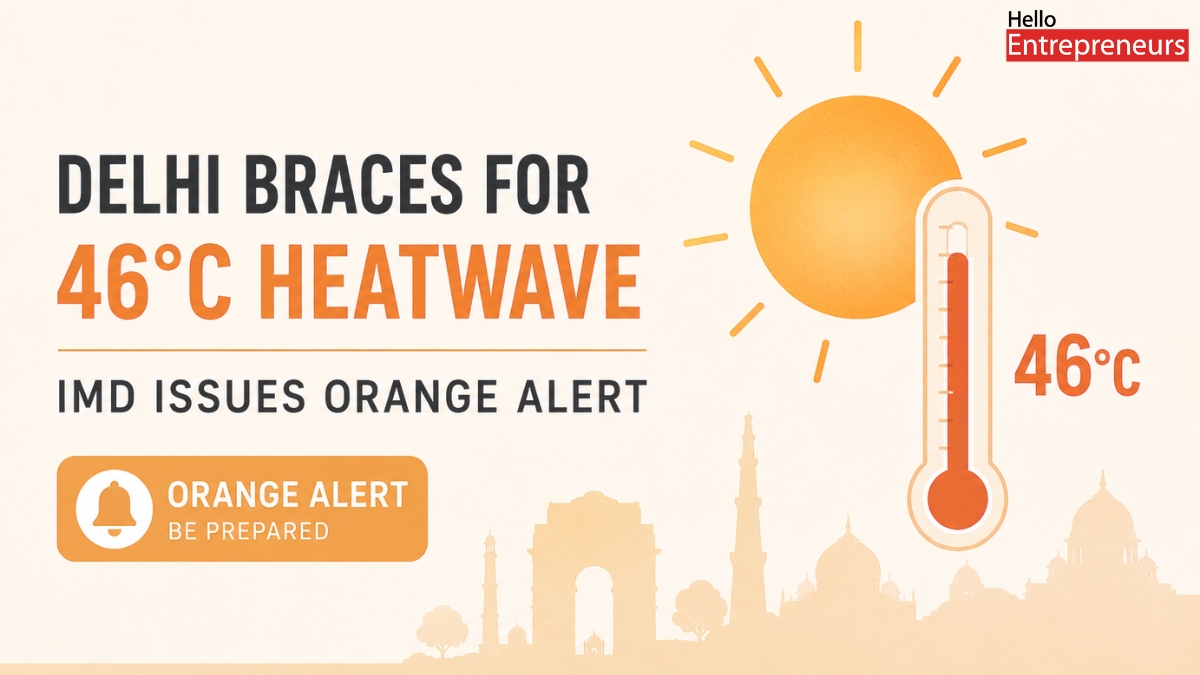
New Delhi: Earlier this week, the national capital and its neighboring areas will be subjected to one of the most severe summer spells yet as temperatures are expected to scald to 46C in the coming days. The Indian Meteorological Department (IMD) has rolled out an “Orange Alert” for the national capital and surrounding areas, telling the people to stay alert.
The warning comes amid North India being besieged by a severe heatwave and taking daily life, health facilities and cities to a danger level.
An Orange Alert means, according the IMD’s warning system, a very high risk to the human health, specially affecting infants, senior citizens and outdoor workers. Residents have been told to avoid getting exposed to the shotest sun during morning and uhafternoon hours and to stay hydrated.
Such temperature levels approaching to 46 is not just a nuisance, it can be deadly. High temperatures can significantly stress the human body and can result in dehydration, heat exhaustion and heatstroke.
Construction workers, sanitation workers, vendors and delivery men are some of the people who are at most risk. These people cannot afford to stay indoors any longer and have to work during these dangerous conditions.
The soaring temperatures are also putting a gigantic strain on Delhi’s power grid. With aircon and cooling systems running at full heart there is an immense electricity consumption and a very real possibility of outages and failures.
The situation is being described as “cooling paradox”, where increasing temperatures force us to use more cooling devices, which themselves generate heat, further aggravating temperatures and increasing electricity production needs.
In many of the low-income and densely populated hubs, intermittent power cuts that have stifled living conditions have cast a longer glass of an air of misery over residents trapped in poorly ventilated homes during the sweltering hours of the day.
The heatwave has also compounded the fear of water scarcity, with several of the city’s neighbourhoods increasingly facing reliance on water tankers as groundwater levels continue to dwindle and per capita daily consumption rises. Staggering queues for water pickups are now a common sight across several impacted areas.
At the same time, several of the capital’s medical establishments are reporting increasing instances of heat-related illness. Medical professionals in the city city say they are witnessing an increase in the number of patients presenting with severe dehydration, heat exhaustion, fever, dizziness, and heatstroke, especially among elderly and children patients.
According to the climatologists, the worsening heatwaves are part of a larger trend that reflects on climate change and urbanization. As the city of Delhi builds more and more concrete infrastructure, reduces its green cover and vehicular emissions increase, meteorologists say, the city is becoming a glaring example of the so-called “urban heat island” effect, which sees cities becoming considerably warmer than the surrounding rural areas.
The spire of urban planners, environmentalists and scientists again via many avenues are putting up a long-term call for an arsenal of measures to tackle the problem of extreme heat, such as increasing green cover, preserving major water bodies, installing cool roofs and implementing mandatory rest periods for outdoor workers during peak afternoon hours.
They say that emergency advisories on heatwaves are simply no longer enough, as heatwaves that are hit India are now sweeping the country at an earlier time in the year, lasting longer and breaking most temperature records almost every year.
The current Orange Alert for Delhi, therefore, is being seen as a reflection of the growing climate pressure on one of the megacities of the world.

