



The 26/11 Mumbai attacks brought into focus how technology could impact the modern day terrorism. The attackers operated on the basis of satellite phones and VoIP communications, which demonstrated the potential for the use of information and communication tools to facilitate a large scale attack by a small group.
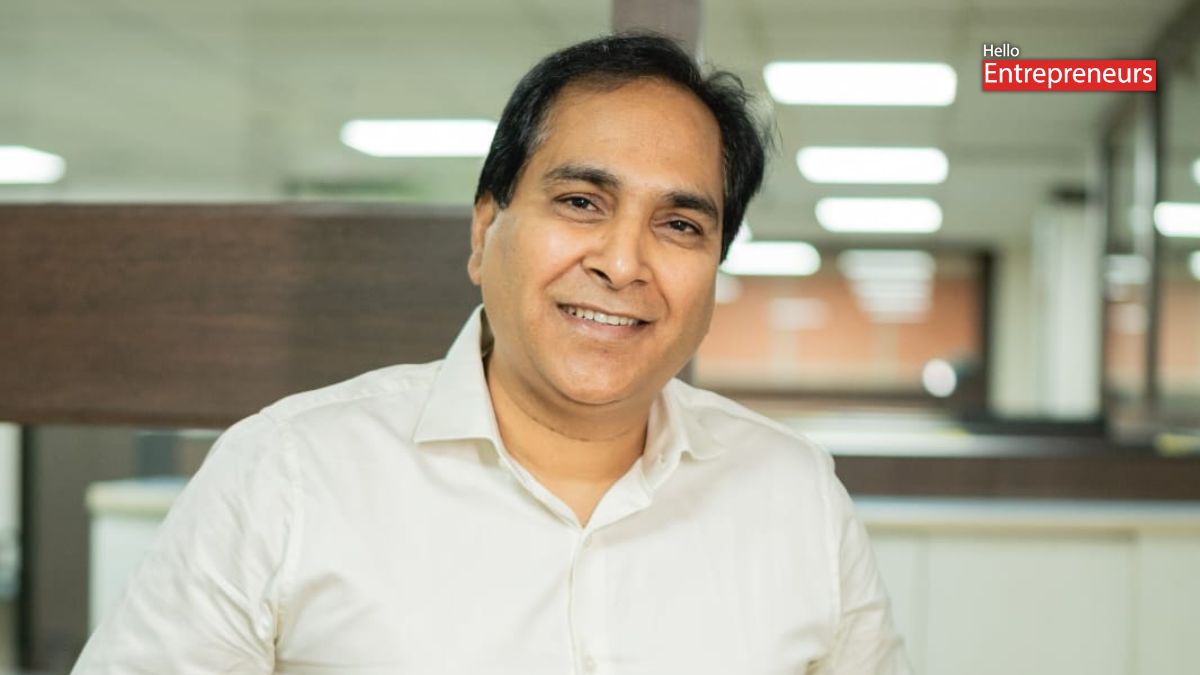
It was a pivotal moment for Rahul Dwivedi, Founder & CEO of Pelorus Technologies. He was the founder of Pelorus in 2009, which is engaged in making technology solutions relevant to the security challenges in India for Indian law-enforcement, intelligence and security agencies.
The biggest change is that security threats today are beyond the physical realm, says Dwivedi. They are becoming more and more complex with the use of drones, digital devices, cyber networks, AI, and a lot of digital evidence.
Drones an emerging security threat.
The use of drones is not just for photography, agriculture and commercial applications. They are also very inexpensive and readily available making them an appealing choice for surveillance, smuggling, and attacks.
Scale of the problem is evident at the borders of India. As per the Ministry of Home Affairs, 278 rogue drones have been detected and recovered by the Border Security Force at the Indo-Pakistan border during 2025. During the operations, drugs, weapons were also seized by the security agencies connected with these events.
At the same time, India is developing its own ecosystem of drones. By February 2026, the government reported at least 38,500 registered drones and almost 39,900 certified pilots operating remotely.
It is increasingly significant for security agencies to be able to detect suspicious drones. Dwivedi feels the technology is something that should be an integral part of the security infrastructure like CCTV.
The threat has also been shown in other countries. In June of 2025, Ukraine launched an attack on Russian military aircraft at multiple air bases in Operation Spider’s Web, which involved the use of drones. The operation demonstrated the potential of relatively cheap unmanned systems to target high-value targets.
Detection is just one of the problems that investigators face. Drone forensics can also be used to identify the source of a drone and how it is being operated, and even potentially the person behind the drone.
Cybercrime is going data-driven. The nature of cybercrime is becoming more data-driven.
Digital information sources are more and more being used in multiple ways in modern investigations. Mobile phones, computers, cloud accounts, financial transactions, social-media activity, communication logs, and even more can be part of a single case.
The cybercrime statistics in India show how much work investigative agencies are having to do. According to the NCRB records, a total of 86,420 cybercrime cases were registered in the country in 2023, while 52,974 cybercrime cases were registered in 2021.
Considering the financial fraud has become one of the important elements of this problem. The number of complaints via the National Cyber Crime Reporting Portal rose from approximately 2.62 lakh in 2021 to a high of 24 lakh in 2025, according to government data.
This has made digital forensics the more critical of the two processes, which involves collecting and analysing electronic evidence.
The government sponsored cyber forensic labs are also growing. By December 2025, the National-Digital Investigation Support Centre in New Delhi had helped in over 13299 cybercrime cases and 33 States and Union Territories had cyber forensic-cum-training laboratories.
Dwivedi explains Pelorus’s approach is to integrate various technologies and capabilities, not just products. He claims that projects like Maha Cyber and Nirbhaya Labs bring together forensic hardware, technology solutions, standard operating procedures and training into bigger ecosystems of digital-forensics.
The landscape of threats and investigations is changing, and so is AI.AI is changing, as are threats and investigations.
This is where AI is aiding in the security battle.
The criminals can leverage AI to make deepfakes, clone voices, generate fake IDs and automate some of the cyber activities. Concurrently, AI can review vast amounts of data, recognize patterns that would be far more time-consuming for humans to do.
This presents a competition between offense and defense in using the technology.
India has already begun to leverage AI in defence and security sector. The government has set up organisations like the Defence AI Project Agency and Defence AI Council to foster AI use in the defence industry.
But for Dwivedi, the adoption problem is the main one. Access to AI tools isn’t a solution. Agencies require trained staff, adequate infrastructure and systems which enable information from a number of sources to be analysed as a whole.
Dwivedi is clear that India should continue working with global technology partners. Pelorus itself collaborates with leading OEMs, as innovation is rarely achieved in isolation.
However, he believes it is equally important to strengthen indigenous capabilities in critical security technologies. Homegrown solutions can provide greater control over sensitive data, be tailored to the needs of Indian agencies, and contribute to a stronger domestic technology ecosystem.
Foreign technologies may also be subject to export controls, licensing requirements and geopolitical developments, making it important to build resilient capabilities in areas such as intelligence, defence and digital forensics. According to Dwivedi, developing more technology within India can strengthen long-term capability while complementing global partnerships.
The focus on indigenous capability has also grown across India’s defence sector. Following Operation Sindoor, senior defence officials highlighted the importance of advancing domestic capabilities in areas such as unmanned systems and counter-drone technologies.
Preparing for the next generation of security challenges
According to Dwivedi, two technologies will significantly shape the future of security: agentic AI and quantum computing.
Agentic AI refers to systems that can perform complex tasks with minimal human intervention. While these technologies can improve efficiency, they could also enable cybercriminals to automate attacks at a much larger scale.
Quantum computing presents another long-term challenge. Dwivedi points to the “harvest now, decrypt later” scenario, where encrypted data collected today could potentially be decrypted in the future as computing capabilities continue to advance.
For organisations, this makes the transition to post-quantum cryptography an important long-term priority rather than a challenge that can be postponed indefinitely.
For Pelorus, the objective is to stay ahead of these technological shifts by helping organisations strengthen their investigative, intelligence and cyber security capabilities before threats emerge.
Founded in 2009, Pelorus has expanded its presence in India’s security technology sector while also working to take Indian-developed investigative and intelligence technologies to international markets.
According to Dwivedi, the future of security will depend on the ability to collect and connect information from multiple sources, analyse threats quickly and respond with the right technologies. The focus, he says, is not simply on adopting more technology, but on ensuring the right capabilities are available when they are needed most.