



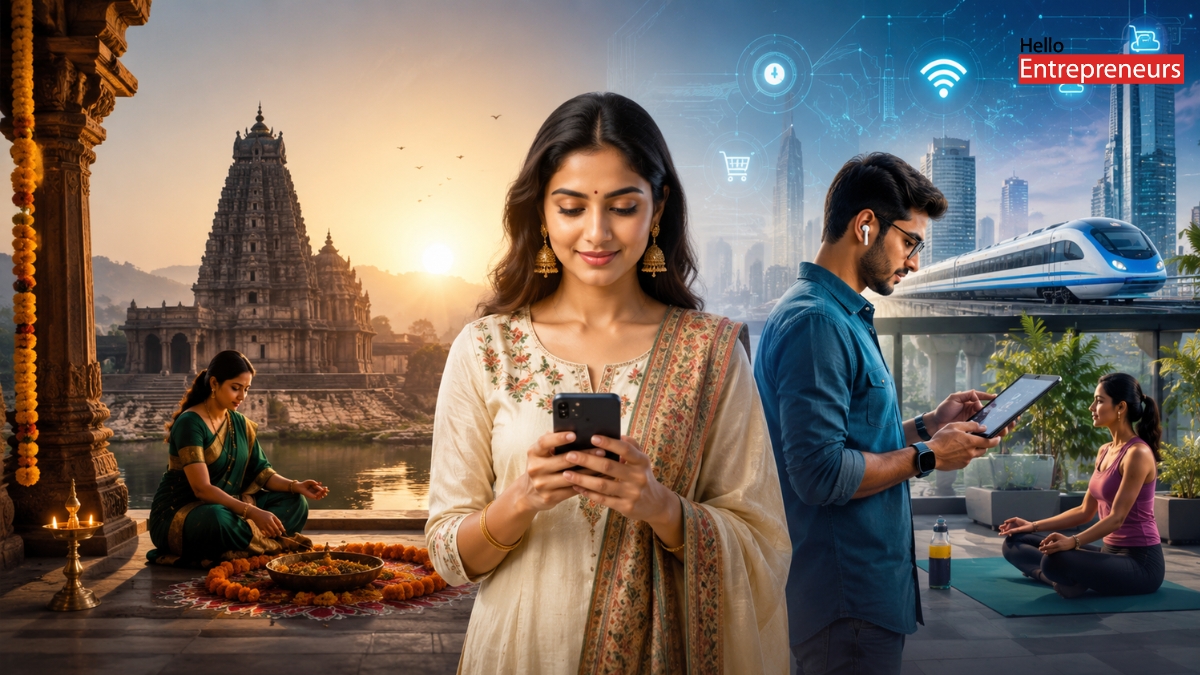
New Delhi: Take a walk through any Indian city right now, and the mix of old and new hits you instantly. There’s a grandmother lighting a diya at the front door, while her granddaughter checks the perfect muhurat on her phone. In a tiny workshop in Lucknow, a tailor finishes a hand-stitched chikankari kurta that’ll soon travel three states away after getting sold through a WhatsApp catalogue. India in 2026 isn’t stuck choosing between its traditions and its tech; it’s finding ways to tie them together—literally, sometimes.
The Temple Has a Queue Number Now
Even temples have gotten a digital upgrade. For years, big places like Tirupati let you book a darshan online, but now, smaller shrines and even neighborhood priests do it too. Need a priest for a housewarming? Book him with a tap. Want temple prasad delivered to your apartment? Easy. People join live aartis online from across the country—some, from halfway around the world. What’s shifted is the relationship with tradition: it’s more personal, more instant, but the rituals themselves haven’t vanished. The door just happens to be digital.
Honestly, this keeps tradition alive for people who move cities, or even countries. A family leaving Varanasi for Pune doesn’t have to give up joining the Ganga aarti. They just stream it instead.
Ayurveda, Rebooted
Ayurveda, once quietly present in kitchen remedies, has exploded online. In 2026, startups offer quick dosha quizzes and AI-powered consultations, then ship customized herbs and supplements right to your home. Ashwagandha and triphala left the shelves of corner stores for the “delivered in ten minutes” section on apps like Blinkit and Zepto. But the real secret? It works because people trust it. If your grandma always gave you turmeric milk when you were sick, you’re way more likely to try a digital version than some imported wellness trend.
Speaking India’s Languages, Finally
Then there’s language. For years, India’s tech seemed built just for English speakers. That’s fading out. Homegrown AI like Sarvam and Krutrim let you talk to your phone in Hindi, Tamil, Telugu, Bengali—and not stiff, textbook versions, either. Real speech, real slang. Voice assistants and bots are suddenly useful for everyone, even in small towns—folks who never got much out of the internet before. Now, a sabziwala in Indore checks his payments by talking to his phone in Hindi. A farmer in Nashik asks a chatbot questions in Marathi. Five years ago, that was sci-fi. Now, it’s just life.
The Wardrobe: Handloom Meets Streetwear
Fashion tells the same story. Gen Z isn’t throwing away classic handlooms or silks—they’re reimagining them. You’ll see bandhani hoodies, khadi re-stitched into skirts, jhumkas worn with sneakers. The mix is everywhere. Thrifting and upcycling took off, so today’s consumers find their grandmother’s saree turned into something they’ll actually wear. Even weavers are getting tech-savvy—some brands stitch QR codes inside clothes, so you can scan and see exactly who made your shirt or kurta.
Getting Around: Electric, Affordable, Everywhere
Transportation, too, has quietly shifted electric. Once, EVs felt fancy and unreachable. Now, between Tata, Ola Electric, and Ather, families can actually afford them. It’s less about saving the planet and more about saving money; daily costs matter. Charging stations are popping up everywhere—even next to temples. That’s when you know something has gone mainstream.
Wellness Without the Jargon
Wellness isn’t buried under jargon anymore. Mental health, once a taboo, is finding its voice. Workplaces offer sound baths, breathwork, group therapy. Apps let people talk to counselors in their own languages. Even old traditions—like Sufi qawwali or group storytelling—are being seen as valid forms of emotional care, not just entertainment. It’s not about copying the west; it’s about understanding the value in India’s own community rituals, just repackaged for now.
Money, Minus the Middleman
And it all moves at a crazy speed because of UPI. The payments system hums quietly in the background, connecting almost every trend, from online temple donations to Ayurveda subscriptions, fashion sales, EV charging, and more. That college student in Gurugram and the chaiwala next door use the same app for money, probably a dozen times a day.
The Bigger Picture
Zoom out, and you see what’s really happening: India isn’t replacing tradition with tech. It’s translating the old ways into a language that fits today. The diya still burns bright—but now, someone might snap a photo of it for Instagram, order the oil online, and check the exact muhurat on their favorite temple’s site before lighting it.
That’s India’s 2026—it isn’t about leaving the past behind, it’s about finding new ways to carry it forward.

