



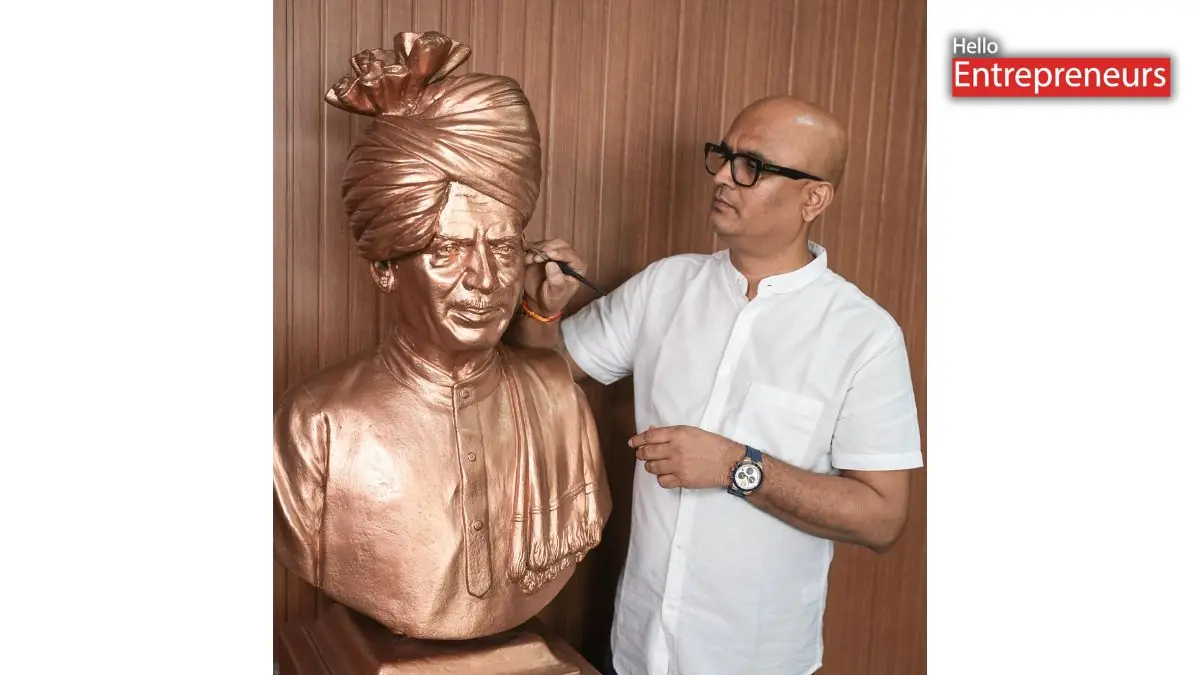
Every year, as Ganesh Chaturthi and Navratri bring color, devotion, and togetherness to cities across India, sculptors work quietly behind the scenes to give shape to the divine. For them, these festivals are not just celebrations, they are a chance to bring art, faith, and emotion together in one powerful form. For many devotees, a sculpture isn’t just a piece of art; it’s a symbol of protection and peace. “When a murti enters a home, it brings a sense of divine security,” the sculptor explains. “It’s not just about clay or paint, it’s about faith. Each idol carries hope and blessings.” And that’s what makes these festivals so special. Through art, people connect deeply with their beliefs and traditions that have been passed down for generations.
Creating deities like Lord Ganesha or Goddess Durga is no easy task. Every detail, right from the posture to the jewelry, holds meaning. Yet, every artist has their own touch. “Even if ten sculptors make a sitting Lord Ganesha, each one will look different,” he smiles. “That’s where personal expression meets tradition.” While commissioned work often comes with client requests, the artist still finds freedom in the finer details, like the expressions on the idol’s face or the gentle curve of a hand.
As awareness about sustainability grows, many wonder if traditional art can stay relevant while being eco-friendly. The sculptor believes it can. “Our culture was always sustainable,” he says. “The use of clay, turmeric, and natural paints is part of our ancient tradition. Non-biodegradable materials came much later.” He sees eco-friendly practices not as a modern demand but as a return to the roots of Indian art, where every element was in harmony with nature.
Interestingly, sculpture has also found a new place in modern Indian weddings. From symbolic décor to meaningful gifts, more couples are choosing art that tells a story. “People today want more than just fancy things, they want emotions,” he says. “Sculptures add depth and beauty to wedding memories.” For him, art is not just about the form but about the feeling behind it. “My advice to young couples is simple, follow your heart. Art is about what you want to preserve, not about perfection.”
During Navratri, the sculptor brings Shakti, the divine feminine, to life through his creations. “The posture, the expression, the aura, all of it reflects the strength and compassion of feminine power,” he explains. Whether it’s a depiction of Goddess Durga’s victory over evil or a calm motherly pose, every sculpture tells a story of courage and love. “The mother protects her children, that’s the essence of Shakti,” he says with quiet reverence.
With Indian festivals now celebrated around the world, these sculptures have become a part of global cultural exchange. “Ganesh Chaturthi and Navratri are celebrated not just in India but in many countries,” he says. “People of all backgrounds join in, experiencing the beauty of our art, music, and dance.” Through these festivals, he believes, Indian art can serve as a bridge between cultures, spreading unity and peace.
While many festival sculptures are temporary, their impact lasts long after immersion. “A permanent sculpture becomes a cultural landmark,” he says. “But temporary ones also teach us an important truth, nothing is permanent. The departure of the deity is only temporary; it reminds us that life itself is a cycle of creation and return.”
For the next generation of sculptors, his message is clear: don’t separate tradition and modernity, blend them. “Think of them as flowing together,” he says. “Respect your roots, but explore new ideas. Keep your process ethical and meaningful.”