



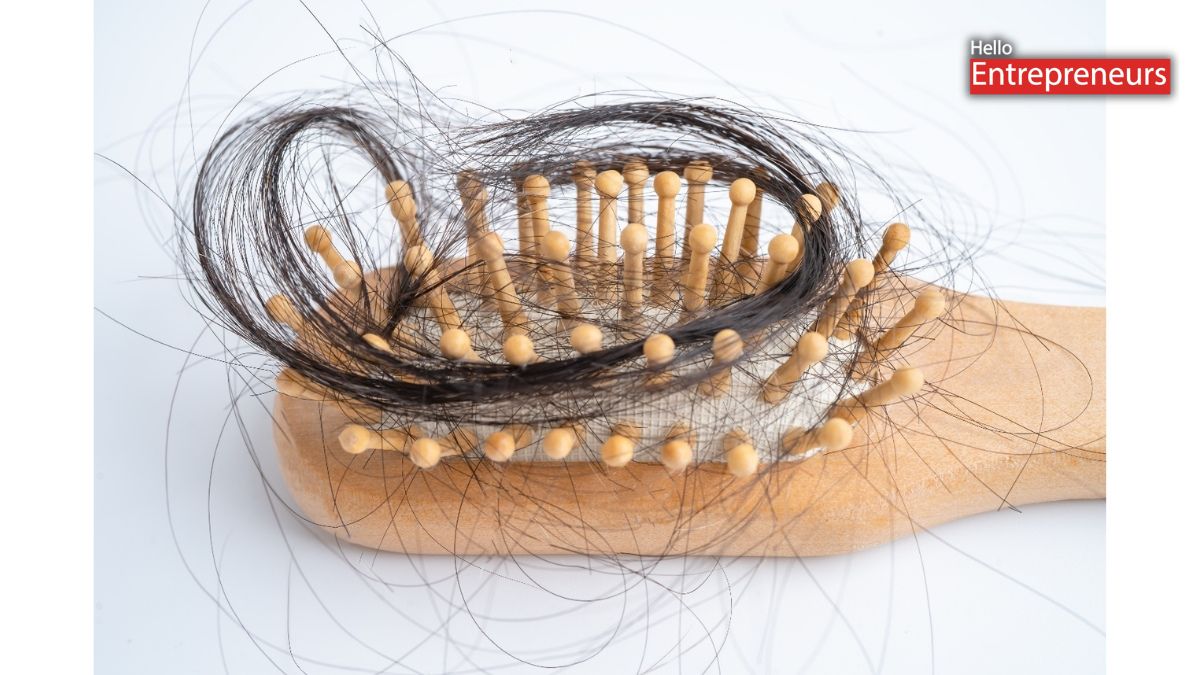
Hair rarely falls overnight without a reason. In many cases, it slowly thins over months before you notice something is off. Nutritional hair loss is one of the most common and reversible causes of thinning, but only if you catch it early.
The challenge is that early signs are subtle. Most people ignore them until shedding becomes obvious. Here’s how to recognize the clues before it progresses.
- Increased Shedding While Washing or Combing
A little hair fall is normal. Losing 50–100 strands a day is expected. But if you suddenly notice:
- A significant jump in hair on your pillow
- More strands clogging the drain
- Hair coming out easily when you run fingers through it
It may signal internal stress or deficiency.
If this increase lasts more than 6–8 weeks, it’s worth investigating.
- Thinning Across the Entire Scalp
Nutritional hair loss usually appears as diffuse thinning – meaning the hair feels less dense everywhere, not just in one patch.
Common signs include:
- A wider parting
- Less volume when tying a ponytail
- Scalp more visible under bright light
Unlike genetic baldness, nutritional thinning often affects the whole scalp evenly.
- Hair Feels Finer or Weaker
When nutrients like iron, protein, zinc, and B-vitamins are low, new hair strands may grow thinner than before.
You may notice:
- Hair breaking more easily
- Reduced shine
- Increased dryness
- Ends splitting faster
This happens because follicles are not receiving optimal nourishment.
- Fatigue Alongside Hair Fall
Hair and energy are closely linked. If hair thinning is accompanied by:
- Constant tiredness
- Shortness of breath during activity
- Brain fog
- Pale skin
Iron or B12 deficiency may be involved.
Low ferritin (iron stores) is one of the most common nutritional triggers of hair fall, especially in women.
- Changes After Dieting or Illness
If hair fall begins 6–12 weeks after:
- Crash dieting
- Rapid weight loss
- Severe illness
- Major stress
It may indicate telogen effluvium triggered by nutrient depletion.
The delay makes it easy to miss the connection.
- Brittle Nails or Dry Skin
Nutrient deficiencies rarely affect just one tissue. If you notice:
- Weak, breaking nails
- Cracked skin
- Mouth ulcers
- Hair thinning
There may be broader micronutrient imbalance.
- Slow Regrowth
If you’ve had hair fall in the past and recovery feels unusually slow, it may be because nutrient levels never fully normalized.
Hair needs adequate:
- Protein
- Iron
- Vitamin D
- Zinc
- Essential fatty acids
Without them, follicles struggle to re-enter the growth phase.
Which Nutrients Are Commonly Involved?
The most frequent deficiencies seen in hair thinning include:
- Iron (low ferritin)
- Vitamin D
- Vitamin B12
- Zinc
- Protein
Blood tests can confirm whether levels are suboptimal.
What to Do If You Suspect Nutritional Hair Loss
Instead of guessing and taking random supplements:
- Check ferritin levels
- Test vitamin D and B12
- Evaluate protein intake
- Assess thyroid function if needed
Correcting deficiencies early prevents prolonged shedding.
A structured approach like Traya’s root-cause mapping combines nutritional evaluation with stress, hormonal, and scalp assessment. This reduces trial-and-error and ensures that the real driver is addressed.
Early nutritional hair loss doesn’t scream for attention. It whispers through subtle thinning, fatigue, and slower regrowth.
If you notice these early signs, act sooner rather than later. Hair recovery is much easier when deficiencies are corrected early.

