




New Delhi: Adventure tourism in India is no longer a hobby of a select few adventure lovers. Rafting, trekking, ziplining and bungee jumping are among the activities that are gaining traction in the tourism market with more travelers seeking experiences over the traditional sightseeing.
Niharika Nigam, Managing Director of adventure tourism company Jumpin Heights, is at the heart of this transformation, contributing to Rishikesh’s reputation as a hub for extreme sports.
Nigam has been on a journey, however, to build an adventure business, and it’s been more than just that. It has also led to questioning the notion that jobs in high-risk industries are fit only for men.
Adventure tourism is traditionally known to be a male dominated industry. Nigam says she would many times get the impression that women were not fit for the role of an operation and rather fit for supportive roles.
She didn’t try to fight against those perceptions, she tried to make them wrong with her work.
Enhancing safety measures, increasing business activities and being actively engaged in the daily running of the company became a key element of her leadership style. With the passage of time the performance became a better response than any debate.
Nigam has been a long-time associate of Jumpin Heights and the company’s early days. It was started in 2010 by retired Army captain Rahul Nigam. Niharika completed her education and later on formally joined the business where she has been actively involved in business development and marketing activities.
One Jump to a Larger Adventure Business
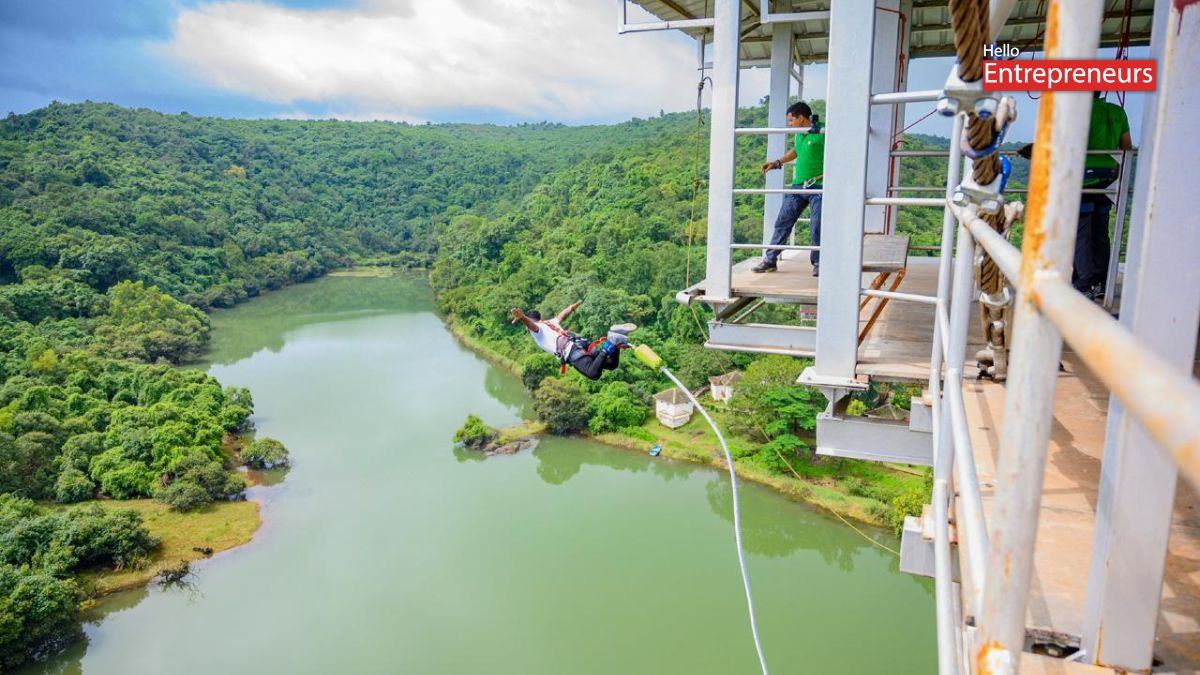
The Rishikesh site of Jumpin Heights features an 83-metre bungee jump and has established itself as one of the most famous and popular commercial bungee parks in India. It’s now claimed that the company has jumped over 1.5 lakh times.
Safety has been the company’s growth driver. Jumpin Heights claims to have operations that meet Australian and New Zealand safety standards. India’s own adventure tourism regime also advocates the adoption of New Zealand’s standards for bungee operations, such as equipment, trained staff, operating protocols and contingency planning.
The company has also grown beyond the borders of Rishikesh. It has also extended its operation in Goa, where it provides a bungee experience over Mayem Lake, providing another place for adventurous travellers to have professionally managed adventures.
Why safety is more important than the thrill.Why safety is more important than the thrill.
The greatest danger for an adventure company is to eliminate risk. It’s a thing that must be dealt with.
Nigam says that a good business risk would be prepared, based on data and understanding of what might happen. If it jeopardizes safety, ethics or customer trust, then it isn’t worth taking the risk, she believes.
This philosophy is of great importance when India’s adventure tourism industry is booming. The Ministry of Tourism in 2025, came up with a set of Adventure Safety Guidelines in collaboration with the Adventure Tour Operators Association of India, with the aim of establishing a more standardised safety framework. States and UTs were also requested to ensure that operators comply with safety and licensing requirements.
Government has also established a National Board for Adventure Tourism to develop areas like safety guidelines, certification, capacity development, best practices and destination development etc.
The Experience Economy has revolutionized the travel industry.
It’s also an indicator of the broader shift in the Indian travel scene that we’re witnessing at present: adventure tourism.
According to official Ministry of Tourism statistics, the number of domestic tourist visits to India in 2025 was approximately 4.29 billion, representing a 45.6% growth from the previous year. Foreign tourist arrivals also increased by 21.4% to approximately 25.27 million. The direct and indirect contribution of tourism is estimated at 5.22% of India’s GDP and the number of employment due to tourism is estimated to be more than 84 million jobs.
For companies like Jumpin Heights, this burgeoning travel market provides a chance to make destinations into experience-driven attractions.
Today’s travelers desire whatever they can remember, not just photograph, says Nigam. There is also an increasing number of families, solo travellers, women travelling alone and professionals who are interested in activities that celebrate personal milestones.
Developing a Culture of Responsibility
There are many more seconds of preparation behind each of the jumps in a bungee jump.
All of these are undertaken as part of the discipline of the operation prior to a customer’s leap.